
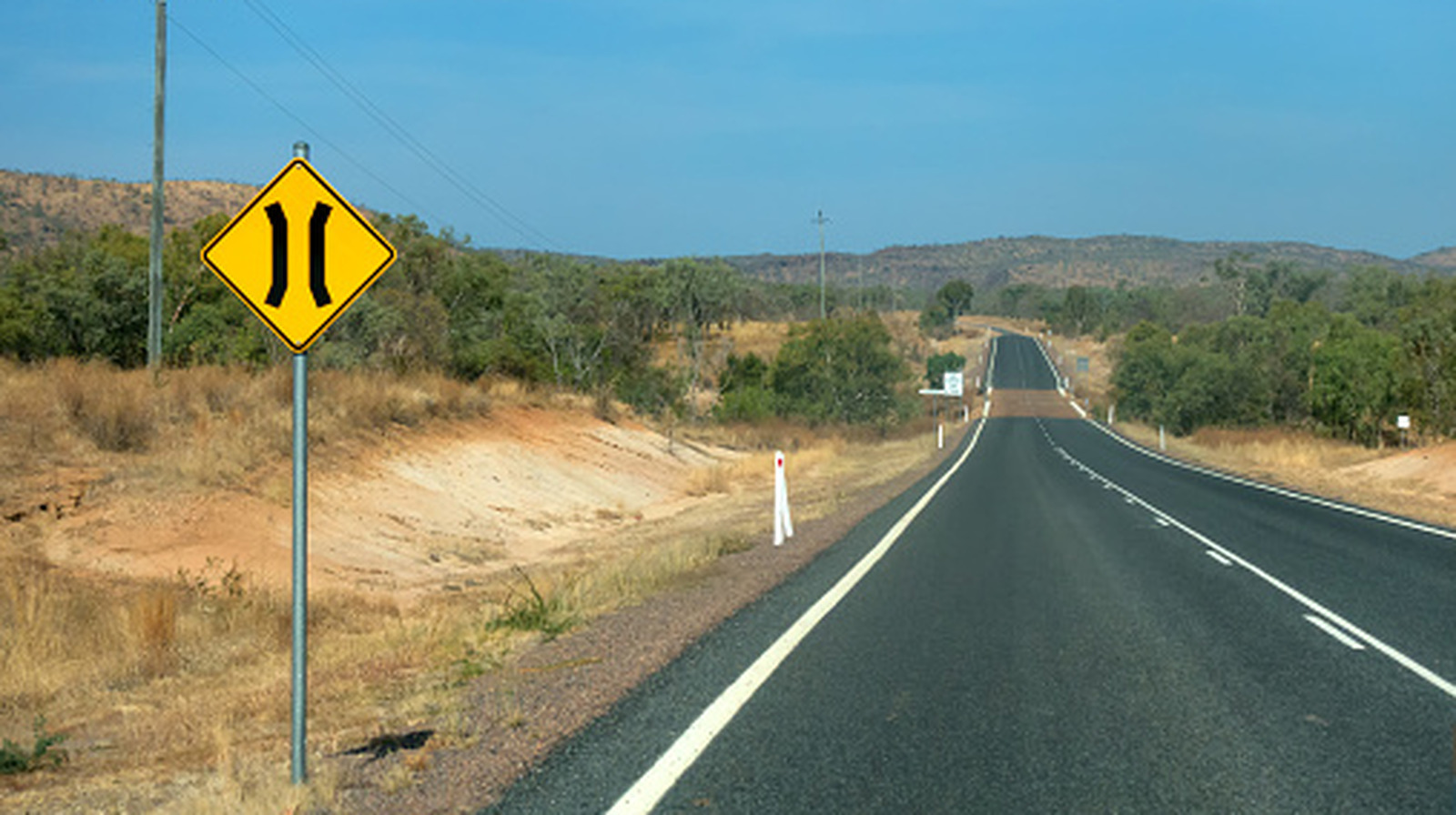
That hourglass-looking road sign is not about time at all. It is a warning that the space ahead is tightening up, whether that means a bridge, a lane, or the whole roadway is about to squeeze down. Drivers who spot it early have a better shot at staying calm, avoiding confusion, and making the right move before the road gets cramped.
If the symbol looks like a full hourglass, it usually points to a bridge or crossing that is narrower than the road leading up to it. In plain terms, the lane you have been using may soon shrink to the point where only one vehicle can cross at a time. Those signs are often placed for both directions so traffic from either side gets the message before rolling onto the tight spot.
There is also a related version that looks more like a half-hourglass beside a straight line. That one is used when the roadway itself is pinching in, not just a bridge. The idea is the same, though the situation can feel a little different behind the wheel, since the change in width may continue for a stretch instead of ending quickly on the far side.
The “Narrows” warning matters because it sets up drivers for a change in rhythm. A road that suddenly gets slimmer can catch people off guard, especially if they are moving at highway speed or focusing on traffic around them. When the pavement starts to disappear from the sides, a little advance notice can make a huge difference in how smoothly everyone gets through.
On a narrow bridge, the main rule is simple: the vehicle that arrives first usually gets to go first. That right-of-way helps prevent hesitation and risky guessing when there is only room for one lane of movement. Drivers approaching from either side should slow down, watch for the other car, and resist the urge to force their way across.
On a road that narrows, the response is a little more about merging cleanly. If a lane is ending or shrinking into less space, drivers in that lane need to yield and blend in with traffic that still has room to continue. The trick is to make the move early enough that it feels smooth instead of sudden, since late lane changes tend to create stress for everyone nearby.
Some roads use extra markings to reinforce the warning, like diagonal yellow and black striped object markers or painted pavement guides. Those details are helpful, but they are not always there, and drivers should not depend on them showing up every time. The sign itself is the real heads-up, and it should be treated like a clear signal to check speed, spacing, and surrounding traffic right away.
This is one of those signs that rewards quick recognition. A driver who understands the shape does not waste time wondering whether it is decorative or symbolic, because the message is practical and immediate. The road ahead is getting tighter, and the smart move is to prepare before reaching the pinch point, not after.
That means scanning ahead, easing off the gas if needed, and watching for vehicles already occupying the narrow section. It also means staying patient if another driver has the right-of-way, since forcing a merge or trying to squeeze through can turn a simple warning sign into a messy situation. The sign is small, but the space it warns about can feel very big once the pavement closes in.
