
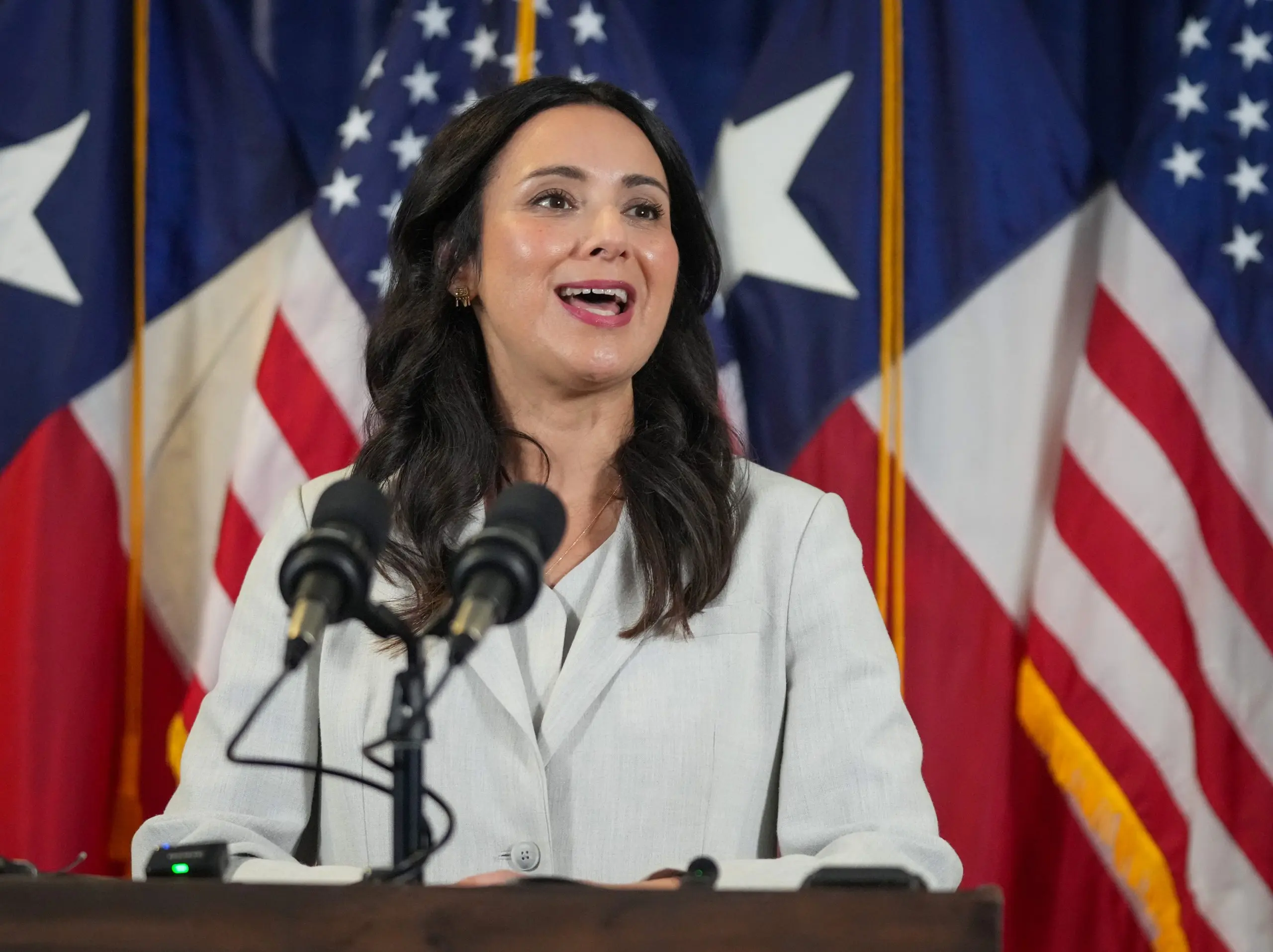
Texas is headed for another sharp turn on H-1B visas, with Gov.-elect Gina Hinojosa signaling she wants Greg Abbott’s hiring freeze gone on day one. The move puts the incoming Democrat on a collision course with a policy built around claims that foreign labor has been used to undercut American workers, even as Hinojosa admits the visa system has real abuse problems.
Hinojosa brushed off Abbott’s January order as political theater, framing the issue as something that belongs in the “culture wars” bucket. That stance lands with a thud in a state where the debate over jobs, wages, and immigration never stays quiet for long, especially when public agencies and universities are involved.
Abbott’s directive was blunt. It barred state agencies and public universities from filing new H-1B petitions without written approval from the Texas Workforce Commission, after reports that some employers had used the visa program to swap out U.S. workers for cheaper foreign labor.
The governor did not sugarcoat the concern. In his directive, he said, “In the most egregious schemes, employers have even fired American workers and replaced them with H-1B employees, often at lower wages,” a line that captured the broader anger driving the freeze.
Hinojosa, for her part, has not tried to pretend the system is spotless. She said there are “absolutely” abuses in the H-1B program and argued that companies should not be taking tax breaks and then turning around and using that money to hire foreign workers instead of Texans.
That admission gives the debate a twist. She is not denying the problem, just rejecting Abbott’s answer to it, which makes the fight less about whether abuse exists and more about how aggressively the state should respond.
There is also a political prize in the background. Hinojosa’s election ended Abbott’s run and made her the first Democrat elected governor of Texas since Ann Richards in 1990, a milestone that already has both parties gaming out how much she can change without help from the Legislature.
Republicans still control the Texas Senate, so rolling back Abbott’s executive order would be one of the fastest ways for Hinojosa to put her stamp on state policy. No vote, no long committee slog, just a direct reversal that would tell voters exactly where she stands on workforce policy and immigration.
She also drew a line between state government and local schools. Hinojosa defended school districts that use H-1B visas to recruit foreign teachers, arguing that districts are struggling to find enough domestic educators to fill open classrooms.
That distinction matters, because Abbott’s order was aimed at state agencies and public universities, not local K-12 districts. So even if the freeze disappears, the argument over who gets access to the program and why is not going away anytime soon.
The broader tension is easy to spot. Supporters of tighter rules see H-1B restrictions as a necessary defense for Texas workers, while opponents treat them as an obstacle to filling hard-to-staff jobs. Hinojosa seems ready to land on the side of flexibility, but only after conceding the program has been used in ways that leave a bad taste.
Abbott’s freeze was designed to last through May 31, 2027, giving lawmakers time to consider wider changes and requiring affected agencies and universities to report current H-1B holders and recruitment efforts aimed at qualified Texas residents. With the next chapter already set to begin under a different governor, the fight over who gets hired in Texas is far from finished.
