
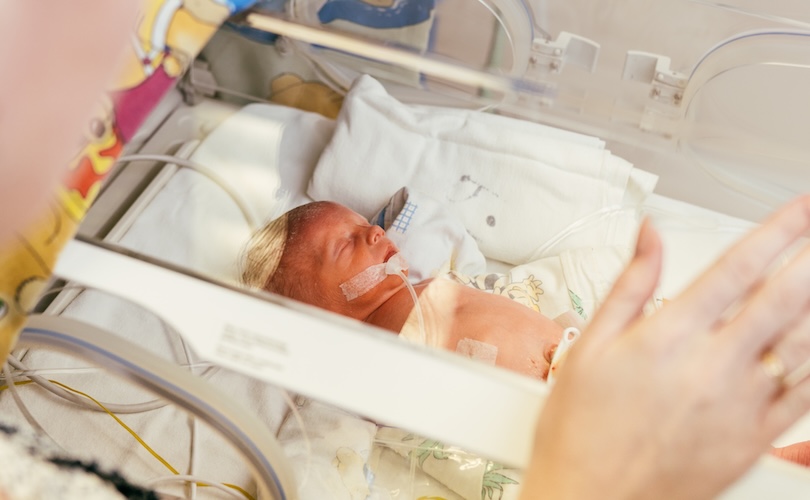
A baby once facing a grim prenatal diagnosis is now healthy after a rare surgery performed before birth, and the case is turning heads for good reason. The procedure gave doctors a chance to fix a serious defect while the child was still in the womb, and the result was a full-term birth, a quick hospital stay, and a thriving infant at home.
The child, Theo, was diagnosed at 20 weeks with complex gastroschisis, a condition where the intestines grow outside the body because the abdominal wall does not close properly. It is a dangerous problem that can raise the risk of stillbirth and often demands immediate surgery after delivery, though outcomes can vary a lot depending on the severity.
In Theo’s case, the condition was serious enough that his parents were offered a place in a clinical trial testing a prenatal repair. They traveled from the United Kingdom to Texas Children’s Hospital in Houston, where the baby became the third patient to undergo the experimental approach.
The operation was done at 26 weeks gestation and used a small keyhole-style method rather than a large opening in the uterus. Doctors gently moved the intestines back into the abdomen and then closed the abdominal wall, giving the baby time to keep growing after the repair instead of waiting until delivery.
That extra time made a huge difference. Theo stayed in the womb, continued developing, and was delivered at term at a normal weight, then quickly settled into feeding and recovery like any other newborn.
His hospital course was strikingly short. Within days, he was breastfeeding, taking full feeds by day two, and discharged by day three, which is the kind of turnaround that sounds almost unreal when stacked against the original diagnosis.
Now 5 months old, Theo is doing well, and his parents say the fear that once hung over the pregnancy has given way to relief. That emotional shift matters just as much as the medical one, because the family went from bracing for the worst to watching a healthy baby grow at home.
Mom Maisie described the early days as an intense stretch of worry, saying, “We were super anxious and scared and worried,” and adding, “It is just a really difficult time for us as a family to process what the start of Theo’s life was looking like it was going to be.” Those words land hard because they capture what so many families feel when a diagnosis hits before birth.
Dad Josh sounded every bit as grateful, saying, “He’s such a fantastic little man,” and “He is doing everything that a normal baby should be doing.” That kind of simple, everyday description says a lot, because normal baby milestones become a big deal when the starting point looked so uncertain.
The case also shows how far fetal medicine has come in a short time. Conditions that once seemed untouchable before delivery are now being approached with real surgical skill, and that changes the outlook for babies and parents who used to be told to just wait and hope for the best.
It is hard to miss the larger takeaway here. A baby in the womb is not some abstract medical problem, but a living patient with real needs, real vulnerability, and a real chance to benefit from care before birth.
