
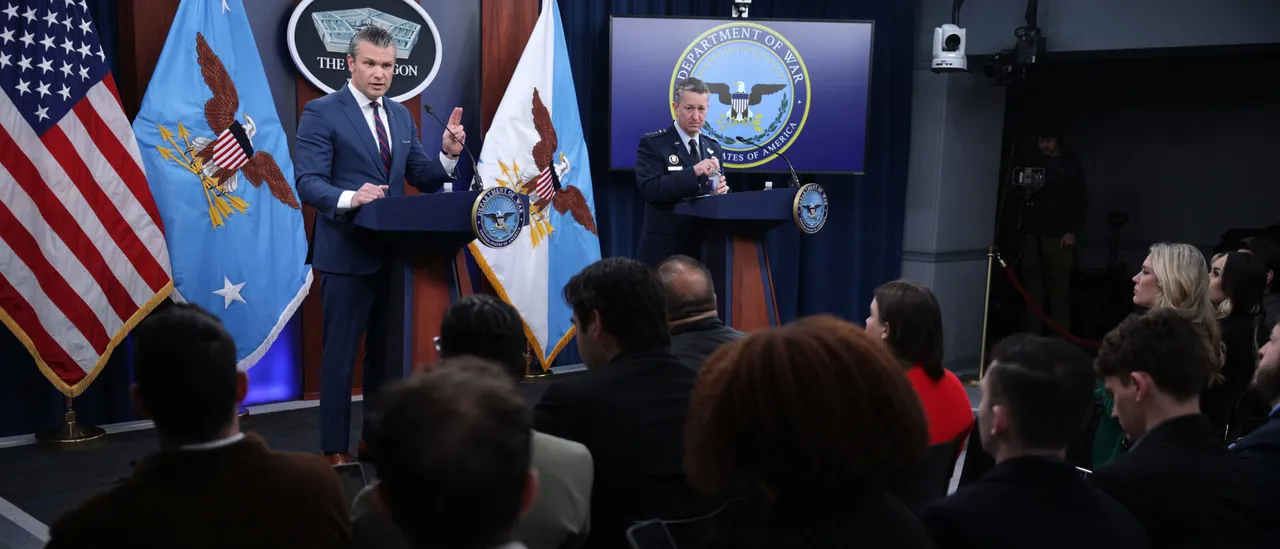
Pete Hegseth told reporters the United States can sustain the fight with Iran and that Tehran cannot simply wait the U.S. out, even amid chatter that America’s interceptor stockpiles are strained. He insisted U.S. forces control the tempo and that military pressure will continue until American objectives are met.
The Pentagon briefing underscored a clear Republican line: strength, resolve, and overwhelming capability matter. Officials acknowledge reports that Iran hopes to wear down U.S. defenses, but senior figures argue those reports misread the balance of power and American will.
Questions from the press pressed that point directly. “You touched on this in your opening remarks, but I’m hoping you could expand on it a bit. It’s been reported that Iran might be trying to outlast our ability to intercept their missiles. It sounds like you guys are saying they don’t have the ability to do so. Is that the case? Can they outlast us?” Daily Caller White House correspondent Reagan Reese asked during the Pentagon’s second briefing of the week.
Hegseth’s answer left no room for doubt about the administration’s posture. “Iran cannot outlast us. We’re going to ensure through violence of action and our offensive capabilities and our defensive capabilities, as I said, that we set the tone and the tempo of this fight,” Hegseth told the Caller.
He pushed back against narratives that suggest limits where none exist. “That’s why stories and speculation about different things to try to make it look like we’re limited to what we can do, the only limits we have on this is President Trump’s desire to achieve specific effects on behalf of the American people, and that’s why we don’t talk about we can say four weeks, but it could be six, it could be eight, it could be three,” he continued.
That blunt framing fits a broader Republican belief that public certainty and steady pressure prevent escalation into messy, open-ended grinding wars. The message from the Pentagon is tactical: manage the fight, keep the adversary reacting, and don’t telegraph unnecessary limits.
Hegseth also outlined how the United States is expanding its offensive options while strengthening defenses, making the gap between Iranian strike capacity and U.S. response capacity larger over time. He described a logistics advantage that allows sustained strikes and an ability to pour munitions and effects onto target sets to blunt and then reverse Iranian advances.
“We know their ability to shoot versus our ability to defend. That difference, it’s wider and wider every day. Our defense gets better. Their offensive capabilities diminish as we are going into ammunitions that we, as we said, have tens of thousands of, we can drop unlimited supplies on with even more effects than the standout conditions we have now, which is why, when we say the throttle is going up. The throttle is going up and it’s going to stay on high,” Hegseth continued.
The fighting has come at a real cost. Since strikes began, six service members were killed in action: Capt. Cody Khork, 35, from Winter Haven, Florida; Sgt. 1st Class Noah Tietjens, 42, of Bellevue, Nebraska; Sgt. 1st Class Nicole M. Amor, 39, of White Bear Lake, Minnesota; and Sgt. Declan J. Coady, 20, of West Des Moines, Iowa, all assigned to the 103rd Sustainment Command at Des Moines, Iowa.
Hegseth also confirmed one missile penetrated U.S. air defenses and struck a fortified tactical operations center, a sobering reminder that even superior forces can take losses. That reality makes the administration’s combined emphasis on offense and defense politically and militarily coherent.
The secretary said strategic aims remain clear and limited in scope: degrade ballistic missile and drone capabilities, blunt naval actions meant to set terms at sea, and deny Tehran pathways to enrich material that could fuel a nuclear program. He framed these goals as forcefully defensive but backed by offensive options to impose costs and restore deterrence.
“So whether that’s ballistic missiles and drones, so offensive capabilities, effectively their navy, which would attempt to set other terms and impose different costs, drone capabilities, which we, which we laid out there, and ultimately though this tying it back to Midnight Hammer, the president has been willing to make a deal,” Hegseth told the Caller.
On the nuclear question he spoke plainly and without hedging. “You can’t have a nuclear bomb. Radical Islamists can’t have a nuclear bomb that they wield against the world. He gave them every single opportunity, then we precisely took it away. And even, even then after that, they didn’t have that, they didn’t come to the table with a willingness to give it away. So ultimately, that those nuclear ambitions, which never ceased, are something that had to be addressed,” he continued.
Administration spokespeople later said the president struck because the United States faced the prospect of an imminent Iranian attack on American troops, arguing the strike was compelled by necessity. In administration messaging that follows this Republican line, the goal is to demonstrate resolve and deny Iran any comfortable timeline to rebuild or rearm.
