
- Georgia’s congressional map challenge under the Supreme Court’s new redistricting rules
- The higher burden now facing voting rights plaintiffs in federal court
- How race, partisanship, and electoral influence overlap in Georgia
- The role of the 11th Circuit and Judge Steve Jones in the case
- What the Callais ruling means for future Section 2 claims
Georgia’s latest redistricting fight is turning into a much tougher legal climb for Democrats and voting rights groups. What once looked like a familiar Section 2 challenge now has to survive a sharper Supreme Court standard, and that changes everything about how the case is argued and what kind of proof can carry the day.
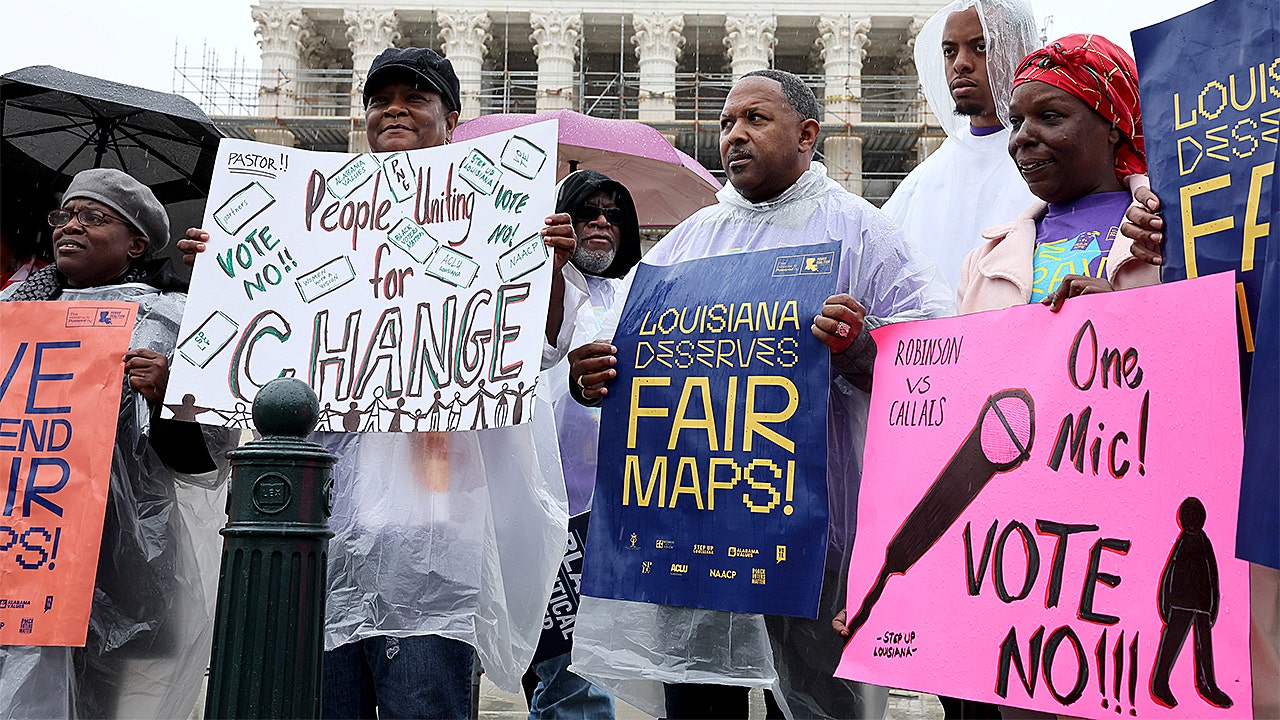
The dispute sits squarely in the middle of the state’s 2021 map redraws, which were attacked as diluting Black voting power. But after the Supreme Court’s ruling in Louisiana v. Callais, challengers need more than claims that a map weakens their influence at the ballot box. They have to show a strong inference that lawmakers intentionally discriminated on the basis of race.
That shift matters a lot in Georgia, where race and party often point in the same direction. Black voters overwhelmingly back Democratic candidates, so any map that helps Republicans can easily be framed as either partisan strategy or racial line-drawing, and that overlap makes the challenge harder to prove. Courts now have to sort through those motives with more care instead of treating the election effects alone as enough.
The 11th U.S. Circuit Court of Appeals recently sent the case back to U.S. District Judge Steve Jones after vacating his earlier ruling against the state’s maps. Jones had previously found for the challengers and ordered Georgia to create more majority-Black districts, including one congressional seat, two state Senate districts, and five state House districts. Now he has to revisit that decision through the new lens set by Callais.
That new lens is a big deal because it narrows the path for Section 2 claims. Before, plaintiffs could focus heavily on whether minority voters lost the ability to elect their preferred candidates, even if intentional discrimination was not spelled out in so many words. Now, courts are being pushed to ask a different question: was race actually the driving force behind the map, or was it politics doing the heavy lifting?
Georgia’s side has a strong answer to that. State officials can argue that the mapmakers were chasing partisan gain, not targeting Black voters because of their race. Since Black voters in Georgia tend to support Democrats, the state can say the lines reflect political calculations that are legal, even if they are harsh and highly effective.
That is why some election law observers think the challengers are in a tight spot. If the evidence shows lawmakers wanted to help Republicans, that is not the same thing as proving racial discrimination, and the Supreme Court’s new standard demands that distinction. The burden is not just to show bad outcomes, but to tie those outcomes to a prohibited motive.
The original lawsuits, filed by Black voters and voting rights organizations between late 2021 and early 2022, argued that the maps stripped away Black political power in violation of the Voting Rights Act. Jones agreed in 2023, but Georgia responded by passing replacement maps that followed his order while keeping the GOP’s broader advantage intact. Those newer districts were used in the 2024 elections and remain in place heading toward 2026.
Hans von Spakovsky said he does not see the challenge clearing this newer hurdle. He argued that earlier rulings leaned too heavily on the idea that partisan gerrymandering somehow became a Section 2 violation, and he said the Supreme Court has now made clear that courts must separate racial discrimination from political behavior. In his view, voting patterns driven by politics are not the same thing as racial dilution.
What happens next depends on how Jones handles the remand. The plaintiffs may try to add new evidence, update their analysis, or present revised maps that address the Supreme Court’s requirements more directly. Georgia, meanwhile, can press the idea that the case already had its full hearing and should be judged on the existing record.
Even with all that legal back-and-forth, the map drama is not likely to move Georgia’s lines before the 2026 midterms. The appellate court did not tell the state to restore the original 2021 maps, and Georgia has already run primaries under the revised districts. That leaves the courtroom fight alive, but the political map on the ground stays put for now.
