
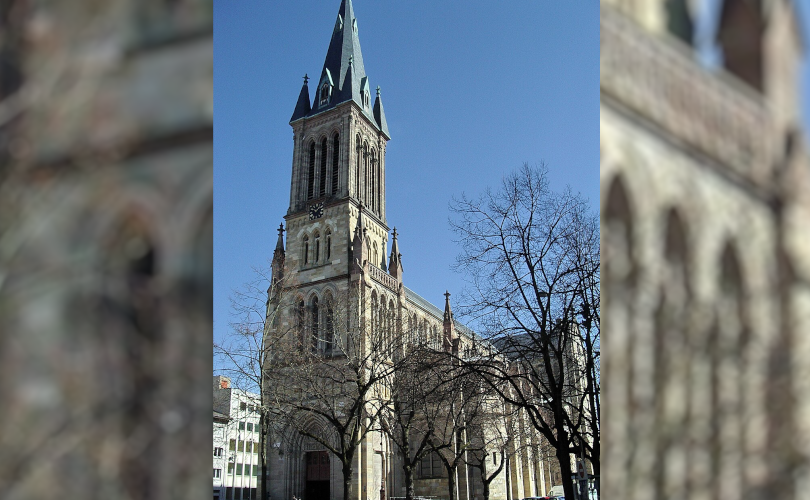
A brief but violent daylight attack left a French Catholic church badly damaged when a man used an altar cross to rip open three confessionals that date from the early 19th century, an act that has shocked parishioners and raised fresh questions about protecting historic religious sites.
The scene inside the church was chaotic and raw, with the carved wood of the confessionals bearing the marks of force and the quiet of a worship space broken in an instant. Objects meant for private rites and reflection were turned into evidence of a rapid, destructive gesture, and people who walk the aisles now feel the jolt of an attack that happened in broad daylight. The fact that the damaged confessionals are from the early 1800s deepens the sense of loss, because those pieces connected present worship to generations long past.
Heritage specialists and church caretakers are now facing practical problems: how to assess the structural harm, how to conserve fragile woodwork, and how to replace or restore pieces that carry both artistic and spiritual value. Restoration work on antique liturgical furniture demands skill, time, and money, and small parishes rarely have the budgets to respond quickly to sudden vandalism. Even when restoration is possible, the original craftsmanship and patina are often impossible to fully replicate, leaving a permanent scar where continuity once stood.
Beyond the material damage, there is a deeper emotional impact on parish life, because confessionals are not merely furniture; they are places where people seek guidance and absolution, where private conversations between clergy and parishioners occur. That intimacy was violated in a single violent episode, which can leave congregants feeling exposed and unsure about returning to a space that suddenly feels less safe. Religious communities tend to move slowly toward healing, and this kind of damage intensifies the need for pastoral care and reassurance.
Security concerns are now part of everyday planning for many churches, and this incident will push leaders to weigh the right balance between openness and protection. Locking doors or adding cameras can make worshippers feel watched, but ignoring the possibility of repeat incidents risks further losses to both people and property. Local officials and church boards will be asked to coordinate on sensible steps that respect worship while deterring vandalism, and those conversations can reshape how congregations relate to their buildings.
The attack also raises questions about how society values historic religious sites, whether as architectural treasures, community centers, or living places of faith, and how those roles can conflict when threats appear. If civic leaders treat historic churches merely as monuments, they miss the way these spaces function as active centers of daily life and spiritual practice. Safeguarding them requires funding and policies that recognize both cultural heritage and the ongoing needs of congregations who use the buildings every week.
People in the parish and neighbors alike will now have to decide how to respond: with increased vigilance, public discussion, or renewed investment in preservation and pastoral outreach. Whatever emerges, the immediate priorities are clear—repair what can be repaired, support those who were shaken by the attack, and consider practical steps to prevent a repeat. The damaged confessionals are a stark reminder that history and faith can be vulnerable and that protecting them takes both care and community will.
