
New research from Penn State shows a tiny, four-minute daily strength routine can lift mobility, balance and leg power for older adults, with measurable gains after 12 weeks while staying simple enough to do at home.
Public health guidance still points to 150 minutes of moderate exercise per week, yet many seniors fall far short of those targets and almost none meet muscle-strengthening recommendations. In this trial the average participant was 74 years old and sedentary, reporting just 18 minutes of activity per week before joining the study.
The team tested a home program called Functional Activity Strength Training, or FAST-2, enrolling 97 adults aged 65 and up and randomly assigning them to either the brief daily routine or a no-intervention control. The goal was to see whether a very small, consistent dose of strength work could move the needle on common mobility tests.
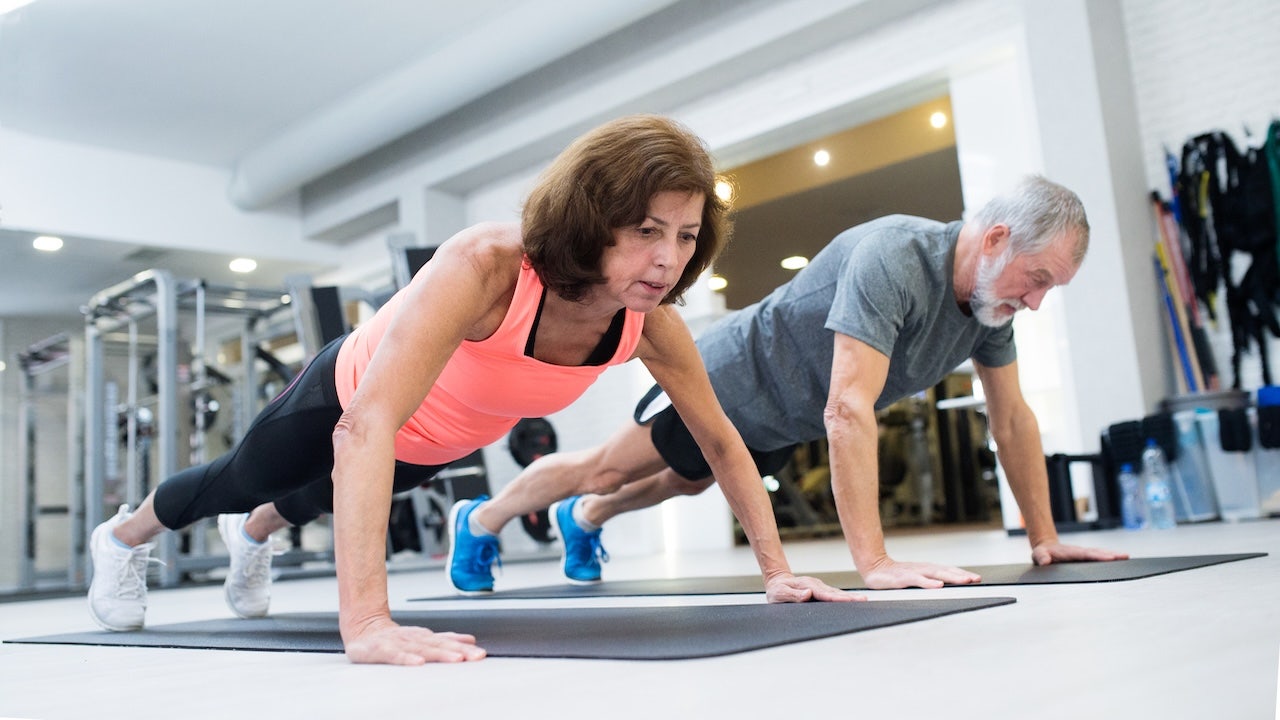
The circuit took exactly four minutes: four basic moves for 30 seconds each, with 30 seconds of rest between exercises. The actions were push-ups, chair stands, two-arm resistance-band rows and stair stepping, and participants were given elastic bands plus an adjustable step to keep things realistic for home use.
To make the work manageable the researchers offered clear written directions and simple modifications, like doing push-ups against a counter or using hands on the knees for chair stands, and participants were encouraged to increase difficulty as they got stronger. “Exercise is actually really complicated, because you have to decide how many repetitions, how far, how many sets, how much rest and how many times per week,” co-author Smita Dandekar, associate professor of pediatrics at Penn State College of Medicine, said in the press release. “It’s hard work … so if we can make it short, we’re part [of the] way there.”
After three months the differences were clear and practical: the exercise group averaged 4.2 more repetitions on a 30-second chair-stand test compared with controls and shaved 2.3 seconds off their time for five consecutive sit-to-stand reps. They also improved one-legged balance by an average of 3.6 seconds, changes that matter for independence and fall risk.
“These indicators predict your future ability to go into a nursing home, your future likelihood of falling and of developing difficulty walking,” noted lead author Christopher Sciamanna, professor of medicine and of public health at Penn State College of Medicine, in the press release. “They give you a sense of whether or not you’re going to be able to be active in the future.”
Notably, participants completed their short workouts on 81 percent of tracked days, a much higher engagement than many longer home exercise programs achieve. The study does have limits: it followed fewer than 100 people for just 12 weeks, did not detail dropout rates fully and left open questions about how the routine works for seniors who already rely on walkers or who have significant cognitive decline.
Those caveats mean this is promising but preliminary evidence, showing a minimal time investment can produce meaningful physical improvements in older adults who were previously inactive. The trial was published in PLOS One, and the findings invite larger, longer studies to test durability, safety in broader groups and real-world implementation strategies that keep seniors moving safely.
