
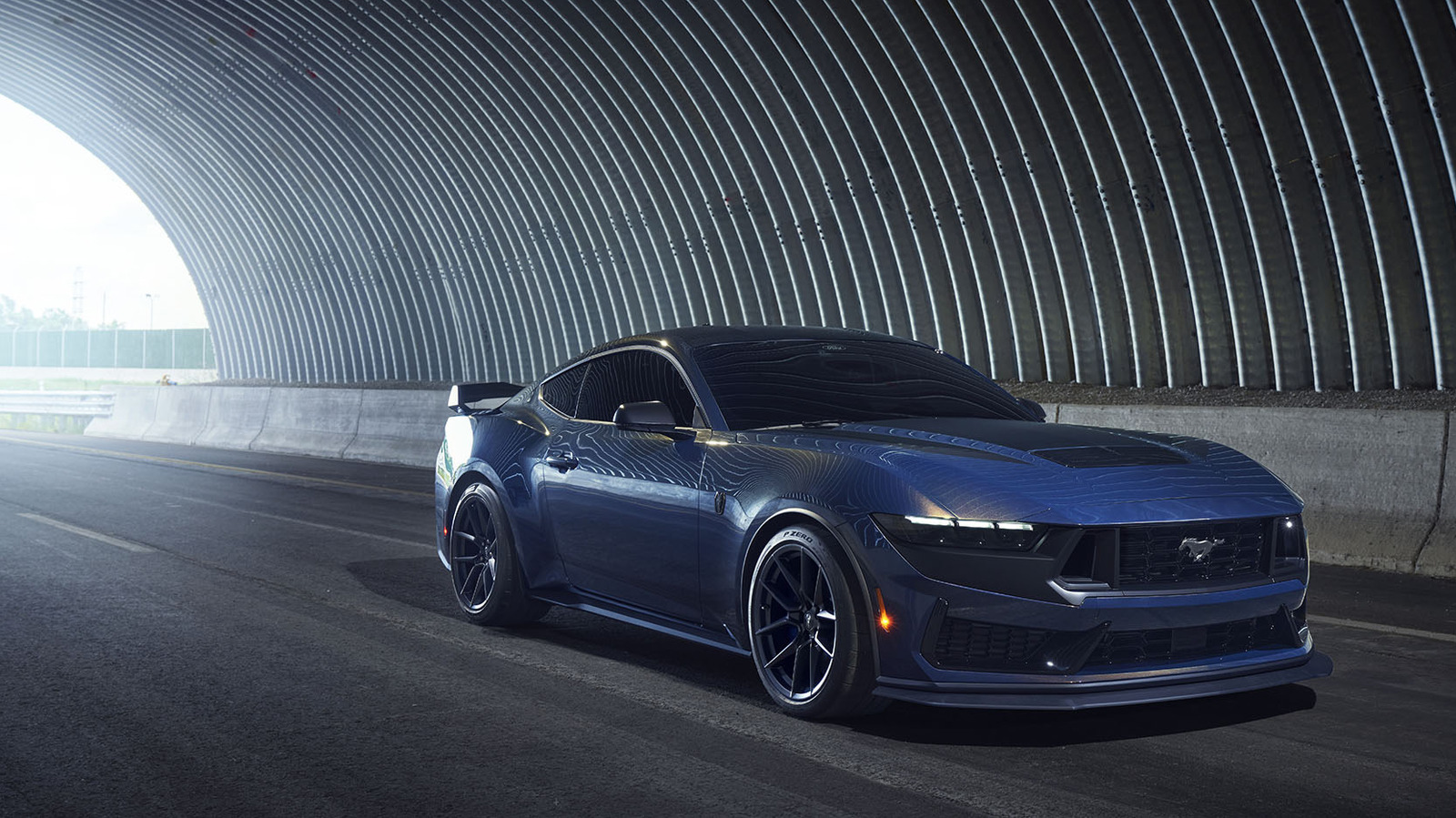
The Mustang Dark Horse promises big numbers on paper, but real-world testing and common engineering limits often tell a different story. This piece walks through why official horsepower claims can differ from what hits the pavement and what owners should actually expect.
Manufacturers publish peak horsepower as a headline figure because it grabs attention, but that number usually represents the engine at its best case scenario. The advertised value is often measured at the crank or under specific, ideal conditions that are hard to reproduce outside the factory. When you take that engine out into the real world, several layers of loss and variability show up between the flywheel and the road.
Drivetrain loss is one of the first culprits. Power measured at the crank does not account for what the transmission, differential, axles, and wheel bearings consume before torque ever reaches the tires. For a rear-wheel-drive car like the Mustang, that loss can commonly range from 15 to 20 percent, so a 500 horsepower claim at the crank can translate to noticeably less at the wheels.
Dyno results are the common reality check, but dynos are not perfect either. Different dyno types and calibration methods produce different wheel horsepower numbers, and ambient conditions such as temperature, humidity, and altitude also change outcomes. A chilly, dense-air day will help power numbers, while hot, thin air will eat them, and most showroom claims do not account for these variables.
Manufacturers sometimes list peak power at a particular RPM that is fleeting and hard to sustain under real driving stress. That number might require fresh tune maps, ideal fuel, and a brand-new engine at perfect temperature. In everyday use, heat soak and engine wear reduce the ability to hit or hold that maximum number consistently.
Fuel, octane, and calibration matter too. Automakers usually test with high-quality pump fuel or even race-grade gas to achieve peak figures, while average drivers may use lower octane fuel that prevents the engine from reaching the same output safely. Factory engine maps can be conservative for emissions and longevity reasons, leaving some potential on the table but never advertised as guaranteed.
Quality control and manufacturing tolerances create another layer of variance between cars. Two Dark Horses rolling off the same assembly line can have slightly different compression, valve timing, or turbocharger tolerances if applicable. Those small differences can produce measurable gaps in dyno numbers and on-track performance, which frustrates buyers expecting identical results across the board.
Tuning and aftermarket modifications complicate the narrative even more. Some owners tweak ECUs, upgrade intakes, or fit exhausts and then achieve wheel numbers closer to or even above factory crank claims. That does not retroactively make the factory figure false, but it does show that the advertised numbers are not universal outcomes for every example of the model.
Marketing plays a role in how people interpret spec sheets. Headlines touting maximum horsepower are easy to understand and share, which is why automakers emphasize them. That emphasis can leave buyers misled if they do not understand the technical context behind those claims or the predictable losses that occur between lab and asphalt.
For buyers and tuners, the practical takeaway is to look beyond the peak number and consider measured wheel horsepower, real-world 0 to 60 times, and independent dyno tests when evaluating a vehicle. Warranty and legal considerations also matter, so stay mindful that modifying software or hardware to chase headline figures can void coverage and invite problems down the road.
Enthusiast communities and independent testers are often the best source for realistic performance expectations, because they run multiple cars under varying conditions and report the spread of results. If you want to know what a Dark Horse will likely produce for your driving life, those collective tests give a far clearer picture than a single factory number.
