
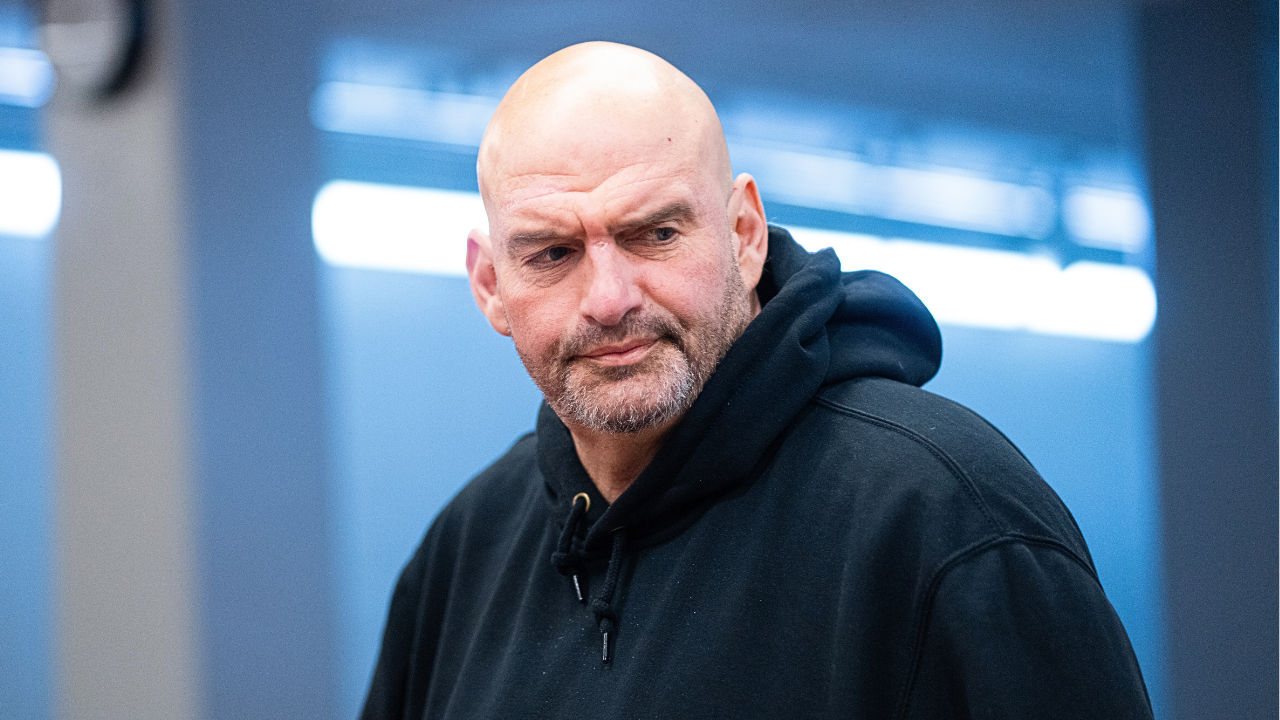
John Fetterman is at the center of an odd political story: Republicans are openly courting him to switch parties while he insists he won’t, yet his health history, outspoken criticisms of his own party, and the tight margins in the Senate keep the rumor mill humming and make his seat one of the most interesting to watch.
This started as a stunt more than a scandal, but it stuck because it touches a lot of real questions about loyalty, electability, and who gets to represent Pennsylvania. Republicans, including the former president, have made a public offer meant to tempt him across the aisle. Fetterman has said he won’t leave the Democrats, but politics rarely stays tidy.
None of this matters as much as what the senator has been through personally. He survived a severe stroke that scrambled his speech and thinking, and he has been blunt about a battle with depression and even past suicidal thoughts. Those experiences shape how he speaks and how voters judge him, and they make anything that sounds personal feel heavier than the usual political back-and-forth.
On top of his health story, Fetterman has become unusually frank about the Democratic Party’s direction, and that honesty has rubbed colleagues the wrong way. He has used sharp language to describe what he sees as a leftward drift, pointing to issues from immigration to support for Palestinians as signs the party has gone off course. That kind of internal critique makes him appealing to some conservative voters and unnerving to party loyalists.
He has also taken positions that put him at odds with the progressive wing, most notably a strong pro-Israel stance that clashes with growing left-wing hostility toward the Jewish state. Those differences are part of why Republicans believe a switch could be plausible, since on several high-profile items his instincts line up with conservative voters. But alignment on a few issues doesn’t erase the long list of areas where he still votes with Democrats.
President Trump openly weighed in, telling Sean Hannity to make Fetterman an offer: “Your job is to tell him: He’s gonna run as a Republican, he’s gonna have our full support, more money than he ever dreamed of, and he’s gonna win big.” That kind of public courting was meant to do more than flatter; it was a strategic nudge aimed at creating headlines and testing loyalties.
Fetterman didn’t take the bait publicly, but he has acknowledged friction in his own ranks, saying his fellow Democrats have been “suspicious or kinda standoffish.” That tension is real: colleagues tend to keep their distance when a senator looks like an unpredictable vote. In a chamber divided by a handful of votes, that unpredictability becomes leverage.
There was a moment of real political theater when Trump invited Fetterman to Mar-a-Lago after securing a second term, calling him “impressive” and “just a common-sense person.” Fetterman later broke ranks to vote to confirm Pam Bondi as attorney general, a move that raised eyebrows back at home and in Washington. Those gestures feed the narrative that he’s more independent than most of his party.
Still, the record matters. Fetterman points out he votes with Democrats 93 percent of the time, which is a statistic Republicans can’t ignore when they talk about a party switch. That record prompts a fair question: could he really wear a Republican label day in and day out when his roll-call behavior is so aligned with Democrats? The optics of friendship with GOP colleagues only go so far against a voting ledger.
“My voting record actually reflects that I am a Democrat. You know, what’s changed me with many of my other colleagues is that I don’t agree and I use like extreme rhetoric and say, but I support what I think most Americans should agree with these things.
“You know, the Democratic Party, you know, we became an open border party, without a doubt. And now that’s wrong, and I support to make our border more security, and deport all of the criminals right now. So I can’t be a Republican because in many other areas, I disagree on that. So whether if I’m politically homeless or whatever, but I’m staying in my party.”
He won his current seat after flipping it as lieutenant governor in the campaign against Dr. Oz a few years back, proof that he can win statewide in a swing state. That victory, plus his public independence, gives him bargaining power if elections tilt either way. With the Senate split so narrowly, a semi-independent Democrat can be valuable to both sides.
Practically, the calculus is simple: if Democrats net three seats, Fetterman’s vote could be decisive; if he loses, it’s not the worst thing in his life considering what he’s already survived. Republicans will keep the offer on the table as long as it makes sense, and Democrats will keep pushing him to stay as long as his loyalty helps them hold the line. The rest is political theater, but with real consequences for the balance of power.

2 Comments
Look Fetterman now has to think real hard about the old adage “shit or get off of the pot;” because he is in the “Demoncrap Toilet” and may have spoken up a bit, but that is nothing in the reality of the horrible situation our Congress is in; like they say about “talking the talk but can you walk the walk!” He should either say he is done with that evil party and get on as a genuine GOP member and reformed human being or get the hell out of politics and go off into the sunset; he is acting like a BOZO at the present time!
He can really talk the talk but just like the many Rino’s already infesting the GOP he can’t and won’t walk the walk!!! Message is Politics as Usual!!! Too many Low-Life’s in our Congress!