
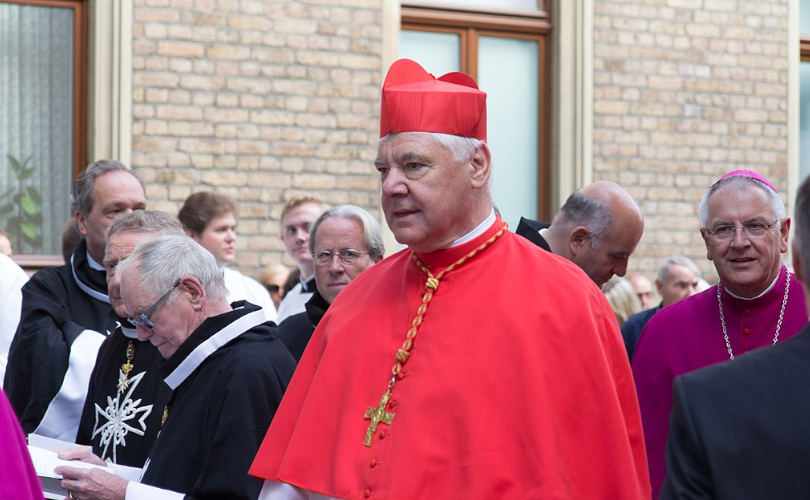
Cardinal Gerhard Müller argues that when Europe abandons Christ it risks becoming “‘a lifeless body’ ripe for takeover by its ‘strongest neighbor,'” a warning tied to rising migration and what he calls “‘Orwellian’ globalism.” This piece looks at why faith and national identity matter in that view, how migration and globalist policies interact with cultural cohesion, and what a return to traditional values would mean for social resilience and political stability.
Müller’s blunt image of a spiritual corpse is meant to shock, and it does. When a society loses its spiritual center it often loses the shared habits and moral instincts that knit communities together. From a Republican perspective the point is simple: institutions fail without a backbone of values, and faith has historically supplied a strong backbone for Western civilization.
Migration is a complex reality, but it is not just a numbers problem. Rapid demographic shifts change neighborhood life, school culture, and public expectations faster than institutions can adapt. That creates friction, and when people feel their way of life is under pressure they look to leaders who promise safety, order, and respect for the traditions that shaped them.
Globalism, as Müller warns, often comes dressed in technocratic language about efficiency and rights. But policies that prioritize open borders, supranational courts, and centralized decision making can hollow out local democracy. The result is a sense that ordinary citizens no longer control the fate of their communities, and that vacuum invites either coercive conformity or a scramble for identity that fuels political polarization.
Religious faith in public life is not about coercing belief, it is about preserving the cultural grammar that guides behavior. Churches, synagogues, and mosques can anchor neighborhoods by promoting charity, civic service, and interpersonal accountability. If those anchors weaken, social bonds fray and the social safety net becomes dependent solely on bureaucratic systems that cannot replace moral formation.
Talk of a “strongest neighbor” is not just geopolitical alarmism. It highlights how weakened internal cohesion can make countries vulnerable to outside influence, whether through migration flows, economic leverage, or ideological pressure. A nation that no longer speaks confidently about its roots is easier to sway with promises of material gain or the blandishments of global elites.
Policy responses should be pragmatic and unapologetic. Secure borders, fair and enforceable immigration rules, and robust integration programs serve both national security and social harmony. At the same time, supporting families, religious institutions, and local civic life helps restore the habits and loyalties that keep a pluralistic society functioning without coercion.
Critics will call this nostalgic. They will argue that an open, borderless order is morally superior and economically necessary. But nostalgia is not the issue. The real question is sustainability. Can a society built on transactional, rootless values survive the pressures of demographic change and strategic rivalries while preserving liberty and order? The Cardinal’s warning forces that question into the open.
There is no quick fix. Moral restoration takes time and leadership that is willing to name uncomfortable truths. Political leaders must be clear about the cultural goods worth defending and the practical steps needed to secure them. That means honest conversation about identity, a renewal of civic education, and policies that make it easier for families and communities to thrive.
In the end the debate is about what kind of public life we want. If Europe wants to remain an actor shaped by its history rather than a passive field for global forces, it will need more than clever treaties and economic charts. It will need a revival of the social habits that once made Western societies resilient, and a politics willing to defend the space where those habits can grow.
