
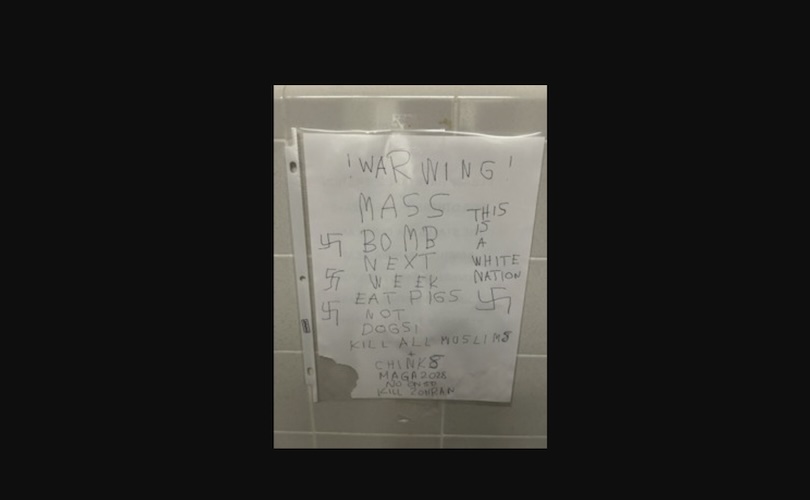
The Justice Department says a San Jose State University graduate student is at the center of a nasty campus hoax that stretched over months and triggered real fear. Prosecutors allege the messages were designed to look like the work of a Trump supporter, even though the accused student presents himself online as a progressive activist. The case lands right in the middle of the ugly trend of fake hate crimes that can shake a campus, waste police time, and put innocent people in the crosshairs.
According to federal authorities, campus police started finding threatening notes in restrooms back in October 2024, and the pile kept growing. More than 20 messages were documented, many of them filled with hateful language and claims about planned violence on specific dates. By the time investigators dug in, the school was dealing with a pattern, not a one-off stunt.
One of the most alarming notes appeared in November 2025 and shouted, “!WARNING! MASS BOMB NEXT WEEK” alongside swastikas and phrases like “THIS IS A WHITE NATION” and “MAGA 2028.” Another message included the ugly line, “Kill all Jews, Muslims, Chinks, and Mexicans.” The setup was meant to scream political extremism, and prosecutors say that was the point.
Authorities say fingerprints tied the message to Ziheng “Tony” Fang, a 30-year-old graduate student studying data science. Federal prosecutors also say Fang’s online profiles paint a very different picture from the false image the notes tried to create, including a rainbow flag and posts that lean anti-ICE, pro-immigration, anti-MAGA, and pro-Palestine. That contrast is a big reason the case has drawn so much attention.
Fang has been charged under federal law for false information and hoaxes, a charge that can bring fines and prison time. In cases like this, the law is not playing around because bogus threats can force schools and police into emergency mode fast. Even without physical injury, the damage is real when students and staff are left wondering whether they are walking into danger.
On a campus, that kind of panic spreads quickly. Administrators may cancel classes, move lessons online, or quietly warn people to stay alert while investigators sort it all out. That disruption does not just annoy everyone for a day or two, because it can undermine trust in the people and institutions that are supposed to keep students safe.
The Fang case also fits into a much broader pattern of hoaxes that have embarrassed campuses and public officials before. Over the years, plenty of fake hate incidents have been exposed after first being treated as proof of rampant racism or political violence. The script is painfully familiar, with someone creating outrage first and hoping the facts can catch up later.
That history matters because once a story like this breaks, people react fast and hard. Media outlets, activists, and campus leaders often rush to frame the incident before the evidence is fully in, and that can amplify the lie far beyond the original location. When the truth finally lands, the correction rarely travels as far as the accusation did.
Texas Democrat Taral Patel also faced charges after allegedly posting racist messages about himself and blaming a Republican opponent. Then there is Jussie Smollett, whose alleged attack in Chicago became a national spectacle before investigators concluded the story had been staged. Those cases keep reminding the public that not every shocking claim is what it first appears to be.
For SJSU students, though, the issue is less about old scandals and more about what happens when someone turns a campus into a stage set for fake terror. Restrooms, hallways, and bulletin boards are supposed to be routine parts of student life, not places where people stumble across threats designed to whip everyone into a frenzy. When that trust gets broken, rebuilding it takes more than one arrest and a few official statements.
