
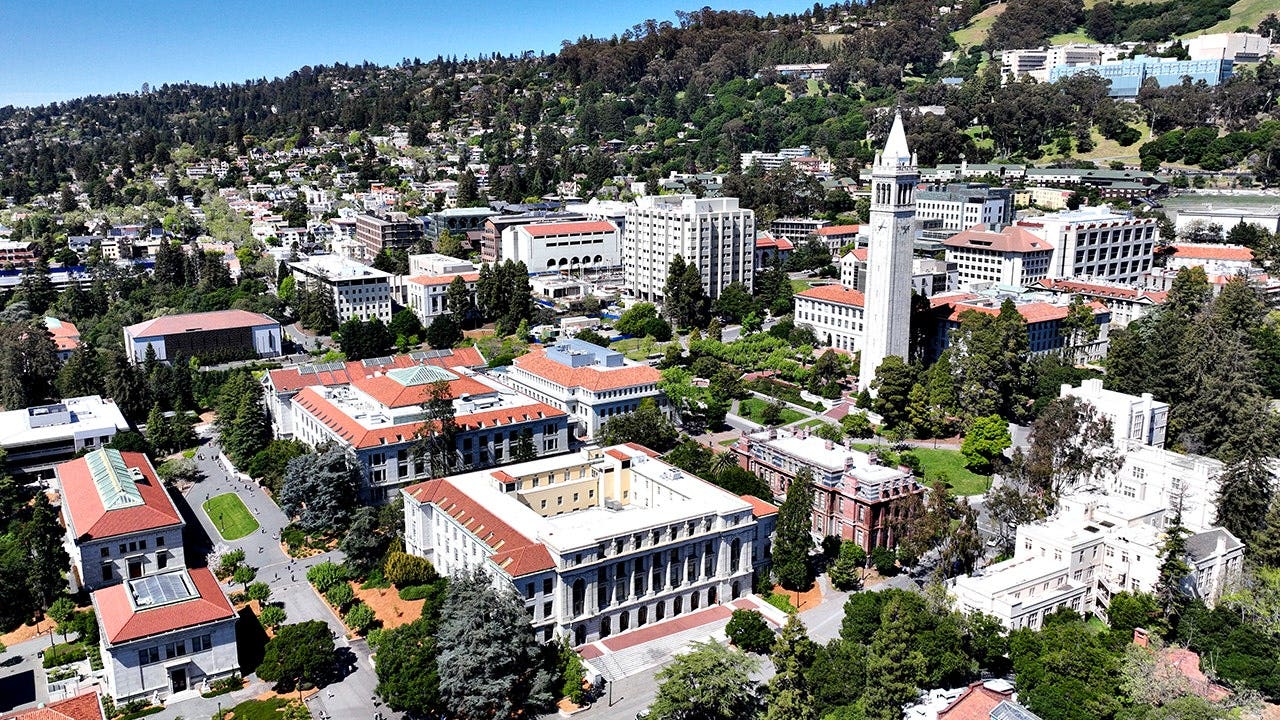
The Trump administration has put UC Berkeley Law in the hot seat, accusing the school of giving Black applicants an edge while Asian and White applicants were left behind. Federal officials say the numbers point to a system that does not just look imbalanced, but legally suspect, and the dispute lands in the middle of a broader fight over race in admissions.
The Department of Justice and the Department of Education said Berkeley Law violated Title VI of the Civil Rights Act of 1964, the law that bars racial discrimination in federally funded programs. The allegation is simple on its face: the school’s admissions process allegedly produced a pattern that favored one racial group over others in a way the government says cannot be squared with federal law.
According to the DOJ, Black applicants in 2025 had “5.8 times higher odds of admission than comparable white applicants.” Officials said the review began in March 2025 and followed years of national pressure on universities to move away from race-based decision-making after the Supreme Court dealt a major blow to affirmative action programs.
The timing matters, especially in California, where Proposition 209 already bars affirmative action in public education. That means Berkeley Law is operating under both federal and state rules that are supposed to keep race from being used as an admissions preference, yet the government says the school’s own data tells a different story.
“The data produced by Berkeley Law demonstrates a strong bias against Asian and White applicants, with a corresponding bias in favor of Black applicants,” the DOJ said. That line sits at the center of the case, because it frames the issue not as a vague concern, but as a direct accusation based on admissions outcomes.
The numbers cited by federal officials get even more specific. In 2024 and 2025, an analysis of admitted students’ LSAT scores found that 37% of Black admitted applicants scored below 99% of admitted White applicants, and half of the school’s admitted Black applicants had LSAT scores “below 95% of the admitted white applicants.”
The department also pointed to a longer trend from 2021 through 2025, saying median LSAT scores for Black admits hovered around 165, while Asian and White admits were closer to 172. Hispanic admits fell in the middle at about 169, and the DOJ said the gap has been steady enough to raise serious questions about how admissions decisions are being made.
“The median Black admit consistently has an LSAT score about 5 points lower than the median white or Asian admits,” the department said in a letter to attorney Tania Faransso, who is representing the law school. That kind of spread is exactly what federal officials are using to argue that the process may be built on something other than merit alone.
Berkeley Law, for its part, is pushing back hard. The school said its admissions process follows federal law and Proposition 209, and it rejected the idea that race is being used as a deciding factor in any way.
“Our admissions policy is clear that race is not considered in any way in admissions decisions,” the school said. “Proposition 209, federal statutes and the Supreme Court’s decisions do not preclude schools from pursuing diversity so long as they give no preferences based on race. Berkeley Law does not do so.”
The school also argued that diversity efforts can still survive if they rely on race-neutral factors like socioeconomic background and personal experiences. “UC Berkeley will spare no effort to provide ample evidence showing that the university complies with all relevant laws, policies and rules governing admissions,” the school said, signaling it is ready to fight the federal findings rather than quietly absorb them.
As of October 2025, Berkeley Law enrolled 1,128 students, including 516 White students, 293 Asian students, 51 Black students and 130 Hispanic students. Those totals do not settle the dispute, but they add more fuel to a fight that has already become part legal battle and part culture war over what fairness in higher education is supposed to look like.
