
- Dodge Charger Sixpack drift builds
- BOOST Coupe and RPM Sedan differences
- Turbocharged inline-six power increase
- Rear-wheel-drive and manual transmission focus
- Competition-ready suspension, cooling, and safety upgrades
- Public appearances and drifting showcase events
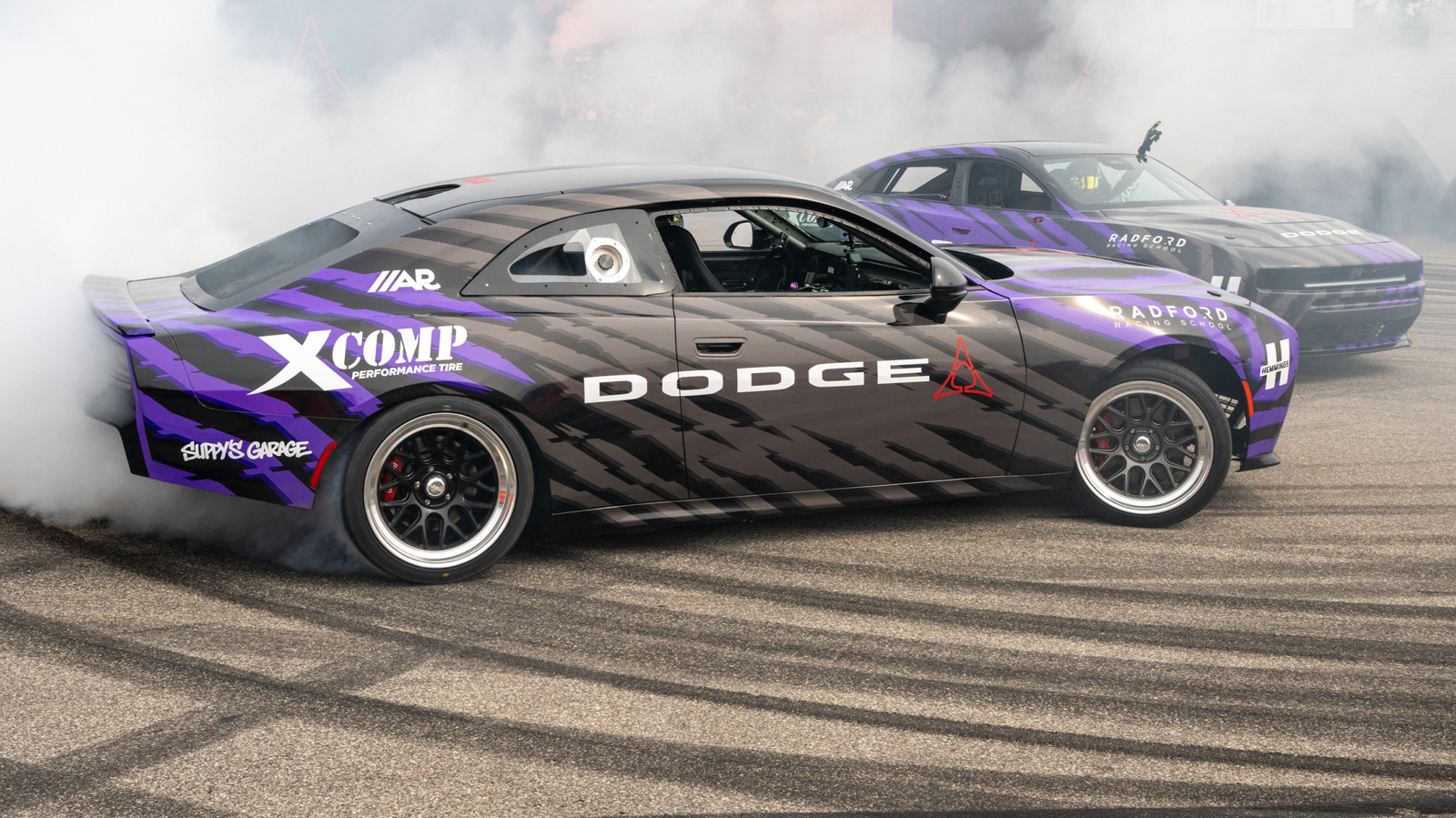
Dodge’s turbocharged Sixpack engine has been turned loose in a way that showroom buyers will not see, and the result is a pair of wild Charger drift machines built to smoke tires and grab attention. One is a two-door BOOST Coupe, the other a four-door RPM drift taxi, and both were shaped for sideways driving instead of everyday commuting.
The project came together fast, with Suppy’s Garage handling the build in just 60 days. These Chargers shed the all-wheel-drive setup in favor of rear-wheel drive, got suspension changes aimed squarely at drifting, and gained a manual transmission, which gives the driver a much more direct way to set the car loose.
That drivetrain swap matters because drifting is all about controlling wheelspin, balance, and momentum. Rear-wheel drive makes it easier to break traction, while a clutch and stick shift give the driver another tool for snapping the rear end out and keeping the car in a slide. It is a very different personality from the regular Sixpack Charger, even if the core engine remains the same.
Under the hood, the numbers get serious fast. Dodge’s twin-turbo inline-six already brings plenty of punch in stock form, but these builds are tuned up to a conservatively estimated 750 horsepower, which is about 200 more than the production Scat Pack version they started from.
The two cars get there in different ways, and that is part of the fun. The BOOST Coupe leans on a single high-output turbocharger, while the RPM Sedan uses a heavily modified Turbosmart twin-turbo setup, both aimed at pushing the Sixpack platform to its limits without disturbing the engine internals.
Almost everything else was touched, adjusted, or replaced. The body panels and windshield stayed put, but the rest of the hardware was massaged for drift duty, including custom intake and exhaust pieces, fuel-system work with CAD fuel cells, heavy-duty driveshafts, axles, and hubs, plus digital displays to keep an eye on the engine.
The list of competition-ready changes keeps going. Hood-mounted blow-off valves help vent exhaust and smoke through the top, the cooling system was moved to the rear, and MoTeC engine management helps keep the whole thing under control when the car is being hammered on the edge of traction.
Safety and chassis control were not treated as afterthoughts either. A full roll cage, a drift-specific braking setup, a hydraulic handbrake, and a quick-change rear end all help turn these Chargers into machines that can survive the abuse of repeated slides, hard entries, and sudden transitions.
The visual payoff is exactly what drifting fans want to see. Smoke pours out, the cars hang at sharp angles, and the Charger shape looks even more aggressive when it is being used like a blunt instrument instead of a boulevard cruiser.
The pair has already made the rounds at Roadkill Nights in August and later at Laguna Seca in September 2026, giving fans a chance to see the builds do their thing in public. The project also stayed in the spotlight through video coverage on Hemmings’ YouTube Channel, where the transformation played out in plain view.
