
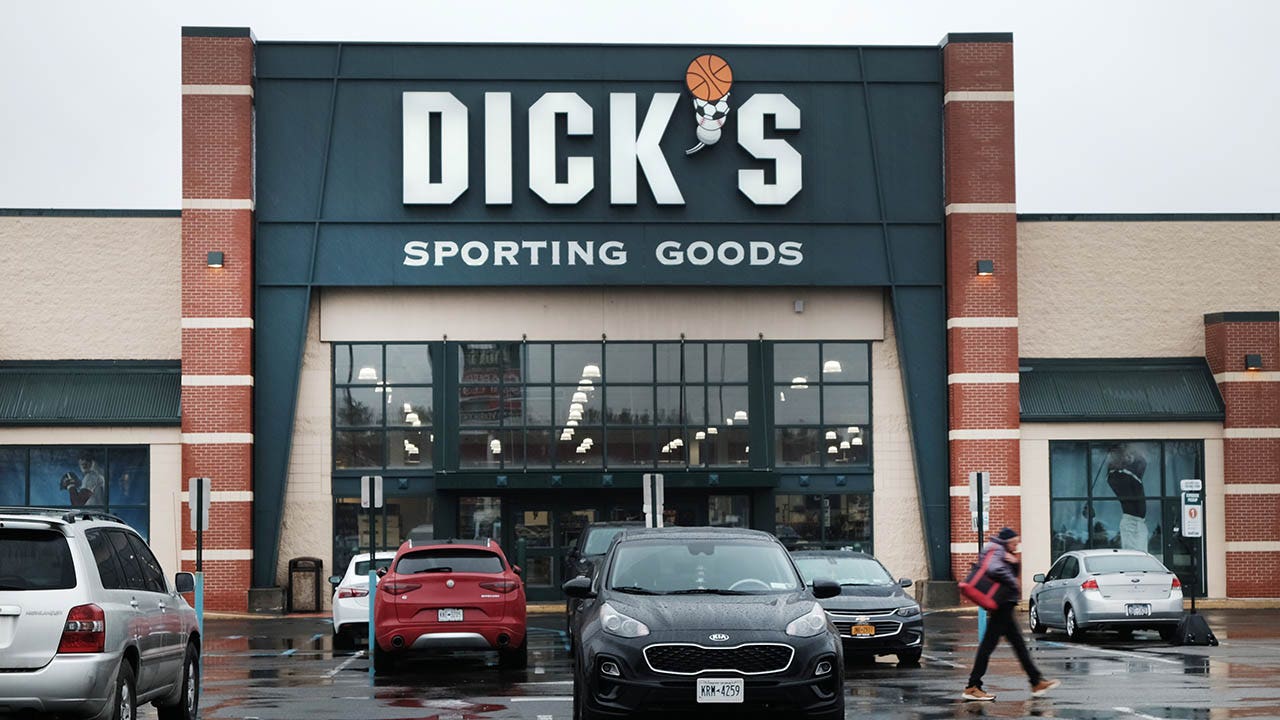
Dick’s Sporting Goods took a hard hit after it warned that demand for athleticwear is cooling, and the latest earnings report gave Wall Street plenty of reasons to flinch. The company missed second-quarter estimates, cut its outlook for the year, and showed that the sneaker and apparel market is not nearly as hot as it looked earlier in the year.
Shares dropped more than 29% in a single session, putting the stock on track for a rare one-day collapse if the losses stick. That kind of move usually points to more than just a weak quarter, and in this case it reflects a bigger shift in how shoppers are spending. With gas and groceries still squeezing budgets, discretionary purchases are getting a much harder look.
The company said consumers are becoming more selective, and that change is showing up most clearly in athletic apparel and footwear. Dick’s had counted on strong demand for newer product launches, but that momentum did not show up the way it expected. Executive Chairman Ed Stack said fewer launches came through in the second quarter and the ones that did land fell short of both industry and company expectations.
That softer tone marks a notable pivot from just a few months ago, when management had been sounding more upbeat. In May, the company had actually raised its annual target and talked about encouraging signs that Foot Locker could get back to comparable sales growth. Now the message is more guarded, and the full-year view reflects that shift.
Foot Locker has been a major part of the story since Dick’s bought the chain for $2.4 billion last year. The deal was designed to deepen the company’s sneaker business and expand its reach internationally, but that strategy is now running into a tougher market. Dick’s said Foot Locker is no longer expected to post growth in annual comparable sales, and the forecast has been reset to flat or down 2%.
Part of the problem is that older-style products are losing some of their pull. Executives said lifestyle and legacy silhouettes were “simply not resonating the way they once did,” which left inventory bloated and forced heavier discounting. When brands have to lean on markdowns to move product, profit pressure usually follows fast.
Foot Locker has felt that strain especially hard because of its exposure to legacy brands and its international footprint. Europe and other overseas markets have been choppy, with geopolitical uncertainty adding another layer of trouble. That is not the kind of backdrop retailers want when they are trying to convince investors that growth is right around the corner.
Neil Saunders of GlobalData said the numbers do not look good for the biggest sneaker brands, even if some of them may have offset the weakness with more apparel sales, including around the World Cup. He also warned that investors should not shrug this off, since weak sneaker demand can spill over into broader retail and brand performance. When the core product starts slipping, the whole category feels the pressure.
The earnings report also showed how quickly expectations can change when sales soften. Dick’s projected annual sales of $21.9 billion to $22.2 billion, down from its earlier range of $22.1 billion to $22.4 billion. Its quarterly profit came in at $3.53 per share, below estimates of $3.76, while net sales of $5.59 billion for the 13 weeks ending Aug. 1 also came up short of forecasts.
There was one more wrinkle in the outlook. Dick’s said it expects tariff refunds to help, but some of that money will be funneled into promotions rather than boosting the bottom line. That may give shoppers more deals in the near term, but it also shows how much work is still ahead if the retailer wants to steady the business and rebuild confidence.

1 Comment
I quit when they stopped selling hunting equipment years back.