
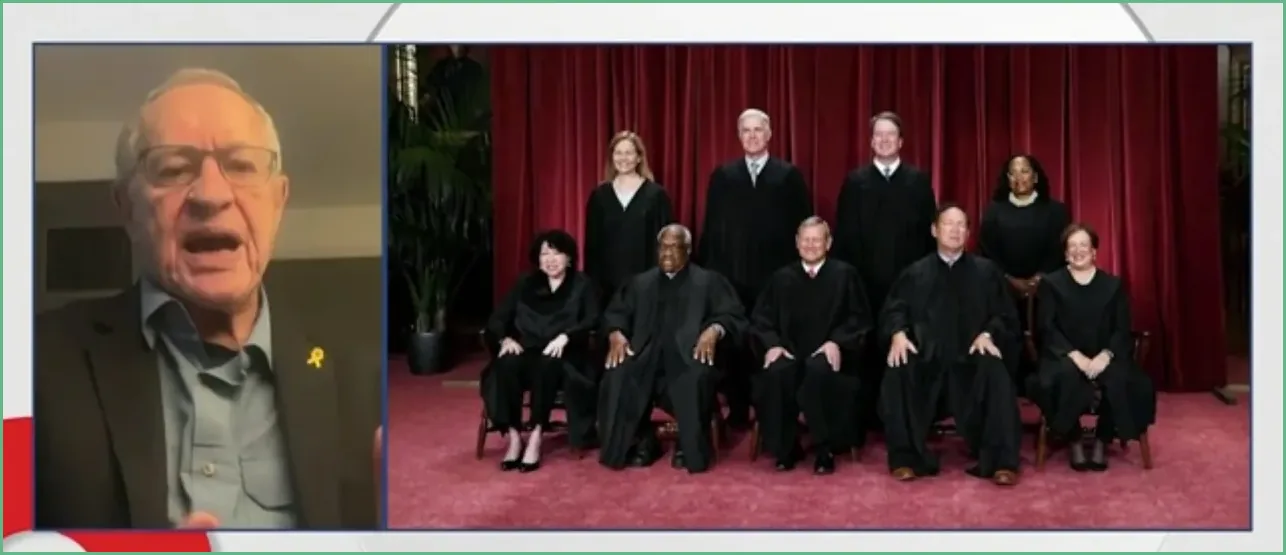
Alan Dershowitz told a cable audience that President Trump’s team missed a vital chance at the Supreme Court by arguing tariffs as a statutory technicality instead of as a constitutional and foreign policy power. He warned the approach risked alienating pivotal justices and could hand Congress more say over trade and national security. The debate centers on whether emergency declarations can lawfully back sweeping tariffs and what that means for the separation of powers.
Dershowitz went on air to say the strategy was flawed and that outside counsel might have steered the argument toward presidential authority. “I wish his lawyers would have consulted more widely with people outside who could have given them advice about how to argue to this Supreme Court,” Dershowitz said. “And they may have lost some of the middle justices, Roberts and Gorsuch, and others. And so if you have to make a prediction, Oliver Wendell Holmes once said the job of a lawyer is to predict what the courts will do.”
The Supreme Court’s questions revealed genuine concern over the scope of emergency powers, with a clear nervousness about granting indefinite authority to the executive. Chief Justice John Roberts pushed back on reading a statute so broadly that it would let a president impose taxes on any import at will. That pushback captures a deeper institutional worry: judges policing the balance between urgent presidential action and unchecked power.
Dershowitz made a hard-nosed prediction after oral argument, noting the tone in the courtroom and how middle-of-the-road justices reacted. “Based on the arguments, I would have to predict the president might very well lose this. Now he could come back, perhaps, and re-litigate this thing on constitutional grounds, but it would take time to do it,” Dershowitz said. The timeline matters when the policy at issue touches immediate national concerns like drug flows and economic leverage.
Part of the friction came from how the case was framed. Instead of anchoring the defense in the Constitution’s allocation of foreign affairs powers to the executive, the defense leaned on statutory reading of an emergency powers act. Solicitor General John Sauer argued that Congress’ grant to “regulate importation” implicitly covers tariffs, but that reading alarmed justices who fear expansive, open-ended executive taxes by another name.
Dershowitz also warned about the practical consequences of the court stripping this tool from the presidency and handing more authority to Congress. “The lawyers on both sides are excellent. But Neil, the lawyer for the businesspeople, basically said, ‘Oh, don’t worry. If the president doesn’t have the power, you just go across the street and get Congress to do it.’ That doesn’t recognize the realities of how Congress operates,” Dershowitz said. His point is blunt: Congress often moves too slowly or not at all when speed and leverage are required.
The tariffs at issue were tied by the administration to declared national emergencies, first pointing to the fentanyl crisis and then to trade imbalances in a later move dubbed “Liberation Day” in some coverage. Those emergency labels are precisely what make this a constitutional fight, because they sit at the intersection of trade, foreign policy, and national security. If the court narrows emergency authority, future presidents could find a key lever for negotiation and protection taken off the table.
Republican-leaning observers note that the stakes go beyond one president’s actions to the practical need for an agile executive branch in foreign affairs. If the judiciary constricts tools the political branches lack the appetite to use effectively, the United States risks ceding leverage to adversaries and weakening deterrence. That concern explains why critics say the legal fight should have leaned harder on the Constitution’s grant of foreign policy power to the president.
There is still a path forward, Dershowitz emphasized, but it will require a different legal posture and patience. Returning to the courts on constitutional grounds is possible, yet it takes time and careful strategy to convince a divided bench. The outcome will reshape how future presidents signal resolve and use economic measures as instruments of national policy.
WATCH:
