
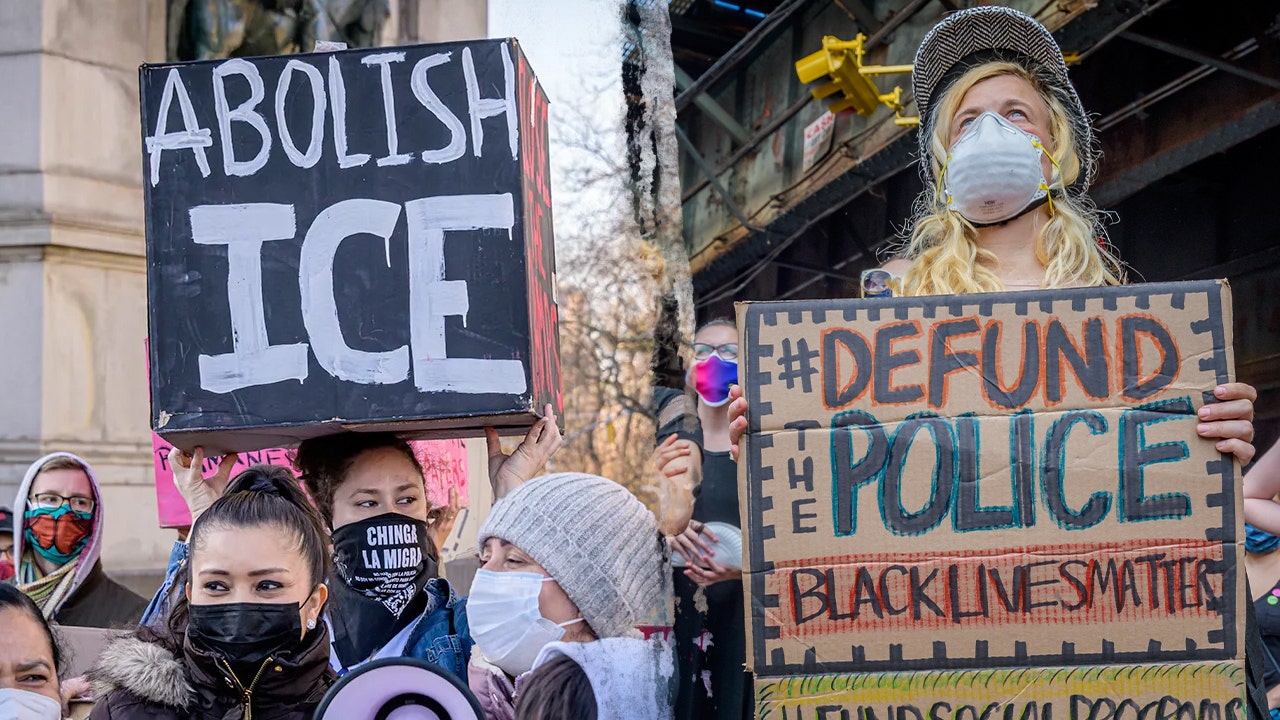
AOC’s casual swipe at “Woke 1” opens a bigger hole for Democrats than the phrase itself. It gives them room to distance themselves from the most abrasive politics of 2020, but it also invites a simple question voters are still waiting to hear answered: what exactly changed, and why?
“Woke 1 was crazy.” That line works as a clean break from the past, especially when the past includes defund-the-police chants, prison-abolition talk, and a political mood that treated dissent like a moral flaw. But a neat label does not erase the record, and voters tend to notice when a party suddenly wants to archive its own history.
The real issue is not whether people can grow or rethink old positions. Of course they can. The problem is when a public reversal comes with no honesty about what was embraced, tolerated, or loudly defended before the mood shifted.
That’s where the whole thing starts to look like compartmentalization. One version of the party lived in 2020, when the loudest voices set the tone and the fringe kept edging toward the center. Another version lives now, talking about affordability, kitchen-table economics, and a fresh start, as if the earlier era were just a weird dream nobody needs to unpack.
Compartmentalization is easy to spot in ordinary life because the contradictions stay hidden until they don’t. Politics works the same way. A party can try to keep the old slogans in one box and the new talking points in another, but the public still remembers who signed off on what.
That memory matters because a lot of 2020 politics was never just policy chatter. It was identity politics with teeth, where belief systems became tests of character and disagreement was often treated like proof of bad faith. Once ideas get wrapped in moral language, backing away from them gets a lot harder than polishing a new message.
That is why the “that was then” approach falls flat. It sounds tidy, but it dodges responsibility. If a politician once supported a movement that elevated extreme ideas, voters are entitled to ask whether the change is genuine or just timed to match the electoral calendar.
There is nothing wrong with admitting a mistake. In fact, that is usually the only respectable way to move on. The catch is that real correction requires a bridge between the old position and the new one, along with some plain talk about what went off the rails.
Without that bridge, the public is left to fill in the blanks. Maybe the party truly reconsidered some bad ideas. Maybe it just realized those ideas had become toxic with voters. Those are very different stories, and Democrats cannot expect people to pretend otherwise.
The problem gets sharper because old statements never really disappear anymore. Campaign questionnaires, archived interviews, and social media posts have a long half-life, and they have a way of crawling back into the spotlight right when a candidate wants to sound newly reasonable. “That was then” is not much of a defense when the quote is still sitting there in black and white.
And that is where the political trap closes. A party can try to move forward without looking backward, but opponents will happily reopen the file. The question is not whether Democrats can rename the era. It is whether they can explain why they are confident enough to call it “crazy” now without saying where the madness came from in the first place.
That explanation would not require a full surrender to the right or a dramatic ideological flip. It would require something much simpler, and much rarer in politics, a straight answer. If the party believes some of its own recent instincts were wrong, voters deserve more than a nickname for the mess.
The easiest path is to keep the old chapter at arm’s length and hope the next election buries it. But the past has a nasty habit of sticking around, especially when it shaped policing debates, prison rhetoric, and the broader culture war that still hangs over the party. Changing the label is one thing. Changing the story is another.
So when a Democrat says “Woke 1 was crazy,” the line lands like a retreat, but not quite a reckoning. It signals distance without fully owning the road that led there, and that gap is exactly where voters tend to focus. The silence in that gap says plenty.
