
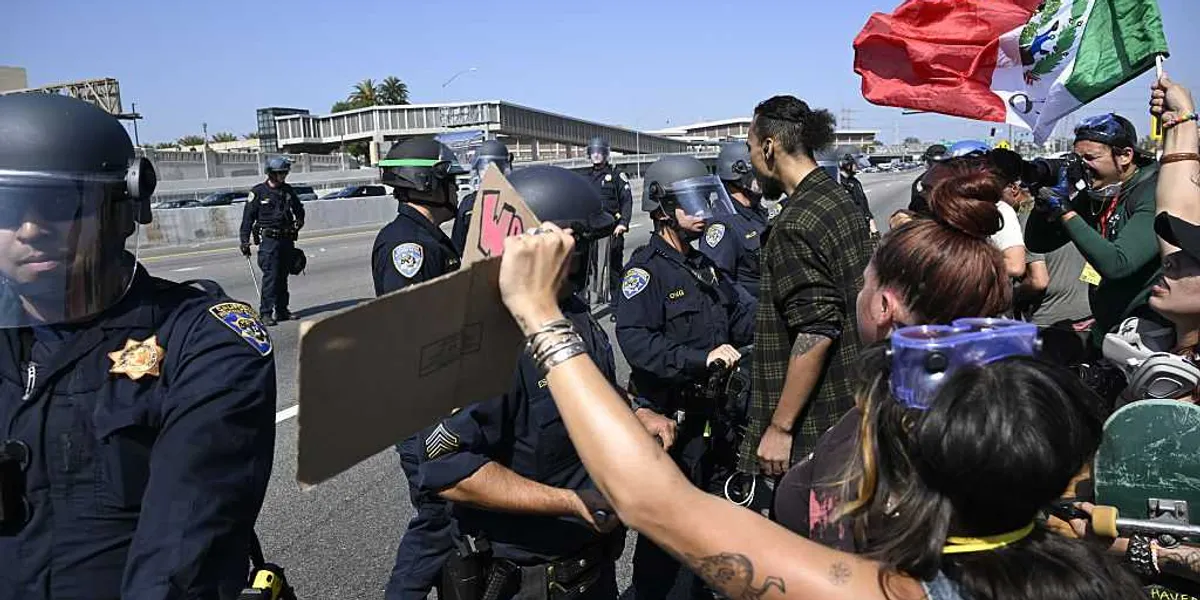
Sanctuary city politics keep running into the same hard wall: the rules may sound generous on paper, but public safety, crime, and immigration enforcement do not stay politely in their lanes. When local officials refuse to cooperate with federal immigration authorities, the result is often a messy mix of confusion, loopholes, and frustration for police officers who are left juggling competing priorities.
Supporters of sanctuary policies like to frame them as common sense compassion, but critics see something else entirely. They see governments signaling that some people can ignore the law without serious consequences, even when arrests, detention, or deportation should already be in motion. That gap between rhetoric and reality has become the central flaw in the sanctuary model.
In cities such as New York and Chicago, the tension has only sharpened. Local leaders may talk tough about fairness and community trust, yet the practical effect is often a system that makes it harder for federal agencies to do their jobs and easier for repeat offenders to slip through the cracks.
One of the biggest problems is simple: once someone is booked into jail, the process should not turn into a political standoff. If immigration authorities have a valid interest in a case, local officials should not be turning the jailhouse into a shield that blocks cooperation and invites more needless risk.
The same pattern keeps showing up in state politics too. Democratic officials in places like New York have treated enforcement as optional, while critics argue that this soft approach sends exactly the wrong message to people who are already violating the law and counting on leniency.
That is why the debate around 287(g) agreements matters. These arrangements let local law enforcement work more closely with federal immigration officials, and they represent a direct answer to sanctuary-style resistance. For supporters, they are not a fringe idea at all. They are a practical way to restore order and make sure serious cases do not disappear into bureaucratic fog.
The sanctuary argument also falls apart when police departments are asked to absorb the fallout. Officers on the ground are expected to protect neighborhoods, respond to violent crime, and keep the peace, yet they are often hamstrung by policies that discourage cooperation with ICE and muddy the chain of responsibility.
That is where the public starts to notice the disconnect. Residents want criminals dealt with, not protected by political theater. They want jails to hold dangerous people, not become revolving doors where immigration status is treated like an afterthought until the next headline hits.
There is also a broader cultural issue baked into the whole fight. Sanctuary politics depend on the idea that enforcement itself is the problem, when many voters see the opposite: weak enforcement is what creates disorder, undermines trust, and rewards people who are already thumbing their nose at the system.
Officials in New York and elsewhere often try to soften the language, but the result still lands the same way on the street. When federal deportation efforts are blocked, delayed, or ignored, the burden shifts to taxpayers, victims, and local communities that never asked to become test cases for open-ended immigration resistance.
Even the agencies involved know the difference between politics and public safety. The Department of Justice and immigration authorities are not operating in a vacuum, and the friction with sanctuary jurisdictions shows how quickly local pride can turn into a national enforcement problem.
That is why so many critics see the sanctuary model as less of a moral stance and more of a legal obstacle. It creates a system where the loudest promises are often the least enforceable, while the people expected to carry the load are the ones left dealing with the consequences.
And that is exactly why the issue refuses to go away. Every time a new case exposes another weak point in the sanctuary framework, the public gets another reminder that feel-good slogans do not protect neighborhoods, and political defiance does not make the law disappear.
