
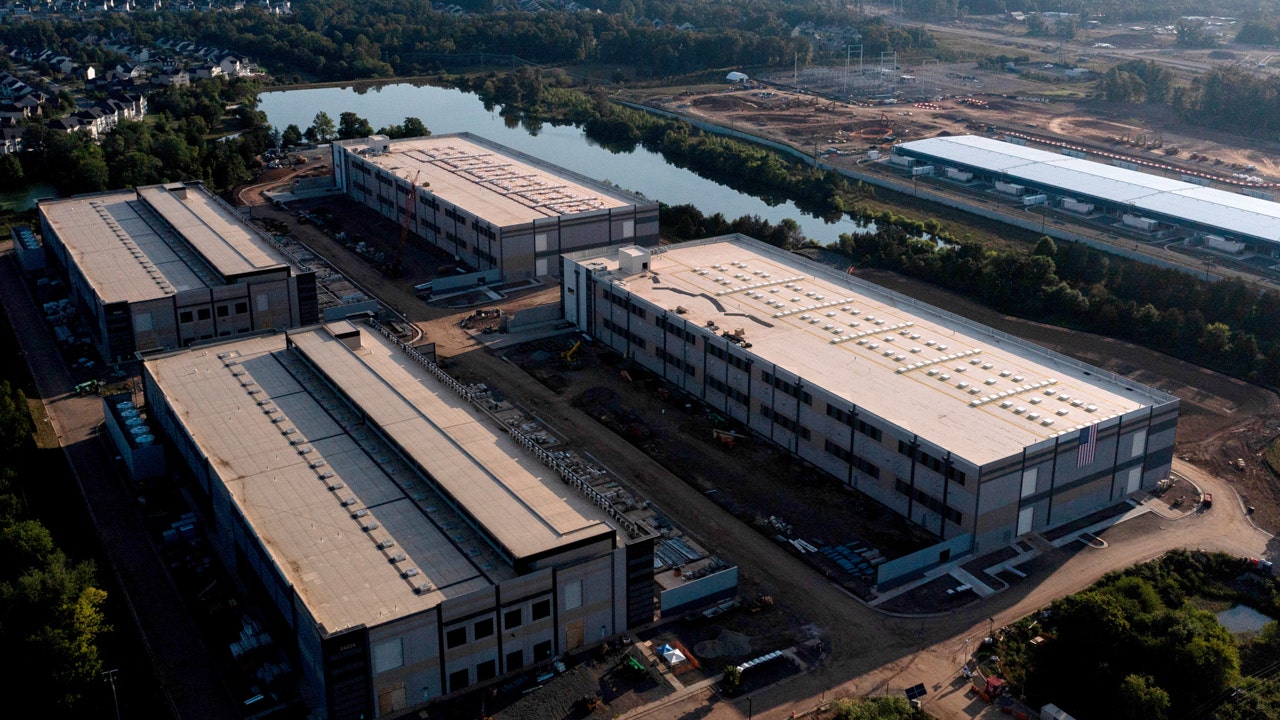
Data centers are quietly turning into a political flashpoint, and not the kind that stays buried in committee hearings. As artificial intelligence keeps racing forward, more Americans are looking at the cost of the machines behind it, from bigger utility bills to heavier water use and sprawling industrial sites in their backyards.
That tension is starting to matter in races that once seemed far removed from tech policy. A recent Gallup survey found 70% of Americans oppose new AI data center construction in their communities, which is a giant warning sign for politicians who think this issue will stay niche. Voters may not talk about server farms every day, but they absolutely notice when a project threatens their bills, their land, or their neighborhood.
The pushback is easy to understand. Data centers need massive power, constant cooling, and serious infrastructure upgrades, and those costs do not disappear just because a company calls the project “innovation.” When residents hear about tax breaks for billion-dollar tech firms while their own electric rates keep climbing, the backlash writes itself.
That does not mean the concerns are fake or that every project deserves a blank check. Communities have every right to ask hard questions about water use, noise, land, electricity demand, and who is actually paying for the new transmission lines and grid work. The problem is what happens when reasonable skepticism turns into a reflexive anti-development movement.
At that point, the debate stops being about fairness and starts becoming a serious competitiveness problem. Artificial intelligence does not live in the clouds by magic. It depends on chips, power plants, cooling systems, transmission lines, engineers, construction crews, and the data centers themselves.
That is why the stakes go far beyond local zoning drama. Data centers are not some side project in the AI economy, they are the backbone of it. If America makes building them too difficult, the investment and the know-how will not vanish, they will simply move to places that are less hesitant and more aggressive.
China understands that perfectly well. Beijing is not sitting around wondering whether it should have the computing and energy infrastructure needed to dominate the next technological era, it is building. The International Energy Agency has already pointed to major growth in data-center electricity demand through 2030, and that competition is not going to slow down because some American communities get cold feet.
The labor angle makes the issue even sharper. Data-center construction has become a real source of work for electricians, laborers, pipefitters, operating engineers, and other skilled trades. In some regions, these projects already account for a huge share of union work hours, which means this is not an abstract debate about technology, it is a paycheck issue for thousands of families.
That puts Democrats in a tricky spot, especially when they claim to stand with organized labor. It is hard to talk about protecting working people while letting activists block projects that are putting union members on job sites right now. If a party says it wants blue-collar growth, it cannot treat the infrastructure behind that growth like a disposable political target.
Republicans have their own test to pass. For years, conservatives have talked about reshoring industry, strengthening energy production, speeding up permits, and competing with China on American terms. Those ideas lose their punch if they only apply when the project is convenient and disappear the second a major facility sparks local opposition.
The smarter path is not to shrug at community concerns, but to answer them directly. Developers need to explain what they are building, how much energy and water it will use, what protections exist for ratepayers, and what nearby communities gain in return. Regulators should also make sure the companies creating the demand are the ones covering the costs, not ordinary families.
There is also a bigger energy story underneath all of this. Electricity demand has been climbing after years of stagnant growth, while generation has struggled under premature plant retirements, congested transmission, and permitting systems that move like molasses. If the country wants to support AI growth without punishing consumers, it needs more reliable generation, stronger transmission, preserved nuclear capacity, natural gas buildout, and serious investment in advanced nuclear power.
Silence from industry is no longer enough either. Companies asking for public support need to explain in plain English why these facilities matter, what jobs they create, and how domestic computing power ties into national security and the competition with China. If that case is not made early, the loudest voices in the room will usually be the ones saying no.
The midterm fight around data centers could end up being a lot bigger than most campaigns expect. It touches jobs, energy, taxes, local control, and the future of American technology all at once. That is exactly the kind of issue that can move fast from policy circles into kitchen-table politics.
