
I’ll outline the exhibit’s core claim, show examples of the work and its tactics, examine the motive behind the display, note historical parallels, and point to the political pushback that follows. This piece looks at the Los Angeles show called ‘Monuments,’ how removed Confederate statues were treated as props for theatrical retribution, and why that matters to anyone who cares about heritage and free expression. The argument is plain and direct: this is less about art and more about punishment, and it reveals a cultural choice being forced on the country.
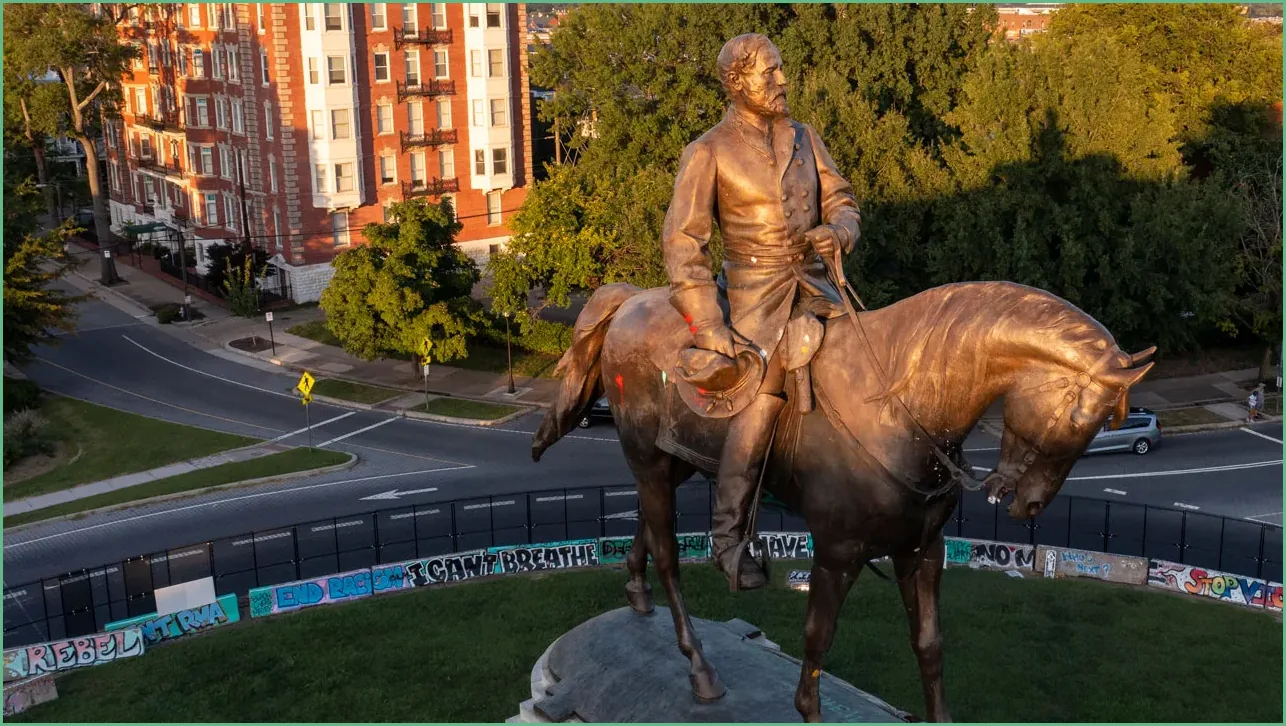
The Brick, in partnership with a contemporary museum, is showing an exhibit that gathers Confederate statues already taken down from public places. Many arrive still bearing protest graffiti; others have been reworked into new sculptures meant to shock. One piece is a literal mutilation of an equestrian statue that once stood in Virginia.
The New Yorker described the exhibit as “at once an act of carnivalesque retribution and a recognition of the Confederacy’s zombie-like persistence.” That phrase captures how the show positions itself as payback while insisting the Confederate past refuses to die. For the organizers, the spectacle is both punishment and proof of continued relevance.
Retribution for whom? The statues are gone from their pedestals already, and the people carved into bronze are fixed in history regardless of what happens to the metal. This display, therefore, is aimed at ordinary citizens who believe public monuments deserve protection and stability, not performative destruction. It is meant to humiliate more than to educate.
One work, originally called Confederate Women of Baltimore, now sits among contemporary photographs of black mothers with injured children. The visual pairing suggests that the grief once memorialized should be silenced or displaced by modern suffering. The implication is blunt: anyone who cares about those older memorials should be marginalized.
The most notorious transformation is titled “Unmanned Drone.” An equestrian statue of Gen. Thomas Stonewall Jackson was cut, reshaped, and made grotesque. Brick director Hamza Walker called it “Ideologically it’s an affront, aesthetically it’s an affront.” If the explicit aim is to offend, we should ask why public institutions are endorsing performance that reads as ritual insult.
These tactics mirror a longer trend where destruction or derision replaces debate. The exhibit reads like curated shame, displaying once-respected craftsmanship as evidence of a discredited ideology. That is not restorative history, it is public ritual designed to humiliate a defeated past and its sympathizers.
There are troubling echoes of the 1937 Degenerate Art show in Berlin, where art was paraded to be scorned. The difference now is the political direction: the modern spectacle targets American symbols the left has declared unacceptable. Using museums to stage political theatre risks turning cultural institutions into partisan tribunals instead of places for discussion.
Meanwhile, the obsession with the Confederacy largely comes from progressive circles who keep dragging historical symbols into contemporary culture wars. There is no viable neo-Confederate movement trying to revive slavery in the streets. The fixation serves as a political cudgel to redefine public memory and constrain what voices may be heard about the past.
Removing statues outright was already a form of damnatio memoriae, and repurposing them into objects of mockery goes further. That is why political pushback matters. The Trump administration has already moved to restore certain monuments and resist wholesale erasure, signaling a clash between those who want to build a shared public memory and those who seek to replace memory with spectacle.
The choice here is not abstract. Communities must decide whether to protect memorials from vandalism and politicized displays or to accept ongoing theatrical indignities in the name of moral correction. That is the fight, and it will shape how Americans remember who they were and what they stand for.
