
- Canada’s uneasy trade relationship with the United States
- Claims that Trump-era pressure pushed Ottawa closer to China
- Mark Carney’s criticism of U.S. demands and dependency
- Disputes over dairy, tariffs, and North American trade terms
- Mixed views on Trump’s trade substance versus his style
- Calls for professional negotiators to get back to the table
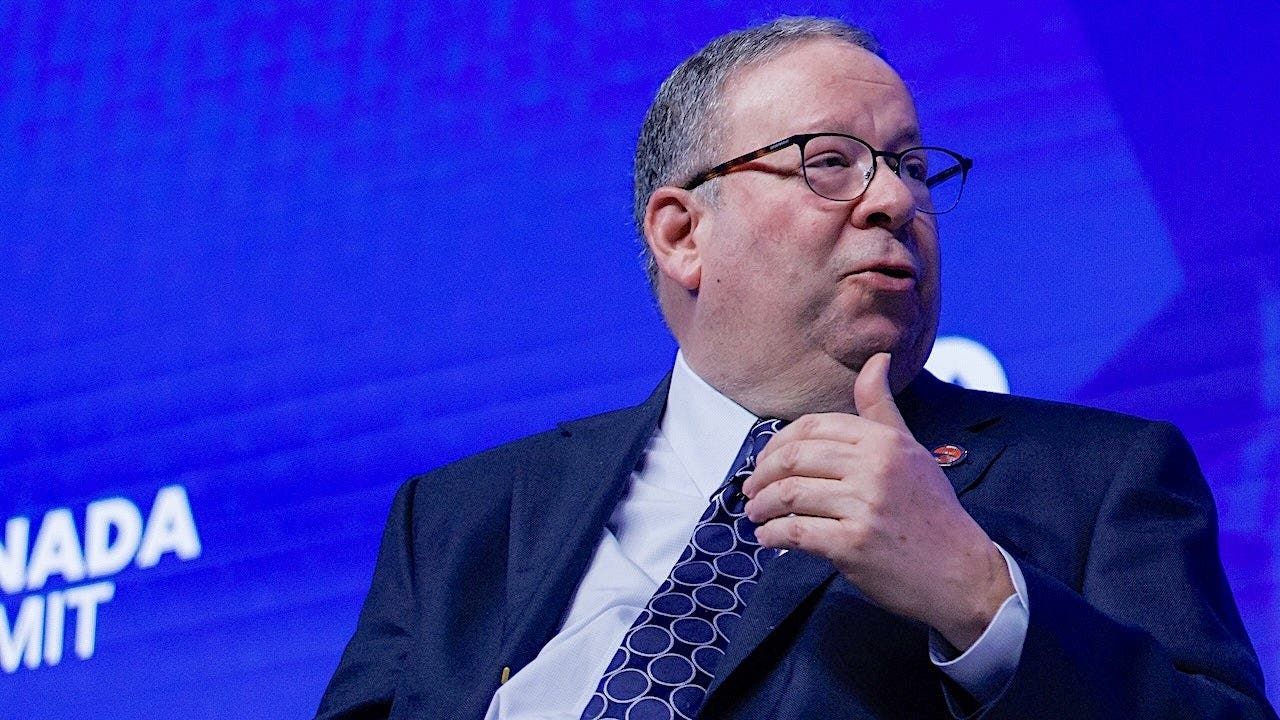
Former U.S. Ambassador to Canada David L. Cohen is laying the blame for some of Ottawa’s recent China drift squarely at the feet of Trump-era trade pressure. His argument is simple enough: when allies feel squeezed, they start looking for other doors to open, even if that means testing the waters with Beijing. That dynamic has turned a tense trade relationship into something sharper, messier, and a lot more public.
Cohen said Canada has “tentatively tried to play some footsie with China,” and he tied that behavior to the broader fallout from hardline U.S. policies. He described the irony as obvious, arguing that aggressive pressure can push friendly countries to consider bigger deals with China instead of drawing them closer to Washington. In his view, that does not strengthen American leverage, it complicates it.
The criticism lands in the middle of a bruising U.S.-Canada trade fight that has already blown past the usual diplomatic friction. Canadian Prime Minister Mark Carney has been blunt about what he sees as Washington’s real goal, saying the U.S. wanted dependency, not partnership. “The most fundamental issue is that the cumulative U.S. demands revealed that they wanted us to become even more reliant on them, not less,” Carney said. “In too many areas, they wanted dependency, not a true economic partnership.”
That sense of distrust has made the trade talks more brittle, especially after negotiations collapsed last month. The dispute is about more than slogans and sound bites, because real business interests are on the line, including the kind of dairy access that has irritated U.S. farmers for years. Cohen acknowledged that Canada’s tariff-rate quota system has been a real sore spot across multiple administrations, and he did not try to shrug it off.
“This is one of the totally legitimate trade issues that exists between the United States and Canada,” Cohen said. “There is contention there that is hurting American dairy farmers. Yes, I will be honest and clear about that.” He also pointed out that the problem did not begin under one president and will not disappear just because the politics are loud.
Even with that criticism, Cohen still gave Trump credit for one major trade achievement: replacing NAFTA with the United States-Mexico-Canada Agreement. He called USMCA a “terrific deal” and said it improved continental trade in a real way. At the same time, he made clear that his problem is less with the policy goals than with the way Trump often delivers the message.
“I do push back at times on some of the rhetoric that President Trump has chosen to use, not necessarily the substance, but maybe the style that he sometimes uses to pursue his substance,” Cohen said. That split matters because the style can turn a hard negotiation into a personal fight, and once that happens, every side starts playing to its own audience. The room gets smaller, the language gets meaner, and the deal gets harder.
Vice President JD Vance has been even harsher, accusing Canada of treating Chinese goods better than products from American border states. “They treat Chinese goods more fairly than they do the goods that come from the people of Maine: It’s insanity,” Vance said. “And what we’ve said to Canada is, ‘Stop it.’” That kind of language captures the frustration on the American side, but it also shows why the talks keep getting knocked off balance.
Cohen still sees a path forward, and he keeps coming back to the same point: serious negotiators need room to work. He praised U.S. Trade Representative Jamieson Greer as a professional and said the people actually tasked with cutting deals were making progress before everything broke down. By contrast, he said Commerce Secretary Howard Lutnick was not the right person to run the trade table, arguing that the job belongs to USTR.
The breakdown itself has become part of the political theater, with each side telling its own version of what happened in those final hours. Lutnick has said Canadians kept adding “crazy ideas” and torpedoed the talks for political reasons, while Cohen said he had no way to know whether that account was true. Still, he argued that Carney’s decision to take the deal back to the provinces made the politics even more complicated, because provincial leaders can carry serious weight in Canadian policy.
What lingers underneath all of it is the bigger question of whether the U.S. and Canada can keep treating each other like trusted partners while fighting over trade, tariffs, and China at the same time. Cohen thinks they can, but only if the noise drops and the adults stay in charge. “You can’t make a deal if you’re not talking to each other,” he said. “Of that, I am 100% certain.”

1 Comment
CCP very strong in Canada for years