
Checklist: Clarence Thomas and Stanford Law School; conservative voices and elite campuses; campus intolerance and ideological divides; protest culture and speaker disruptions; Stanford’s response and public disagreement; the larger fight over free expression in higher education.
Supreme Court Justice Clarence Thomas says some of the nation’s most prestigious schools are effectively closed to conservatives, and Stanford Law School is the name that keeps coming up. His point was blunt: there are places where his presence would not feel welcome, even if the invitation technically exists.
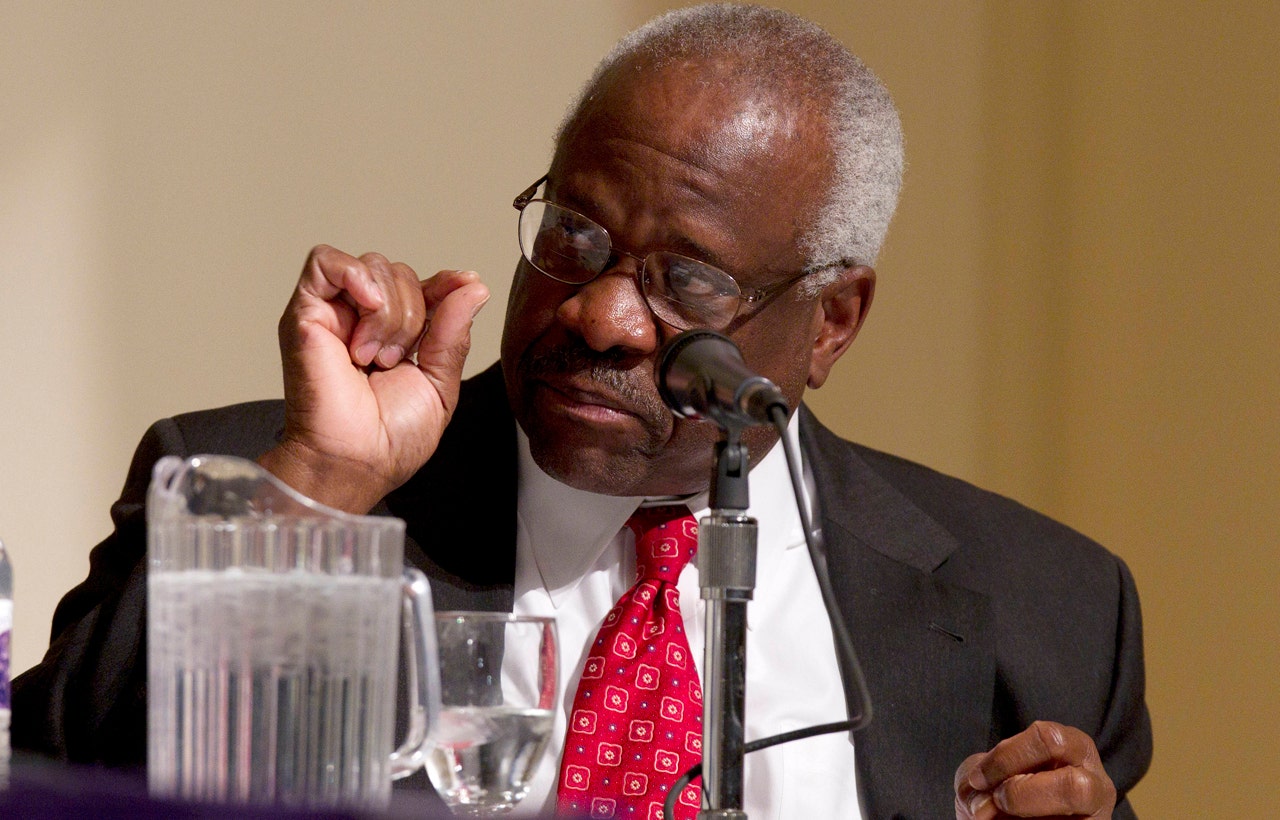
Speaking during a conversation at the Hoover Institution with Peter Robinson, Thomas said he has never been to Stanford Law School and sees that as part of a bigger pattern. In his view, conservative thinkers and judges are often treated as outsiders at elite campuses, where the atmosphere can make open exchange feel more like a slogan than a reality.
Thomas did not soften the message. “That’s the reality,” he said. “That’s the world we’re in, because there’s certain places that are just presumptively off limits. This is the way it works. And that’s true. I mean, I’ve been to Yale Law School, but that’s the way it works. And to say it isn’t, is to lie.”
That remark landed in the middle of a wider conservative argument that higher education has drifted hard to the left. Critics say campuses are too quick to shut out right-leaning ideas, while students are often pushed toward a narrow set of approved opinions by faculty and administrators.
Thomas also tied the issue to the way younger students encounter conservative thought. He said that without YouTube, the ideas of economist Thomas Sowell, who shaped his own worldview, would be far less visible to the next generation because some of those views are treated as unpalatable inside academia.
“And so what these kids are getting is all that stuff [that] is not there,” Thomas said, referring to colleges. “It’s just on YouTube. It’s available to everybody, and they get to make up their own mind.” The comment underscored a simple worry: if institutions won’t host certain voices, students lose out on the chance to hear them face to face.
Stanford pushed back on Thomas’ suggestion that he would be unwelcome. A spokesperson said the school would be “honored” to host him and pointed to the Stanford Constitutional Law Center as a place that regularly brings in members of the judiciary for campus discussions.
The school also said its students and faculty would welcome a chance to hear Thomas discuss the Court, the Constitution, and the law. That response offered a sharp contrast to Thomas’ claim and left the dispute hanging in the open, with each side describing the same environment in a very different way.
The tension around Stanford did not come out of nowhere. In recent years, the school has faced major backlash over conservative speakers, especially when protests have spilled beyond criticism and into direct disruption.
One of the most visible flashpoints came in 2023, when Judge Stuart Kyle Duncan of the U.S. Court of Appeals for the Fifth Circuit visited campus for a talk titled “Covid, Guns, and Twitter.” Student groups opposed to his judicial record pushed hard to cancel or move the event online, and when that failed, a crowd of students showed up with signs and bullhorns that drowned out the discussion.
Tirien Steinbach, then an associate dean at Stanford Law, stepped in during the turmoil and acknowledged Duncan’s free speech rights while also siding with the protesters. Her question, “Is the juice worth the squeeze?” became the kind of line that lingers because it captures how ugly the exchange had become.
The fallout was serious. Stanford leaders later apologized to Duncan, required student training, and made the school’s position more explicit by saying protest is allowed, but blocking a guest speaker from actually speaking crosses a line.
There had already been other signs that the school was not immune from this kind of clash. In 2020, then-Texas Solicitor General Kyle Hawkins faced a walkout after some student organizations objected to his role in litigation tied to DACA, and more than three-quarters of the audience left just minutes into his remarks.
All of that gives Thomas’ remarks extra weight, even if he did not directly point to those episodes during his conversation at Hoover. The debate is no longer just about one justice or one campus, but about whether elite schools still know how to handle ideas they dislike without turning every visit into a brawl.
That question keeps landing in the same place: who gets to speak, who gets heard, and whether a school that prides itself on openness can still make room for views it does not celebrate. For conservatives looking at the modern campus, the answer often feels obvious long before anyone takes the podium.

1 Comment
All colleges then right save Tech Ed