
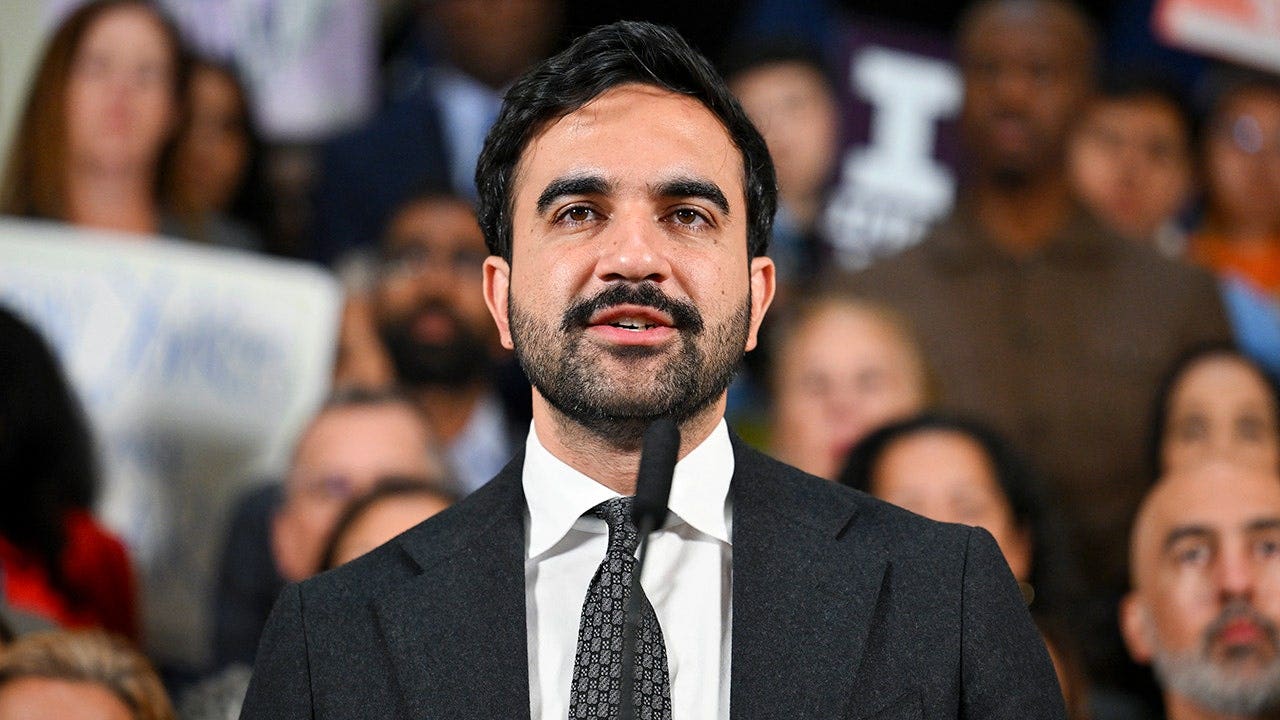
Mamdani’s Italian Heritage Month message sparked a fresh political brawl in New York, with critics pouncing on his praise for Vito Marcantonio and calling it a strange choice for a civic tribute. Queens Councilwoman Vickie Paladino unloaded on the mayor, accusing him of dressing up old left-wing ideas as heritage pride and turning a cultural moment into a fight over ideology.
In his post on X, Mamdani wrote, “Happy Italian Heritage Month, New York. Here’s continuing to fight for Vito Marcantonio’s vision of a government that works for all working people,” and that line lit up social media fast. Marcantonio was a long-serving East Harlem congressman who began as a Republican before moving into the left-wing American Labor Party, and his record has long carried the baggage of Cold War-era suspicion.
His opposition to U.S. involvement in the Korean War and his legal work for the Communist Party put him on the radar of federal investigators, and the FBI kept files on him during that period. That history matters because it explains why praise for Marcantonio lands with a thud for a lot of people who see him less as a proud Italian-American figure and more as a political symbol with a heavy ideological load.
Paladino wasted no time making that case. She called Marcantonio an “obscure Italian-American communist” and said Mamdani was pushing “communist propaganda,” a phrase that instantly sharpened the clash and turned a heritage post into a broader attack on the mayor’s politics.
“Of all the great men and women of Italian descent who’ve contributed to New York City and the United States, this is the idiot he picks,” Paladino wrote on X. That line cut to the core of the complaint, which was not just about Marcantonio, but about why Mamdani would highlight him over the many better-known Italian-American names tied to New York’s history.
She kept going, urging Mamdani to stop leaning on his own Italian background while championing someone she viewed as a bad fit for the occasion. Paladino said he was “physically incapable of being anything other than a loathsome propagandist for communism,” a harsh line that showed just how little patience she has for his messaging.
Paladino then shifted from politics to personal history, drawing a sharp contrast between Mamdani’s post and her own family’s story. She said her father fought in World War II against Italian forces under Benito Mussolini, while her mother raised five children alone and worked in a button factory, a reminder that for many families, Italian-American identity is tied to sacrifice, labor, and assimilation.
“We wanted to become Americans, and our people were proud to learn the language and wave the American flag,” she wrote. “That’s what being an Italian-American in New York means,” Paladino added. “Not the communist propaganda Zohran is pushing here.” The message was plain and unapologetic, framing the whole dispute as a fight over whether ethnic pride should celebrate American tradition or revive old radical politics.
The clash also fit a larger pattern around Mamdani, whose public image has repeatedly drawn fire from critics who say he courts controversy instead of calming things down. For supporters, he is speaking to working people and challenging old power structures, but for opponents, every symbolic gesture seems to come wrapped in another ideological fight that lands hard in a city already overloaded with them.
Mamdani’s office did not immediately respond to requests for comment, leaving the criticism to hang in the air while the online pile-on kept rolling. In a city where identity, history, and politics are always tangled together, even a holiday message can turn into a full-scale street fight, especially when the name attached to it still carries the smell of another century’s ideological battles.
