
Bob Woodson lived a life that tracked America’s hardest shifts: from the forced separations of segregation to the dizzying choices of freedom, from organizing in the streets to building practical institutions that lifted people without relying on pity. This piece follows his journey from a youth in Philadelphia projects to the founder of the Woodson Center, his fight against victimhood narratives, and the projects he launched to restore agency and dignity to Black communities.
Born Robert Leon Woodson in Philadelphia in 1937, he grew up in housing projects after his father died and learned early what poverty and resilience look like. Dropping out of high school at 17 and joining the Air Force, he later pushed himself into college and graduate school, carrying the scars and lessons of a broken neighborhood. Those early years shaped a man who saw clearly how failing institutions and fractured families destroy promise.
Woodson marched and organized with civil rights groups, but he never rested on victories alone; he knew that legal change is only the doorway to harder work. Time after time he tested mainstream organizations and found them wanting, convinced that top-down policies too often produced dependency instead of independence. In 1981, with a modest $25,000 grant and decades of street-level experience, he created the National Center for Neighborhood Enterprise, later renamed the Woodson Center.
He framed his mission bluntly: connect people to what he called “his people” and to the American Dream, but not through guilt or government dependency. He criticized a liberal welfare approach that, in his view, trapped people in poverty while enriching professionals and politicians who managed that poverty. As he once wrote, he had “spoken out against a liberal agenda that has trapped millions of low-income blacks in a state of dependency and used the conditions of poor blacks to establish race-based policies that benefit middle- and upper-income blacks.”
Woodson’s politics were practical, not performative. He mocked the politics of perpetual blame with a ritual line he used at events: “I absolve every one of you. Not one of you is guilty. I absolve all of you of the racial sins of the past.” That line landed as a joke, but its purpose was serious: to take Whites off a guilt pedestal and invite them to work alongside Blacks as equals, accountable to the same tasks of rebuilding communities.
His method was simple and stubbornly local. The Woodson Center trained more than 2,600 faith-based and community leaders across 39 states, helping them leverage funding well beyond the center’s modest budget. These were not Washington-made blueprints; they were solutions crafted by people closest to the problems, the kind of bottom-up work conservatives often argue actually rebuilds civic life.
He also fought cultural narratives that he believed ruined young minds. Sickened by what he called a growing story of victimhood, he pushed a different kind of civic education that highlighted Black achievement and self-reliance. “How can you do that to children? It’s abuse,” he said about teaching kids to see themselves primarily as victims, insisting that a healthy identity must include examples of triumph and institution-building.
That conviction produced 1776 Unites, a direct response to narratives that center slavery as the defining thing about America. The project celebrated entrepreneurs, leaders, and ordinary people who built institutions and wealth against severe odds. It aimed to plant possibility where fatalism had taken root and to remind young people of a broader, more hopeful heritage.
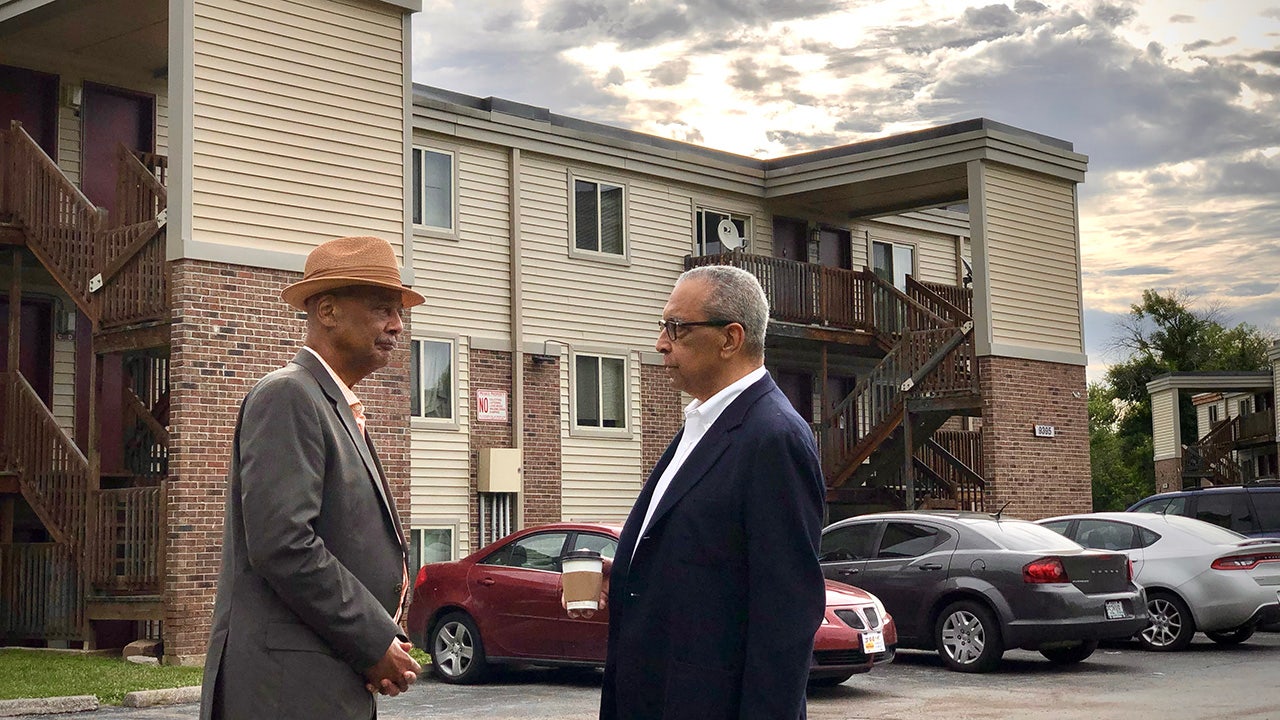
I remember him in Ferguson, Missouri, clear-suited and fedora-capped, praying where Michael Brown was shot before speaking plainly about choices and consequences during an interview for the documentary “What Killed Michael Brown?” He said that if Brown had valued his life he would not have risked it the way he did, and Woodson spoke that truth with sorrow, believing that blunt honesty was a pathway to healing and change. For him, naming hard truths was never about blame; it was about restoring value to life.
Bob Woodson died at 89 on May 19, 2026, leaving a life full of stubborn, hands-on work and an insistence on human dignity without dependency. His approach was to build capacity where people live and to invite everyone to join as equals, accountable and responsible. May God bless Robert L. Woodson Sr. May we have the strength to carry on his work.
