
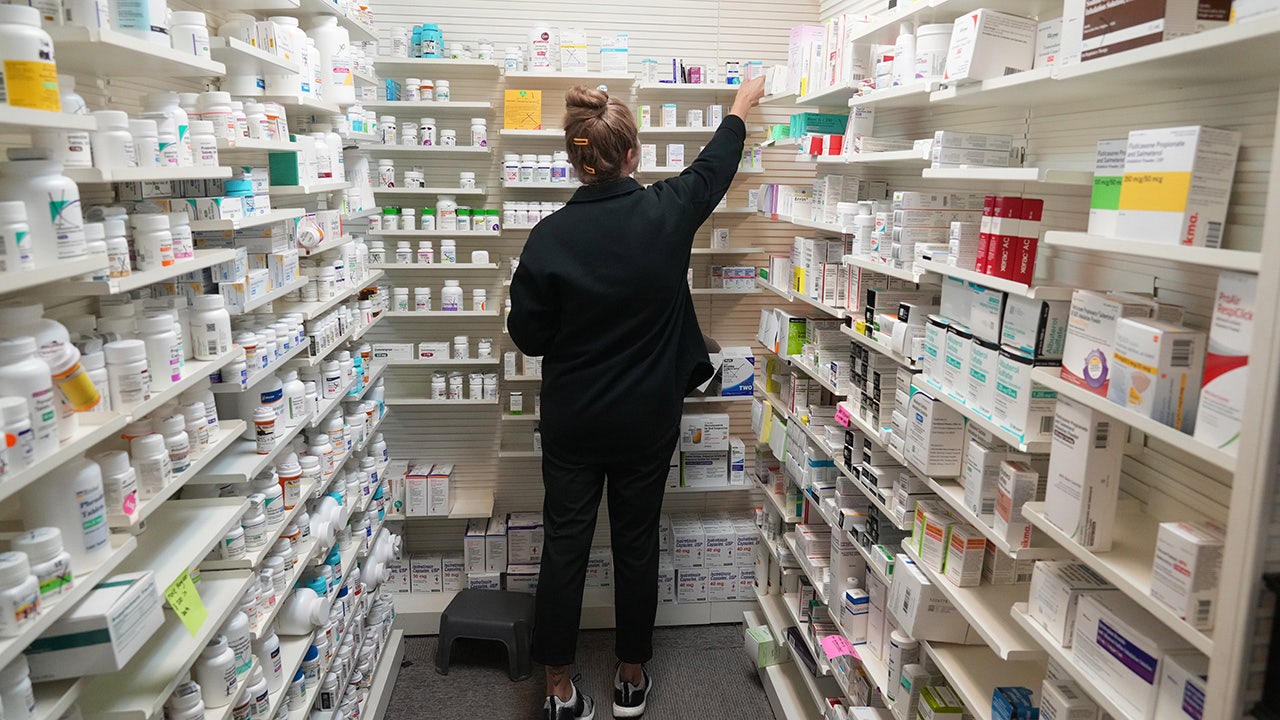
China’s grip on America’s drug supply is more than a supply-chain annoyance. It reaches into national defense, public health, and the basic question of whether the country can protect itself when the pressure is on. The risk is simple and ugly: if a rival controls the ingredients behind lifesaving medicine, it can squeeze, distort, or disrupt access when it matters most.
The United States makes only a sliver of the world’s active pharmaceutical ingredients, while China produces a far larger share. A Johns Hopkins study found that China supplies more than 60% of the essential components needed for antibiotics, which means the country is not just a big player, but a gatekeeper. That kind of dependence leaves hospitals, pharmacies, and patients exposed to shocks that do not care about politics or geography.
This did not happen overnight. It came from years of offshoring, bargain hunting, and a steady retreat from building critical industry at home. Back in 1981, the United States produced a much larger share of pharmaceutical ingredients, but over time that capability thinned out while China expanded its reach into the market.
The danger is not limited to shortages. When a hostile power dominates the materials behind medicine, it also gains leverage over safety, quality, and access. That is why this issue feels bigger than trade and closer to sovereignty, because a country that cannot reliably make its own antibiotics is living on borrowed time.
China has already shown how it uses supply chains as pressure points. Rare earths, semiconductor inputs, and defense-related metals have all been part of that playbook, so there is little reason to think medicine would be treated differently in a crisis. If anything, pharmaceuticals may be even more tempting because the stakes are immediate and personal.
The overlap with the fentanyl crisis makes the picture darker. Chinese chemical suppliers, according to researchers, feed the same broader network that helps cartels move deadly drugs into the United States, turning cheap precursor chemicals into mass harm. That same structure can blur the line between legal medicine inputs and illicit supply chains, which is exactly why the vulnerability cannot be ignored.
A small amount of chemical input can produce a huge amount of harm once it is scaled through criminal networks. In Midwest communities, the damage is visible in addiction, family breakdown, and overwhelmed local systems that keep paying the price for someone else’s supply chain. This is not an abstract theory, it is a real-world consequence of letting outside actors hold too many keys.
Washington has started to move, but the response still has to go further. Laws and tariffs can help narrow the opening, yet they do not automatically rebuild factories, train workers, or restore capacity. Real security comes from production, and production means more than speeches about resilience.
That is where domestic manufacturing has to come back into the picture. Building pharmaceutical facilities in the United States would create jobs, reduce strategic dependence, and give the country a stronger grip on its own medical future. It would also help spread advanced manufacturing into places ready to support it, especially in regions with infrastructure, industrial history, and a workforce hungry for serious work.
Ohio shows what that can look like when investment and capability line up. The state has already become a serious destination for semiconductor work, and that same foundation could support pharmaceutical production at scale. When a state can pair skilled labor with modern infrastructure, it becomes part of the solution instead of another link in a brittle global chain.
The bigger point is plain: America should never have to wonder whether its medicine cabinet is safe because a foreign adversary holds the supply. That dependence cuts against common sense and against national security. The country can keep drifting, or it can decide that the drugs protecting its people should be made by Americans, on American soil, for American needs.

1 Comment
Must end this loophole for CCP
Make Meds USA made Now