
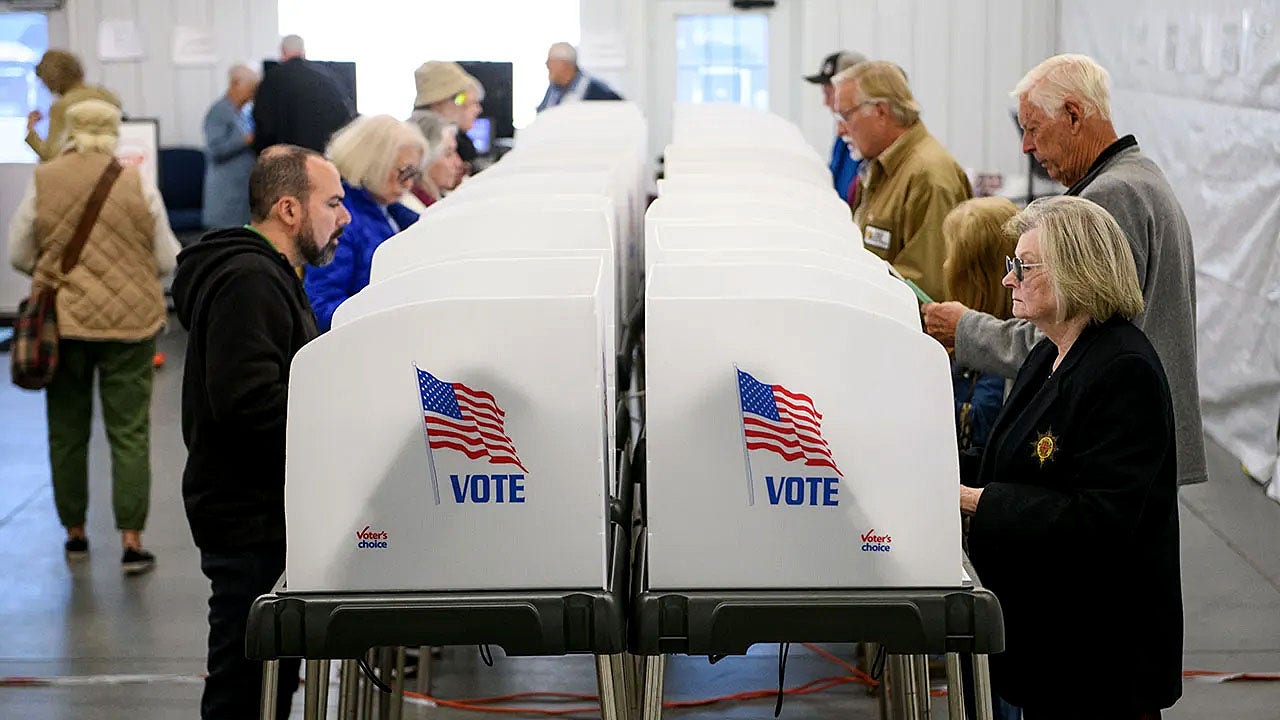
Election Day is closing in, and plenty of people are already acting like the script is written. But there are real reasons Republicans could land harder than the polls suggest, especially if turnout, money, candidate quality, and voter skepticism all break their way.
One big factor is simple: Democrats are deeply unpopular. When a party is carrying weak favorability numbers, it becomes harder to sell voters on more spending, more regulation, and more of the same political class that many Americans already distrust.
Cash matters too, and Republicans are sitting on enough of it to compete in places that usually get overlooked. That gives them a chance to keep advertising, knock down attacks, and reach the voters who are only half paying attention until the final stretch.
Michigan is a good example of how fast a race can tighten when the spotlight turns on a candidate. Once voters start digging into a contender’s background, old ties and uncomfortable questions can suddenly swamp a lead that looked solid on paper.
President Trump is also part of the equation. His rallies still move people, and even in a messy political climate, he remains the kind of figure who can energize supporters and remind them why they showed up in the first place.
That matters because Republican turnout is not just about ideology. It is about giving voters a reason to show up when the media noise is loud, the headlines are grim, and the opposition keeps insisting the outcome is already settled.
There is another edge for the GOP in the shape of the Democratic primary season. When the far left dominates the process, it can push Democrats into backing candidates who sound appealing to activists but look out of step with swing voters and moderates.
Polling itself has also become a battlefield. Some surveys look more like political theater than hard data, and once fake or unreliable numbers start getting mixed into the conversation, confidence in the whole polling industry takes a hit.
Even the polls that are serious may be carrying the same old bias. In race after race, Republicans have often been undercounted, and if that pattern holds, several supposedly competitive states could shift in ways that pundits are not expecting.
That is why so many voters tune out the nonstop election drama and focus instead on what candidates actually support. Lower taxes, lighter regulation, stronger law enforcement, and tighter control over government spending are still winning arguments in a lot of places.
Those issues are not abstract. They affect whether families keep more of their paycheck, whether businesses hire, and whether communities feel safer and more stable instead of stretched thin by bad policy.
Culture also hangs over these races in a big way. When politicians lean into identity politics and try to split voters up by race, religion, or gender, they are usually trying to dodge a real debate about policy and results.
In Michigan and beyond, that kind of messaging can backfire if voters think it is being used as a substitute for a serious argument. People generally know when they are being sold a slogan instead of a plan.
Health care is another flashpoint, especially when progressives keep pushing big government answers that sound generous until the bill arrives. Promises of universal coverage often come with higher taxes, less choice, and more pressure on the private plans many workers already like.
The same goes for the broader economy. Energy policy, job growth, and business investment all connect, and states that keep piling on restrictions tend to find out quickly that progress slows and costs rise.
Republicans have a straightforward case to make if they stay on offense. Voters who are tired of inflation, endless lecturing, and leaders who treat common-sense concerns like a nuisance may not say much out loud, but they still show up on Election Day.
