
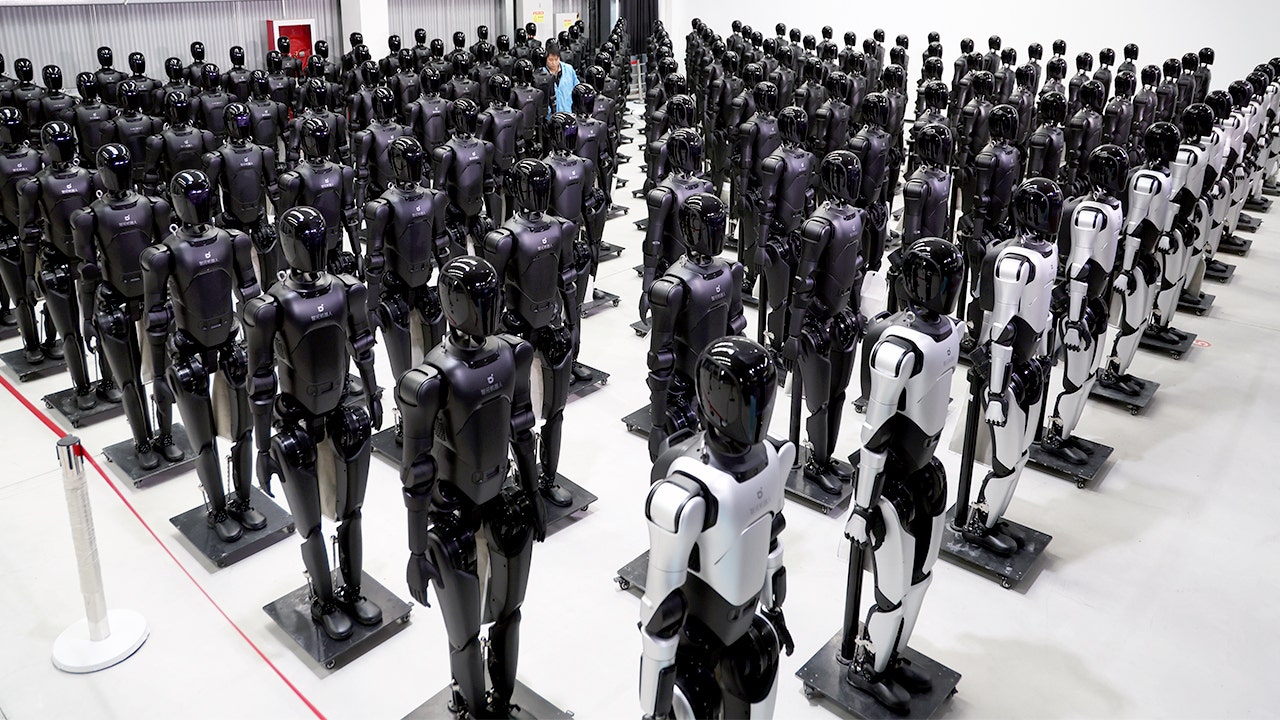
A new factory in China is turning humanoid robots from lab curiosities into real, repeatable products, churning out one unit every 30 minutes and pushing annual output toward the tens of thousands. The plant combines precision assembly, rigorous inspection and modular production so the same line can build different models for different industries. That scale shift forces a new conversation about where robots will actually be useful, which parts of the industry still lag behind and how quickly workplaces and public spaces will change. This article walks through the production leap, the technical bottlenecks and the broader implications for business and work.
The production rhythm is the first headline: a robot every half hour means a jump from prototypes to volume. When an assembly line can sustain that cadence, it changes the whole economics of humanoid machines. Suddenly the talk is not about what’s possible in a demo but whether you can deploy units across multiple sites without breaking the bank.
What makes the factory notable is how repeatable the process has become. Engineers mapped the build into dozens of precision assembly stages and layered dozens of inspection gates to catch flaws before units ship. That combination raised reliability and cut production headaches that used to keep humanoids tethered to labs and show floors.
Flexibility is baked into the setup: the line can swap between designs without shutting down, which is a huge deal for manufacturers. That ability lets one facility serve automotive, retail and home appliance markets without rebuilding infrastructure. It’s the difference between a novelty gadget and an industrial product that can scale across sectors.
>
HOME ROBOT COOKS, CLEANS AND ORGANIZES YOUR LIFE
Business investors are paying attention because sustained output signals a move toward mass deployment. Production numbers are now a proxy for commercial seriousness: high throughput suggests demand is real and that companies can justify bigger sales and service networks. That investor confidence often accelerates the shift from prototypes to fielded systems.
The factory arrangement also highlights a recurring industry pattern: split the brain from the body. One partner handles design and software while another focuses on mass production and quality control. That division of labor mirrors older tech industries and can speed development by letting specialists optimize for what they do best.
But a stubborn gap remains: software and real-world adaptability. Building mechanical forms is getting cheaper and faster, yet teaching those forms to understand messy, changing environments is still hard work. Everyday tasks that humans take for granted—grasping oddly shaped objects, navigating cluttered rooms or reacting to sudden lighting shifts—still trip up many systems.
As costs fall and production rises, adoption will likely widen into warehouses, retail and service roles, where predictable tasks meet profitable automation. That prospect raises real questions about worker displacement, safety standards and social comfort with machines that move and look human. Anyone in business or policy needs to ask where helpful automation ends and overreach begins, because the pace of deployment is accelerating and the choices will matter.
