
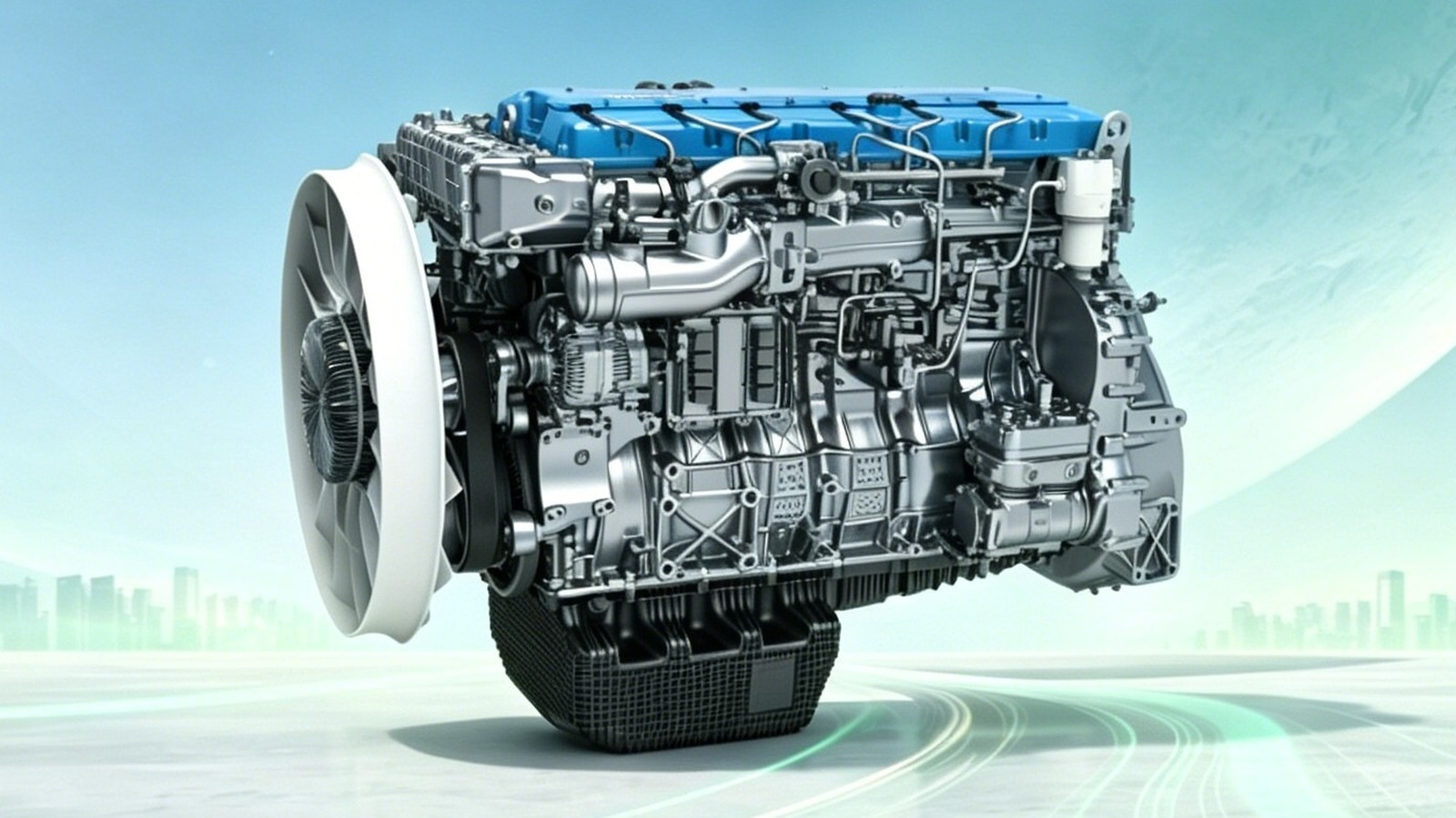
China has given the green light to a hydrogen-powered heavy-duty engine that could shake up the long-haul world. The new Weichai Power WP15 is built for work that usually belongs to diesel, but it runs on hydrogen and just cleared China VI emissions testing, which is no small hurdle. That makes it one of the most interesting signs yet that big trucks may not need to rely on diesel forever.
The WP15 is a 14.6-liter engine rated at up to 600 horsepower, and it is aimed squarely at the kind of machines that spend their lives hauling, digging, and grinding through brutal conditions. Weichai says about 90% of its parts are shared with non-hydrogen engines, which matters because that kind of overlap can make production, maintenance, and service much less painful for commercial buyers. In a world where fleet operators obsess over downtime and repair costs, that detail is doing a lot of heavy lifting.
What makes this engine stand out is not just the fuel, but the way it uses it. Instead of the usual port injection setup, the WP15 sends hydrogen directly into the cylinders in gaseous form. That approach helps sidestep nasty problems like backfiring and pre-ignition, both of which can turn a promising engine design into a headache fast.
It also helps explain why this is being positioned as a serious option for hard-working commercial gear. Weichai sees the engine fitting into port equipment, steel mill vehicles, mining dump trucks, large hydrogen power generators, and long-haul trucks. Those are exactly the kinds of applications where brute strength, reliability, and fuel flexibility matter more than flashy marketing.
Hydrogen in an internal combustion engine has a different appeal than a hydrogen fuel cell. For one thing, it feels familiar to the people who would actually buy and run these machines, since they already understand diesel engines and the way they behave under pressure. That lowers the mental barrier to adoption, and for big fleets that can be just as important as raw performance.
There is also a practical upside in parts sharing. If a hydrogen engine can borrow much of its hardware from existing engine families, manufacturers can potentially cut costs and simplify supply chains. That is a big deal in the commercial world, where every extra specialized part can add friction, delays, and more money out the door.
The emissions angle is where hydrogen really grabs attention, but the story is not quite as simple as “hydrogen equals clean.” Hydrogen itself produces no carbon emissions when it is burned, which is the obvious attraction. The catch is how that hydrogen gets made, because the climate benefit depends heavily on the production method.
Green hydrogen comes from electrolysis powered by renewable electricity like solar, wind, or hydropower, and that is the version that actually lines up with the zero-carbon promise people keep hearing about. Most hydrogen today, though, is still made through steam methane reforming, which creates what is known as gray hydrogen and releases a lot of CO2. That gap between the ideal and the current reality is one reason the hydrogen market still has plenty of growing up to do.
Cost is another hurdle, and it is a big one. Green hydrogen is still expensive, even though policymakers and energy companies keep talking about ways to bring the price down, with the U.S. Department of Energy targeting a much lower cost per kilogram by 2032. Until that happens, adoption will probably move fastest where emissions rules are tightening and fleets can justify the switch for strategic reasons instead of pure sticker shock.
That is why Europe keeps coming up in the conversation. New commercial vehicle rules there are pushing for major CO2 reductions by 2030, and that kind of pressure can accelerate interest in alternatives that look good on paper and in the real world. If hydrogen engines can prove they are durable, familiar, and scalable, the road ahead could get a lot more crowded for diesel.
