
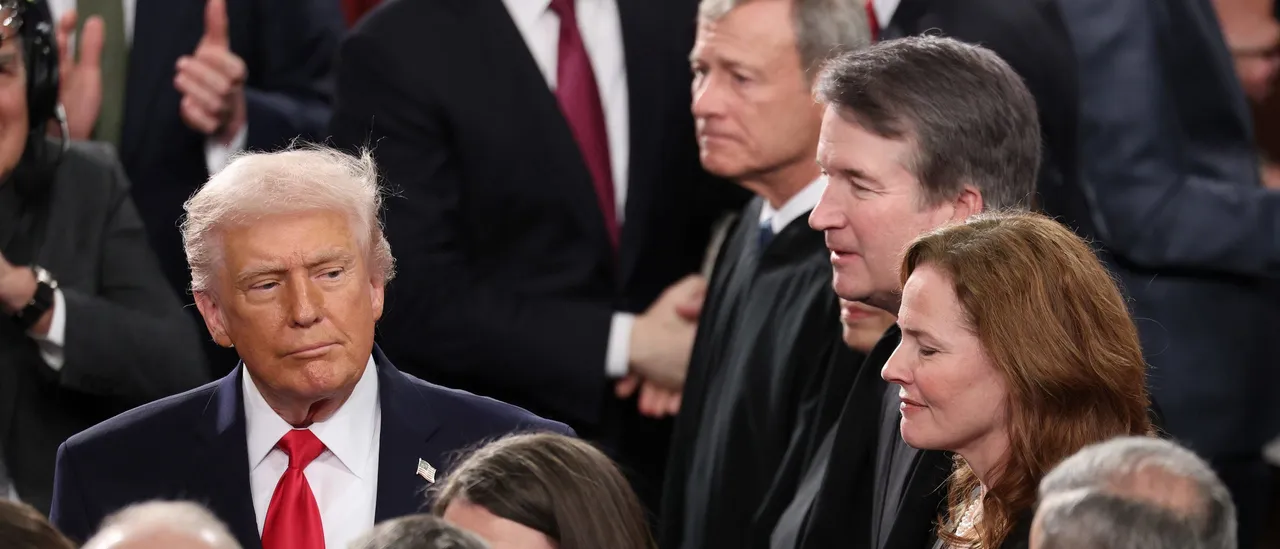
The Supreme Court’s recent ruling on President Trump’s tariff authority raises the same alarm bell conservatives heard after the Obamacare decision: Chief Justice John Roberts again stepped off the bench and into the policymaking arena. This piece argues Roberts misread a statute, sidelined congressional intent, and opted for a narrow textual dodge that limits executive tools like tariffs. It also revisits the pattern established when Roberts reshaped the individual mandate and asks what conservatives should demand from future nominees.
Watching the Court, you expect judges to call the game, not change the rules. Instead, Roberts wrote an opinion treating the law like a puzzle to be nudged to his outcome, noting the statute authorizes “investigate, block during the pendency of an investigation, regulate, direct and compel, nullify, void, prevent or prohibit … importation or exportation.” That observation then became the basis for excluding tariffs because the word tariff did not appear explicitly.
That rationale is thin. If a statute lets the president regulate importation, the practical means of regulation matter; tariffs are a natural, longstanding tool to alter import behavior. To exclude tariffs because the statute did not name them ignores how statutes operate in the real world where Congress delegates broad authority and expects agencies and leaders to choose fit instruments. The decision makes executive action clumsy where Congress left discretion intentionally.
Justice Kavanaugh’s dissent laid this out plainly and was joined by Justices Alito and Thomas, yet Roberts won over Justices Barrett and Gorsuch to seal a 6–3 majority. Gorsuch’s fallback that Congress could always amend the law to add an express tariff reference rings hollow as a practical matter. Expecting quick, decisive congressional fixes is wishful thinking when the political calendar and divided government often block timely action.
This is not a one-off. Conservatives remember Roberts’ pivotal role in the Obamacare episode where he found a tax where none clearly existed to save the law. That move was lampooned by Justice Scalia as logical “applesauce,” a memorable rebuke that underlined the danger when a justice crafts doctrine to protect preferred policies. When the Court starts inventing doctrines, it crosses from interpreting law into making policy.
Roberts once promised to call “balls and strikes,” a compact conservatives relied on when supporting his elevation. Yet time and again he has flexed a different muscle, bending reasoning to fit outcomes he favors. The tariff ruling shows the same habit: instead of letting the political branches settle hard choices, the Court substituted its own judgment under a veneer of textualism.
The consequence is plain: judicial unpredictability undermines conservative gains made through the ballot box and the executive branch. If justices will reshape statutes at will, then selecting judges who respect textual fidelity and institutional boundaries becomes the movement’s top priority. The aim should be justices who mirror Scalia, Alito, and Thomas in restraint, not Roberts’ occasional legislating from the bench.
With the prospect of new nominations looming, Republicans must be resolute about criteria and confirmation rigor. That means pressing nominees on fidelity to originalism, a real commitment to separation of powers, and an insistence that judges refrain from rescuing policy outcomes by stretching legal theory. The tariff case matters beyond trade; it is a wake-up call about who we trust to keep the law where it belongs.
