
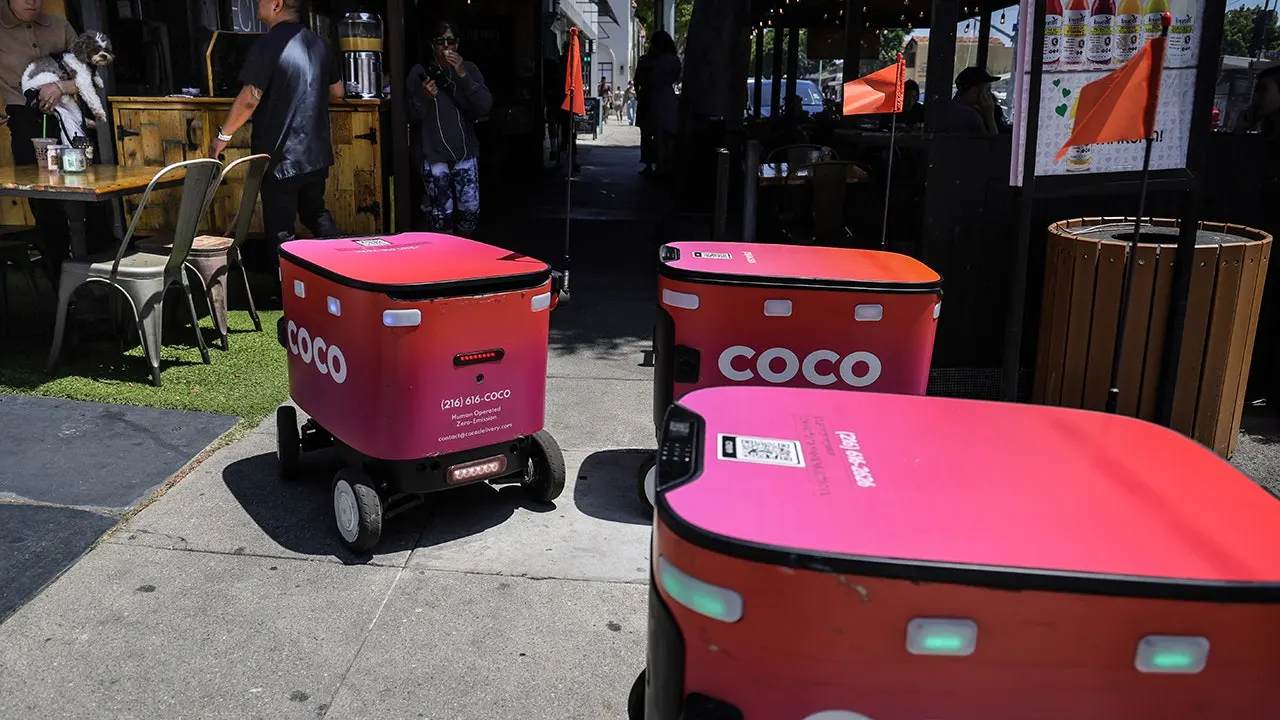
Delivery robots are moving fast from novelty to everyday city gear, but one Chicago sidewalk scene showed how quickly that convenience can turn messy. A routing glitch sent a cluster of Coco robots into a tight pileup near Lincoln Park, blocking pedestrian space and raising fresh questions about access, reliability, and what happens when autonomous machines hit a snag in public.
What started as a weird little traffic jam turned into a much bigger conversation. The robots looked harmless enough at first glance, but for anyone trying to walk through, the scene was more obstacle course than tech demo. That is exactly why sidewalk robots keep stirring debate, especially in places where pedestrians already have to dodge strollers, bikes, scooters, and tight corners.
Chicago runner Becca Ostien came across the bots during a morning trip near North Clark Street, where at least a dozen delivery robots had clustered together. Some were nudging around the group, while others sat still, lights flashing in a narrow stretch of sidewalk. The video spread quickly online, and the reactions came just as fast.
Some people laughed it off as a bizarre tech hiccup, but plenty of others saw something more serious. Commenters pointed out that a blocked sidewalk is not just annoying, it can be a real problem for people using wheelchairs, walkers, or strollers. For anyone with limited mobility, a temporary jam like that can turn a routine walk into a stressful detour.
Coco Robotics said the pileup happened because of a sidewalk deployment error that caused several robots to reroute at the same time as they left their station. The company apologized and said it fixed the issue quickly, returning the robots to normal operation within minutes. It also said the routing behavior behind the problem has now been corrected and new safeguards have been added.
That response matters because public trust is everything when machines start sharing space with people. Coco says the incident was rare and pointed to tens of thousands of deliveries completed in Chicago over the past two years. It also argued the service has helped cut down on traffic, created maintenance jobs, and saved customers money along the way.
Still, Chicago has already had a rocky relationship with delivery robots. The city has allowed them through a pilot program, but not everyone is thrilled about it. Some residents have pushed for a pause, and there have already been reports of crashes involving delivery robots and bus shelters, which only makes another sidewalk mishap feel more like a pattern than a fluke.
The accessibility issue sits at the center of all of this. Sidewalks are supposed to work for everyone, not just people who can easily step around a machine or slip through a narrow gap. When a robot cluster blocks the path, it can leave blind pedestrians, wheelchair users, and parents with strollers stuck dealing with a problem they did not create.
Coco has also tried to frame itself as part of the solution, not just the problem. The company says it works with BlindSquare, a GPS app for people who are blind or partially sighted, and uses sidewalk hazard data from its robots to help flag issues like fallen scooters and broken curb cuts. In that setup, robots are not just delivering food, they are also feeding hazard information into a system meant to make streets easier to navigate.
That idea sounds promising, but it does not erase the basic challenge. A robot that can detect obstacles still has to avoid becoming one, and the Chicago scene showed how fast that can break down when routing goes sideways. As these machines spread into more neighborhoods, the pressure will be on companies to prove they can handle the ordinary mess of city life without creating new ones.
For now, delivery robots are still trying to earn their place on crowded sidewalks. The pitch is easy to understand, since fewer short car trips and faster drop-offs sound pretty good, but the real test is whether these systems can behave when the unexpected shows up. Chicago got a front-row seat to that question, and the answer was a sidewalk full of blinking robots trying to figure out where to go next.
