
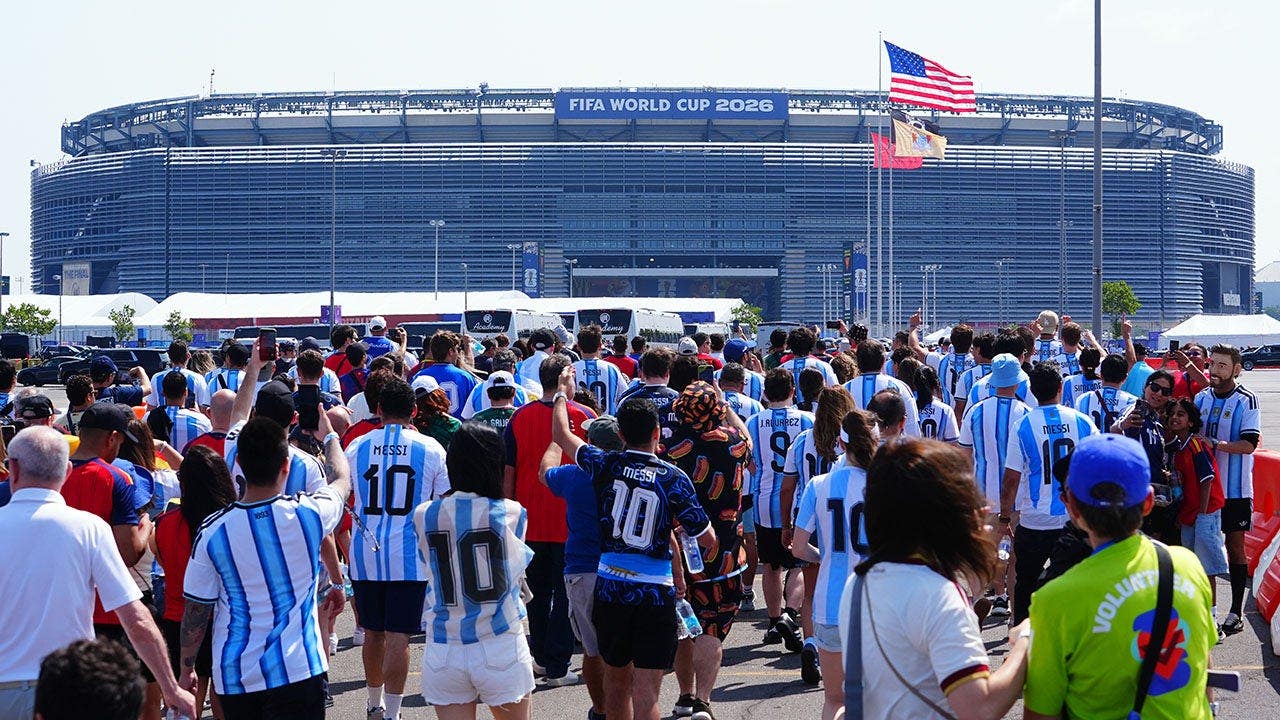
The CDC quietly ran a massive public health operation in the background of the FIFA World Cup, and it was built to catch problems before fans ever noticed them. With millions of people moving between host cities, airports, and stadiums, the agency leaned on real-time tracking, wastewater monitoring, and nonstop coordination to keep health threats from getting out of hand.
As 11 U.S. cities hosted matches and fans poured in from around the globe, the CDC’s job was to stay ahead of anything that could spread fast in crowded settings. That meant watching for signs of illness across multiple channels, from hospital visits to public health reports, while keeping a close eye on international disease activity at the same time.
“Readiness is not only measured by how we respond to emergencies, but by the work we do every day to prevent them,” acting CDC Director Dr. Jay Bhattacharya said in a statement to Fox News Digital.
“The FIFA World Cup demonstrated the strength of CDC’s partnerships, preparedness and commitment to protecting the health of every community we serve.”
The scale of the tournament made the challenge hard to ignore. Across the United States, Canada, and Mexico, the World Cup featured 48 teams, 16 cities, and more than 5 million tickets sold, while an estimated 6.5 million fans moved through the three host countries.
That kind of traffic brings excitement, but it also brings risk. Health officials were already alert for possible outbreaks, especially with large crowds, holiday gatherings, and the broader backdrop of diseases like Ebola, Hantavirus, and measles circulating at the same time.
Measles was a particular concern because it spreads so easily in packed venues and busy travel hubs. By July 16, the CDC had reported 2,260 confirmed measles cases in the United States, a reminder that even one event can become a pressure test for the whole system.
The agency said in a Sunday news release, “The matches drew the world’s attention. The work that kept them healthy did not — and that was the point,” capturing the whole idea behind the operation. Quiet prevention does not get the spotlight, but it is exactly what keeps a massive international event from turning messy fast.
Behind the scenes, the CDC built a World Cup data dashboard that gave health departments a live look at disease trends across host cities. It also ran health operations around the clock at U.S. ports of entry, working with U.S. Customs and Border Protection to monitor international passengers as they arrived.
The agency did not work alone. Multiple CDC divisions teamed up with the Department of Health and Human Services, the Administration for Strategic Preparedness and Response, and the White House FIFA World Cup Task Force to make sure the response was tight, coordinated, and fast.
Experts were also deployed to strengthen surveillance, lab capacity, wastewater monitoring, and preparedness planning in the cities that hosted matches. That mix of tools matters because infections do not wait for a convenient moment, and the warning signs can show up in sewage, test results, or a spike in clinic traffic long before a situation becomes obvious.
In March, the CDC had already rolled out guidance for public health officials to prepare for a wide range of threats, including biological, chemical, radiologic, nuclear, environmental, and mass casualty incidents. The message was simple enough: big events need a broad, practical mindset, not a narrow one.
The guidance also pushed jurisdictions to think in risk-based terms, since travel between venues ties cities together in ways that are easy to overlook. A problem in one place can move quickly when thousands of people are boarding planes, crossing borders, and heading to the next match.
The tournament may be over, but the machinery behind it did not suddenly disappear. The same surveillance, partnerships, and readiness that supported the World Cup continue to shape the CDC’s daily mission, with the activation running through July 31 and the health watch continuing long after the final whistle.
