
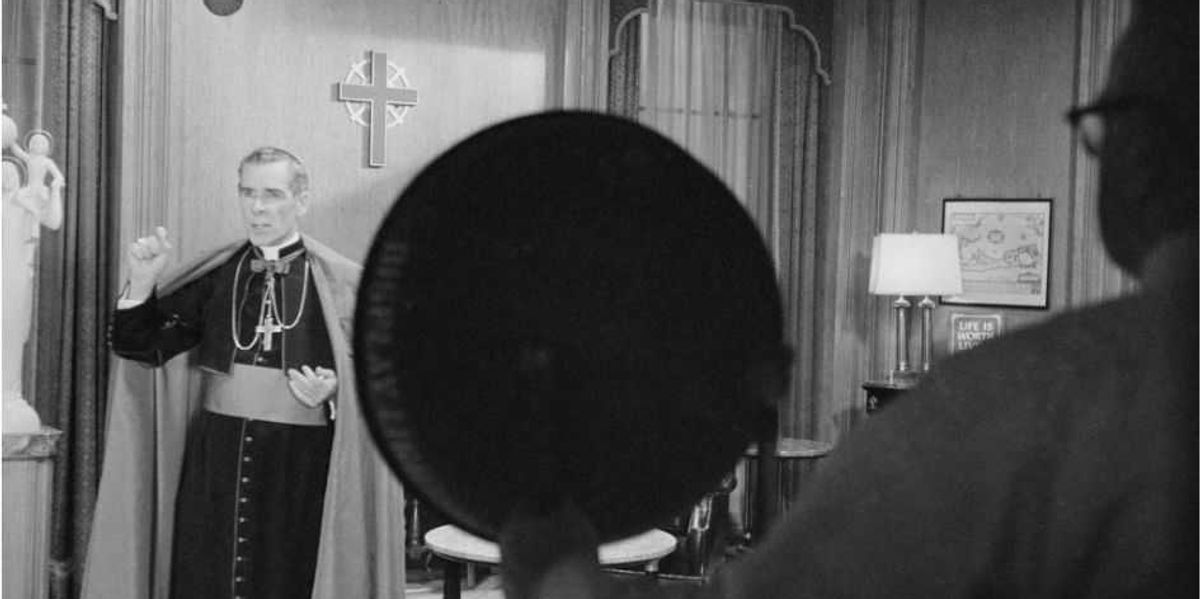
Fulton Sheen saw something about fame that still catches people off guard: public attention can look like influence while quietly hollowing out the soul. Long before the age of viral clips and polished online personalities, he understood that Christian witness was never supposed to orbit ego, applause, or image management. His life pointed to a harder kind of success, one built on truth, sacrifice, and a willingness to disappear behind the message.
Sheen came up in a religious world where platforms were limited and every appearance had weight. In that setting, he became one of the most recognizable Catholic figures in America, using radio, television, and sharp writing to reach millions. But the real point was never celebrity for its own sake, because he treated fame like a tool that had to be handled with care or it would start using the person holding it.
That lesson feels sharper now. Christian influencers today can rack up huge followings, but attention alone does not prove depth, character, or faithfulness. Sheen understood that a public religious voice can turn into performance fast, especially when audiences reward personality more than conviction.
He also knew the danger of confusing popularity with holiness. A polished presentation can still hide weak convictions, and a large audience can make even a shallow message look important. Sheen’s appeal came from the opposite instinct, since he kept dragging the focus back to repentance, prayer, and the claims of Christ instead of the speaker’s brand.
There was nothing timid about his style. He spoke with confidence, used humor well, and knew how to hold attention without sounding like a salesman. Yet the more visible he became, the more he seemed to understand that Christian credibility depends on whether a life matches the words coming out of the mouth.
That is where modern fame often falls apart. Today’s religious media landscape can reward speed, outrage, and constant reaction, which means the loudest voice sometimes wins even when the wisest one barely gets heard. Sheen’s example suggests that endurance matters more than heat, and substance matters more than the rush of being noticed.
He also pointed to a deeper tension that still matters inside Christianity itself. The church has always had to decide whether it wants entertainers, operators, or witnesses. Sheen’s career showed that a speaker can be compelling without becoming slick, and memorable without becoming self-absorbed.
Part of what made him different was his willingness to step back from the spotlight and let the message carry its own weight. That is a rare instinct in any age, but especially now, when visibility is often treated like proof of value. Sheen seemed to grasp that the moment a Christian communicator starts feeding on applause, the work begins to bend around the audience instead of around God.
His life also carried a quiet rebuke to the idea that Christianity must always chase cultural approval to stay relevant. He did not build his reputation by making the faith look safer or softer than it was. He made it intelligible, direct, and public, while still refusing to flatten its demands into something easier to sell.
That balance is part of why his name still comes up whenever people talk about faith and media. He managed to be accessible without becoming shallow, and visible without becoming vain. In an era when everyone is tempted to measure ministry by reach, Fulton Sheen remains a reminder that influence without humility tends to rot from the inside.
His example lands hard because it asks an uncomfortable question: is the goal to be admired, or to be faithful? The answer changes everything about how a Christian speaks, posts, performs, and carries a public life. Sheen never seemed interested in building a monument to himself, which may be why his voice still cuts through the noise when so many louder ones fade fast.
