
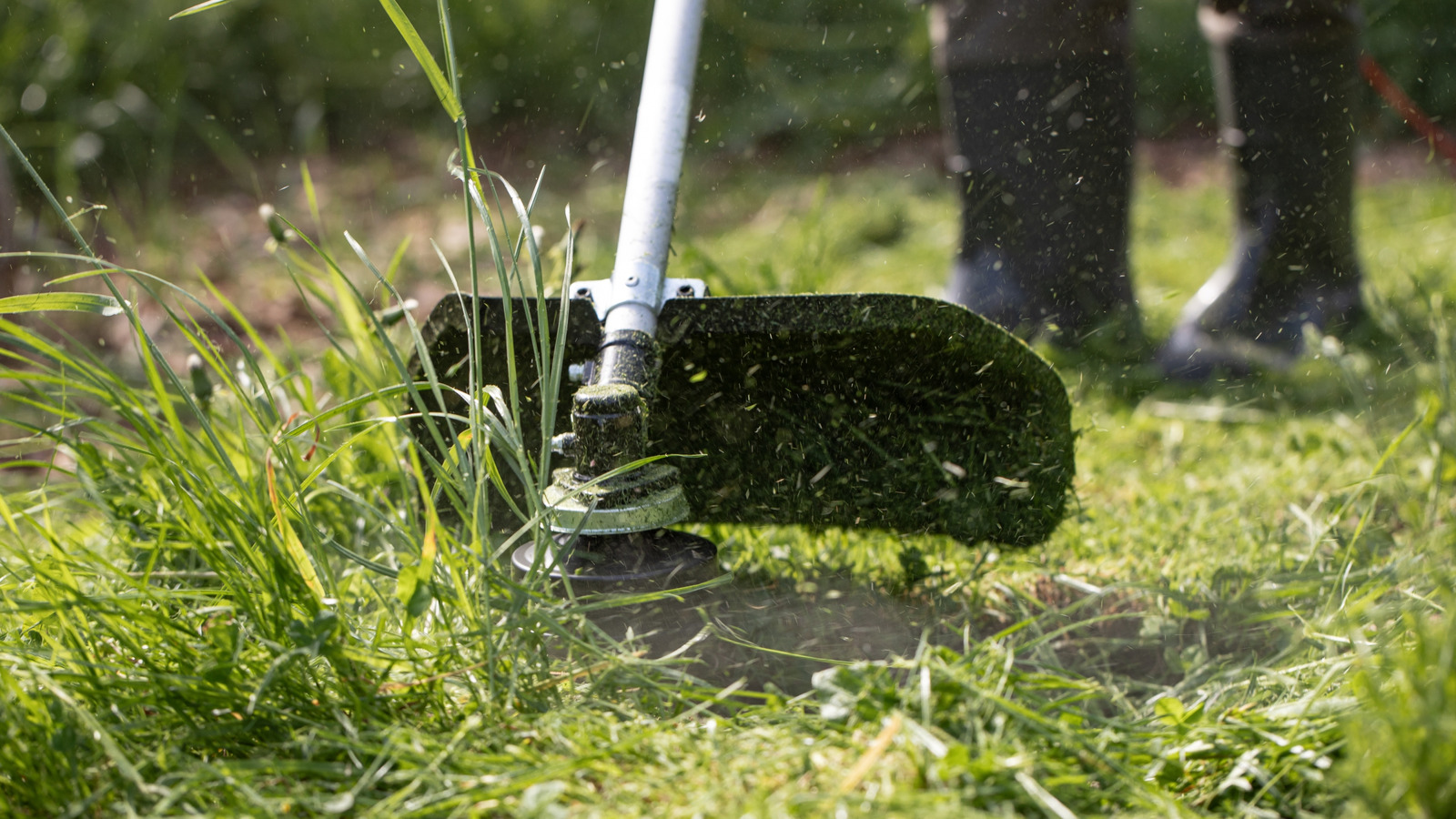
There’s a tempting logic to using a weed eater as your only grass-cutting tool, especially when mower prices can feel wildly out of line for a tiny yard. But once you look past the sticker shock, the tradeoff gets obvious fast: a string trimmer can handle grass, sure, but it is not built to deliver the kind of clean, even cut a lawn really wants. For small yards, the smarter move is usually to treat the weed eater as a helper, not a full replacement.
The biggest issue is precision. A mower glides across the lawn at a set cutting height, while a weed eater depends on the person holding it to stay steady the whole time, over every bump and dip in the yard. That sounds manageable until you try it for real, and one small wobble can leave grass cut too low or chew up a patch that should have stayed healthy.
That matters because grass has limits. A good guideline is the ⅓ rule, which means you should not remove more than one-third of the grass height in a single mowing session. When you stick close to that rule with frequent, lighter cuts, the lawn handles heat and stress better, and the roots get a better shot at growing deep and strong.
Weed eaters also create a timing problem. Grass does not grow at the same speed every week, and weather can push growth from slow to frantic in a hurry. If you are trying to maintain a neat look with a trimmer alone, you may find yourself out there much more often than you expected, especially when the season is in full swing.
Then there is the shape of the job itself. Cutting a whole lawn with a weed eater is a lot more work because longer grass usually needs several passes, starting high and working lower bit by bit. That method helps reduce the chance of cutting too much at once, but it also means more time, more effort, and a greater chance of inconsistency than you would get from a mower in a single pass.
For a small yard, though, a weed eater still earns its keep. It shines along edges, around trees, near fences, and around patio furniture, where a mower either cannot reach or would be awkward to maneuver. Used that way, it becomes the perfect cleanup tool, giving the lawn a finished look after the mower does the heavy lifting.
If your yard has trees or other obstacles, trimming around them first can make the rest of the job smoother. A careful border lets the mower work more cleanly afterward, and it reduces the chance of leaving scraggly patches around hard-to-reach spots. That kind of one-two approach is where a string trimmer really starts to make sense.
Weed eaters can also help when a section of grass has gotten a little out of control. Instead of trying to hack everything down at once, it is better to break the space into smaller zones and work through them in order, keeping the cuts controlled as you move toward the middle. That approach is slower, but it gives you a better shot at an even result without tearing up the lawn.
Even so, a mower still belongs in the picture, even in a small yard. If budget is the concern, it makes more sense to look for an affordable model with solid ratings than to ask a trimmer to do a job it was never really designed to handle. The weed eater can absolutely pull its weight, but when it comes to keeping grass tidy, healthy, and uniform, it works best as part of the team, not as the whole lineup.
