
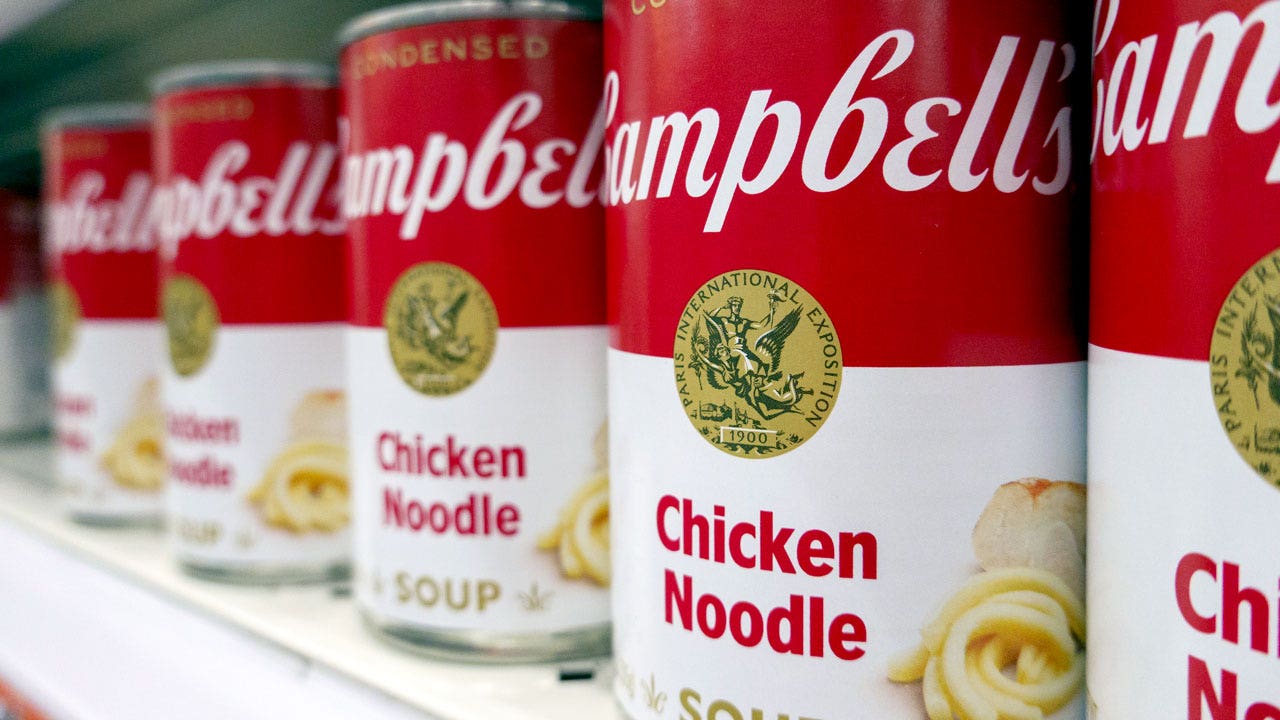
Campbell’s is slashing costs, trimming salaried jobs, and shutting down plants as the company tries to steady the business and get back on firmer ground. Management is betting that tougher decisions now will help protect margins, lift cash flow, and restore confidence after a rough stretch.
Here are the key points to keep in view:
- Workforce cuts and plant closures
- Pressure from cautious shoppers and private-label competition
- Price increases and margin defense
- Cost savings goals and operational reset
- Revenue and earnings outlook
The company said it has cut 13% of its salaried workforce and closed two snack plants as part of a broader turnaround plan. CEO Mick Beekhuizen did not soften the message, saying, “Make no mistake, our results remain unacceptable,” and adding, “But instead of waiting for the environment to improve around us, we are addressing reality head-on.”
Campbell’s has about 4,300 salaried employees, according to The Wall Street Journal, and roughly 13,700 full-time and part-time workers as of August 2025, based on a filing with the Securities and Exchange Commission. That scale makes the cuts significant, especially for a company trying to move faster while also tightening the screws on spending.
Part of the squeeze comes from shoppers who are getting more selective with every trip to the store. Lower-income households in particular have been leaning harder into cheaper private-label and value products, a shift that has put pressure on branded food companies trying to hold their ground.
To defend its margins, Campbell’s has raised prices over the last few years as costs climbed for raw materials, transportation, and product launches. The company said average price increases of 4% to 5% have been applied across about 60% of its portfolio, with the benefits expected to start showing up more clearly in the second quarter, even if sales take a hit in the meantime.
That trade-off is the messy part of the plan. Higher prices can help profits, but they can also push customers away if they feel squeezed already, which is exactly why the company is trying to balance growth, volume, and discipline all at once.
Beekhuizen said the restructuring is aimed at making the business sharper and more accountable. “With this program, we are focused on increasing speed and accountability and improving our margins and cash flow,” he said, signaling that the company wants less drift and more urgency.
The financial outlook is still subdued. Campbell’s expects fiscal 2027 net sales to fall 2% to 4%, which is weaker than analysts had been looking for, and it sees adjusted earnings per share of $1.65 to $1.80, also below Wall Street estimates.
Recent results show why the company is under pressure. Fourth-quarter net sales dropped 8% to $2.14 billion, just under expectations, while adjusted earnings per share of 39 cents matched forecasts, giving the company a mixed but far from comfortable finish.
Performance varied across the business, too. Volume in the snacks segment fell 6% even as prices rose 1%, while the meals and beverages unit saw volume rise 3% with prices held steady, a split that shows how uneven demand can be from one category to the next.
The company says its bigger mission is to build something more durable, with less financial risk and a stronger balance sheet behind it. Beekhuizen said the priorities are to return Campbell’s to a long-term value creation model and maintain its investment-grade credit rating, a sign that the turnaround is about more than just cutting headcount and closing doors.

1 Comment
Update flavors, new soups, soup mixed
sell some divisions off
CUT staffing
Merge Ops
Merge like units
Downsize
More food ideas:
Cajun, New Mex, CA, Tex Mex, NE style, Farm 2 table,
BBQ