
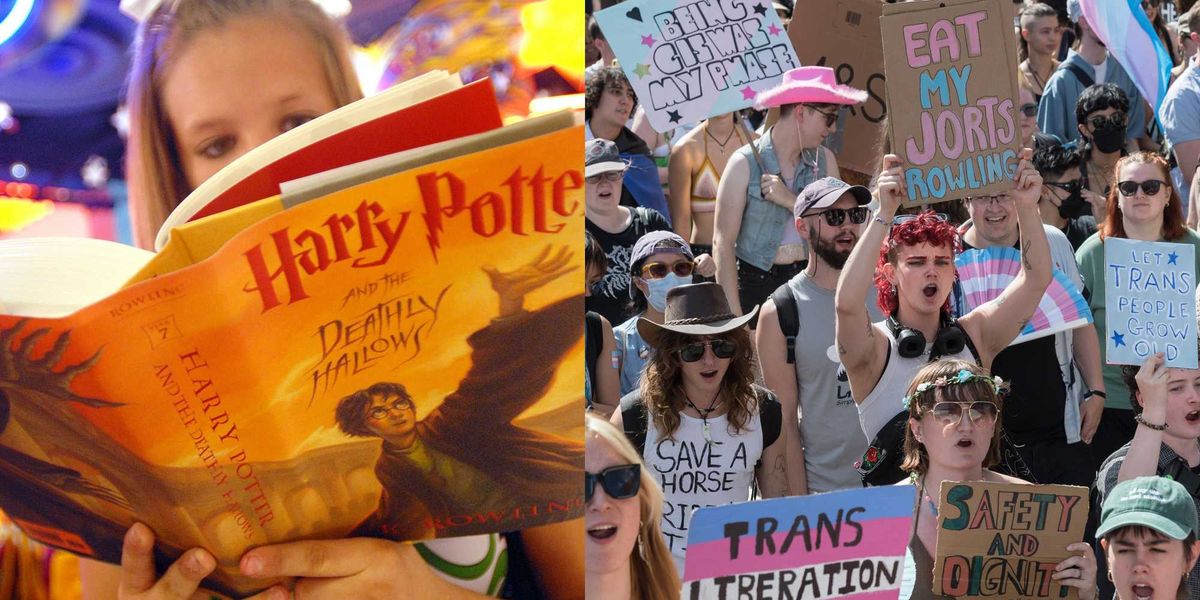
Bluesky lit up again after a fresh wave of posts claimed that watching the newest Harry Potter series amounts to supporting something far darker than simple entertainment. The backlash quickly turned into a full-on pile-on, with users tossing around loaded accusations and treating a TV show like a moral battlefield. What should have been a pop culture debate instead became another round of internet outrage, political signaling, and cartoonish certainty.
The spark came from the long-running fight around J.K. Rowling, whose name now seems to trigger instant reaction in certain online circles. For some users, her involvement with the Harry Potter universe is enough to make the franchise a permanent target, no matter what the actual show is doing. That kind of response has become familiar across social media, where outrage often matters more than context.
Bluesky users did not hold back, with some describing support for the series in extreme, overheated language that was meant to shame anyone still interested in the story. The rhetoric was less about criticism and more about turning consumption into guilt. In spaces like that, nuance usually gets flattened fast, and every entertainment choice becomes a political purity test.
That sort of reaction also reveals how quickly online activism can drift into performance. Instead of discussing whether a new adaptation is any good, the conversation jumped straight to accusations and moral condemnation. The result was a familiar internet mess, where outrage spreads faster than facts and anyone who disagrees gets treated like a traitor.
Harry Potter has always lived in that awkward space between nostalgia and controversy, and this latest flare-up shows the franchise still knows how to ignite a crowd. Fans who grew up with the books and films often see the world differently from the activist class that now treats the property as untouchable. That clash is not really about a wizard story anymore, but about who gets to control the cultural narrative.
For many regular viewers, the loudest critics simply miss the point. People often watch movies and shows because they enjoy the characters, the world-building, or the memories tied to them, not because they want to sign onto every debate surrounding the creator. Social media has a habit of acting as if every choice must carry a manifesto, which is exhausting and usually nonsense.
The newest round of attacks also says a lot about how quickly a fandom gets dragged into broader culture war fights. One group sees a TV release, another sees a political statement, and suddenly the conversation is no longer about storytelling at all. The internet has a way of turning ordinary entertainment into a referendum on identity, ideology, and loyalty.
That is especially true when the conversation moves onto Bluesky, where many users are eager to present themselves as morally uncompromising. The tone can be sharp, theatrical, and brutally self-assured, with little patience for anyone who refuses to join the outrage parade. It creates a strange atmosphere where disagreement is not just unwelcome, but treated as proof of bad character.
Still, the more forcefully that critics try to shame viewers, the more they expose how thin the case really is. Calling a TV audience “genocidal” over a fantasy franchise may grab attention, but it also makes the speaker sound disconnected from reality. That kind of language burns hot for a minute, then leaves behind the unmistakable smell of overreach.
Meanwhile, the Harry Potter machine keeps rolling, fueled by curiosity, nostalgia, and the kind of cultural gravity that does not disappear just because a few online activists want it gone. The series still has a massive built-in audience, and plenty of people are willing to separate the art from the noise. In the end, the latest online uproar says less about the show itself than about a digital culture that thrives on outrage and cannot resist turning everything into a fight.
