
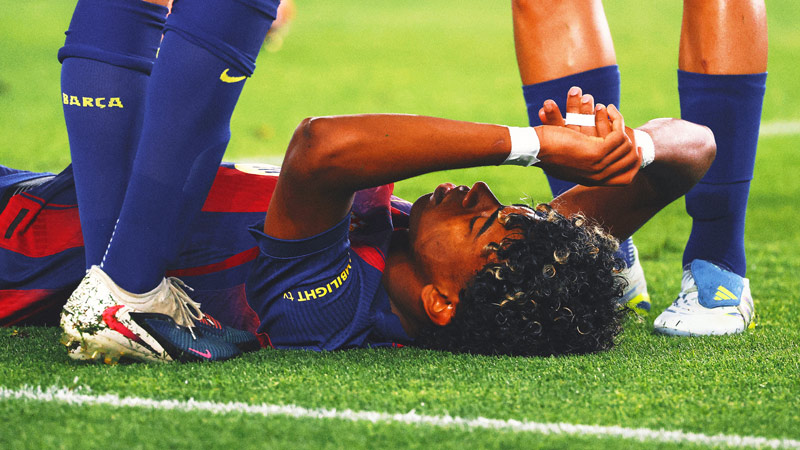
Barcelona has confirmed that rising star Lamine Yamal will sit out the remainder of the club season with a leg injury, though the club says he should be fit in time to join Spain at the World Cup. The news lands as a blow for Barca’s attacking depth but with careful management it looks like Yamal’s international ambitions remain intact. This article lays out what the injury means for the player, the club, and Spain heading into the summer tournament.
Barcelona’s medical bulletin was clear: Yamal will miss the rest of the club season due to a leg issue, and the club expects him to be ready for Spain at the World Cup. That leaves the squad to redistribute minutes among attacking options and forces tactical adjustments from the coaching staff. The decision to prioritize a measured return makes sense given the calendar and the stakes of a World Cup year.
Lamine Yamal has become a household name not just for his age but for how quickly he changed games with his direct style and pace. He broke into the first team and earned a regular role by showing composure and creativity beyond his years. Losing that kind of unpredictability in wide areas is more than just a missing body; it is the loss of a unique spark that opponents had to account for every match.
From a squad-management perspective Barcelona now faces choices about who steps up and how minutes will be redistributed across the front line. Coaches can lean on experienced campaigners to cover the minutes he would have taken, or accelerate the development of other young prospects. In matches that matter, managers often prefer a steady hand, but the club also needs flair, so the mix will be delicate and worth watching closely.
Spain’s national team has reasons to feel cautiously optimistic despite the setback at club level. National medical teams will coordinate with Barcelona’s staff to monitor progress and adjust the workload so Yamal can arrive at the tournament in peak condition. That shared responsibility gives both the player and the national side the best chance to have him available without risking long-term consequences.
The timing and nature of the injury will shape the recovery window, and Barcelona appear to be taking a conservative route focused on full healing rather than a rushed return. Leg injuries can vary widely, so an individualized rehab plan is the sensible approach to avoid recurrence. With the World Cup still ahead, the priority is a structured recovery that balances fitness, match sharpness, and the heavy travel and intensity of summer tournaments.
On the pitch, Yamal’s absence will be noticed beyond goals or assists because he changes how opponents set up defensively. He pulls defenders out of position, creates lanes for teammates, and forces coaches to alter their defensive game plans. Replacing those subtle, tactical benefits requires more than a like-for-like substitution; it calls for players who can approximate his movement and willingness to take risks in the final third.
Fans and pundits will debate substitutions, formations, and who deserves more minutes, and that noise is part of the sport. What matters most is that decisions are rooted in the player’s long-term health and the collective goal of both club and country. If handled right, Yamal can skip the tail end of the club campaign and still arrive for Spain ready to contribute at the World Cup without carrying lingering issues.
