
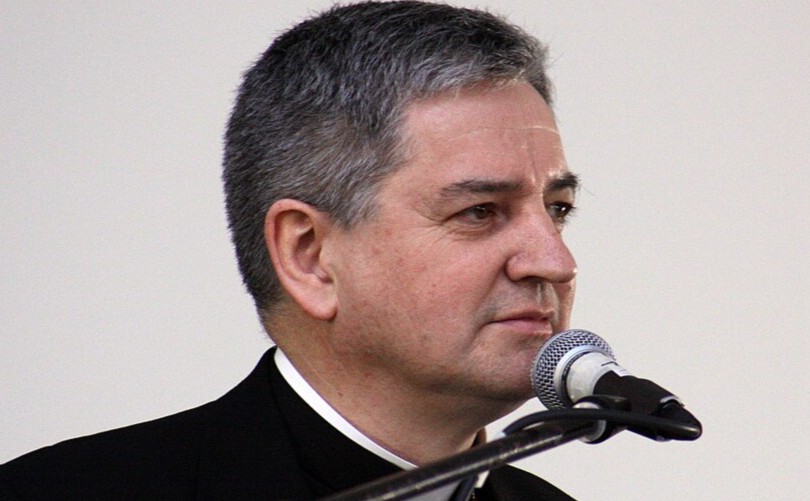
Bishop Marc Aillet has called on Catholics to pray, fast, and pressure lawmakers over France’s proposed assisted dying bill, arguing it weakens the legal taboo against killing and puts vulnerable people at risk. His appeal frames the debate as one about dignity, the duty to protect life, and the moral cost of state-sanctioned death. This piece unpacks his warning, the practical steps he urged, and the broader concerns that drive opposition to changing the law. The tone is urgent and rooted in a conservative view that defends life and challenges the risks of legalizing assisted dying.
The bishop’s message lands in a political moment when lawmaking can shift moral boundaries quickly. He urged the faithful not to sit on the sidelines but to act through prayer, fasting, and direct contact with senators. That combination mixes spiritual discipline with civic engagement and reflects a belief that public policy should reflect moral truths, not just pragmatic calculations. From a Republican perspective, that mix of faith and action is a natural response to laws that redefine core principles.
At the heart of the concern is the idea that legalizing assisted dying erodes a clear legal and moral ban on killing. Once a legal exception is carved out for those judged to be suffering or terminal, the line between care and killing becomes blurrier. Opponents worry this invites pressure on elderly or disabled people who may feel like a burden, or who could be nudged toward death by family, medical systems, or economic incentives. Those are not hypothetical risks for many conservatives; they are real harms to be prevented by law.
The bishop’s appeal to prayer and fasting is more than symbolic. For many conservative Catholics, spiritual practices are a way to unite conviction and action, sharpening the will to influence public life. Fasting commits people to serious reflection and moral clarity, while prayer focuses communal resolve. When combined with lobbying, these spiritual acts translate into votes, calls to senators, and organized efforts to protect the vulnerable.
Lobbying senators is practical politics. The legislative process in France gives lawmakers the power to shape the scope of any assisted dying measure, so targeted pressure can make a difference. Conservative activists know that well-timed letters, phone calls, and organized visits to offices move the needle, especially when they come from committed communities. The bishop encouraged such engagement because legal language matters; small changes in wording can either safeguard lives or open dangerous doors.
Another major worry is scope creep. A bill that starts limited to terminal illness could later expand to include chronic conditions, psychiatric suffering, or even social and financial reasons. The slippery slope argument is central to conservative objections: laws that begin with compassion can convert into systems that accept death as a convenient fix. Protecting life requires vigilance at the drafting stage so protections are airtight and abuses are hard to imagine, not easy to exploit.
Beyond lawmaking, there are practical alternatives that conservatives prefer and promote. Improved palliative care, better support for caregivers, and policies that reduce elder isolation would address the suffering that often drives assisted dying requests. The bishop’s stance aligns with a view that public policy should invest in dignity-preserving solutions rather than creating a legal escape hatch. Republicans and pro-life advocates argue that humane care is a stronger moral and social response than sanctioning death.
The debate in France touches on broader cultural questions about how society values life and who counts as worthy of protection. The bishop framed his appeal as defending the weakest among us, those who could be marginalized when cost or convenience become priorities. For conservatives, defending life is not only a religious duty but a public one, tied to social cohesion and respect for human worth. That conviction fuels organized campaigns aimed at protecting legal and moral norms.
In urging prayer, fasting, and lobbying, Bishop Marc Aillet gave conservatives and faithful Catholics a clear playbook: combine moral persuasion with political action. The fight over the assisted dying bill is about legal definitions, medical ethics, and the kind of society France wants to be. For those who oppose the bill, the message is straightforward: protect the ban on killing, strengthen care for the vulnerable, and refuse policies that normalize state-sanctioned death.

1 Comment
This is all 100% Pure Evil from Hell! On the glide-slope toward what has been a typical vernacular term among the sort of people who immediately upon seeing an injured animal on the side of the road saying; “shoot it and put it out of its misery!”
Applying that lack of proper morality and such a cavalier attitude toward a life, especially when it comes to Human life, is like saying we humans can play God in whatever circumstance we might be presented with! And that is one hell of a slippery slope straight into hell because anyone could then say from their own vantage point; “I thought my friend or loved-one was suffering too much, so I decided to end all of that with a bullet!
Which according to Holy Scriptures would be a premeditated Murder!