
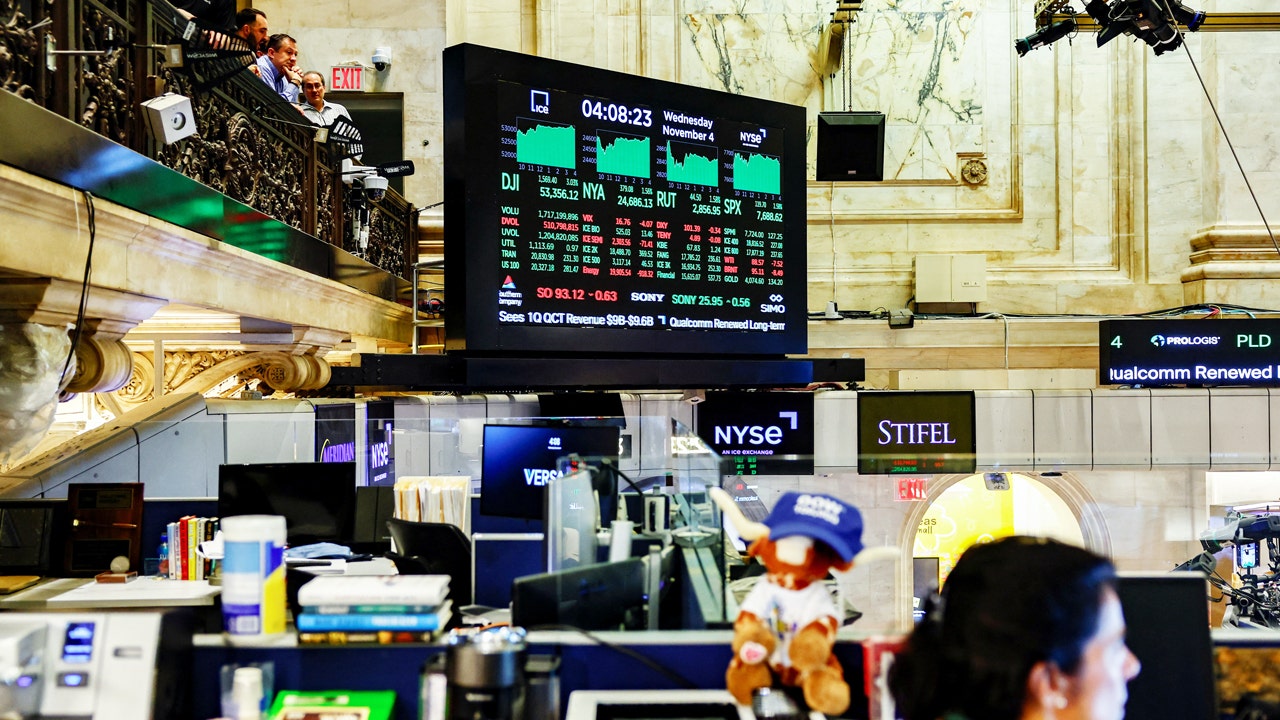
Asian markets opened Friday under heavy pressure after Wall Street’s steep overnight sell-off rippled across the region, dragging Japan, South Korea, and Taiwan sharply lower. Technology and chip names took the hardest hit, while investors also watched U.S. futures swing unevenly as nerves stayed high.
• Broad market losses spread from the U.S. to Asia
• South Korea’s KOSPI hit a steep intraday drop and paused trading
• Japan’s Nikkei and Taiwan’s market sank on tech selling
• AI and semiconductor stocks were among the weakest spots
• Wall Street’s prior-day plunge fed worries about regulation and growth
South Korea’s KOSPI fell more than 8% at one point, forcing a temporary halt designed to cool the panic. Trading resumed later, but the index still sat roughly 7% lower, a sign that the pressure was far from over.
Japan’s Nikkei also got hammered, sliding about 6% and heading toward its worst day in eight months. Taiwan’s benchmark dropped more than 8% as semiconductor shares and other tech heavyweights were dumped in a hurry.
The damage was especially ugly for companies tied to the artificial intelligence trade. Samsung Electronics lost nearly 10%, SK Hynix fell 11.7%, Taiwan Semiconductor Manufacturing Company slipped 8.5%, and SoftBank Group dropped about 11% as investors rushed for the exits.
The mood shifted quickly after Thursday’s Wall Street rout, when the Dow Jones Industrial Average sank 1,833 points, or 3.44%, and the S&P 500 slid 4.36%. The Nasdaq Composite fell 5.52%, pushing it into correction territory after a pullback of more than 10% from its October peak.
That kind of move does not stay in one market for long. Asian traders were forced to digest the same uneasy questions that rattled U.S. investors, including whether the recent run in tech stocks had simply gone too far, too fast.
U.S. futures offered a mixed picture before the opening bell, with Nasdaq futures up about 1.3% and Dow futures down 0.71%. That split suggested a possible bounce in technology shares, but not enough conviction to calm the broader market jitters.
One big source of anxiety has been the political fallout from Democrats’ sweeping midterm victories, which handed them control of both chambers of Congress. Investors have been weighing what that could mean for AI firms, data center buildouts, and a more aggressive regulatory climate.
President Donald Trump blamed the election results for Thursday’s sell-off and said Americans’ retirement savings were taking a hit. On Truth Social, he wrote, “The Stock Market suffered one of the Worst Days in History based on the results of the Election,” then added that the country would soon be “BIGGER AND STRONGER THAN EVER BEFORE.”
That message captured the clash running through the market right now: fear in the moment, confidence in the rebound. For now, traders in Asia were left staring at screens full of red numbers, with chipmakers, AI-linked firms, and the broader tech complex still carrying the weight of the global shakeout.
