
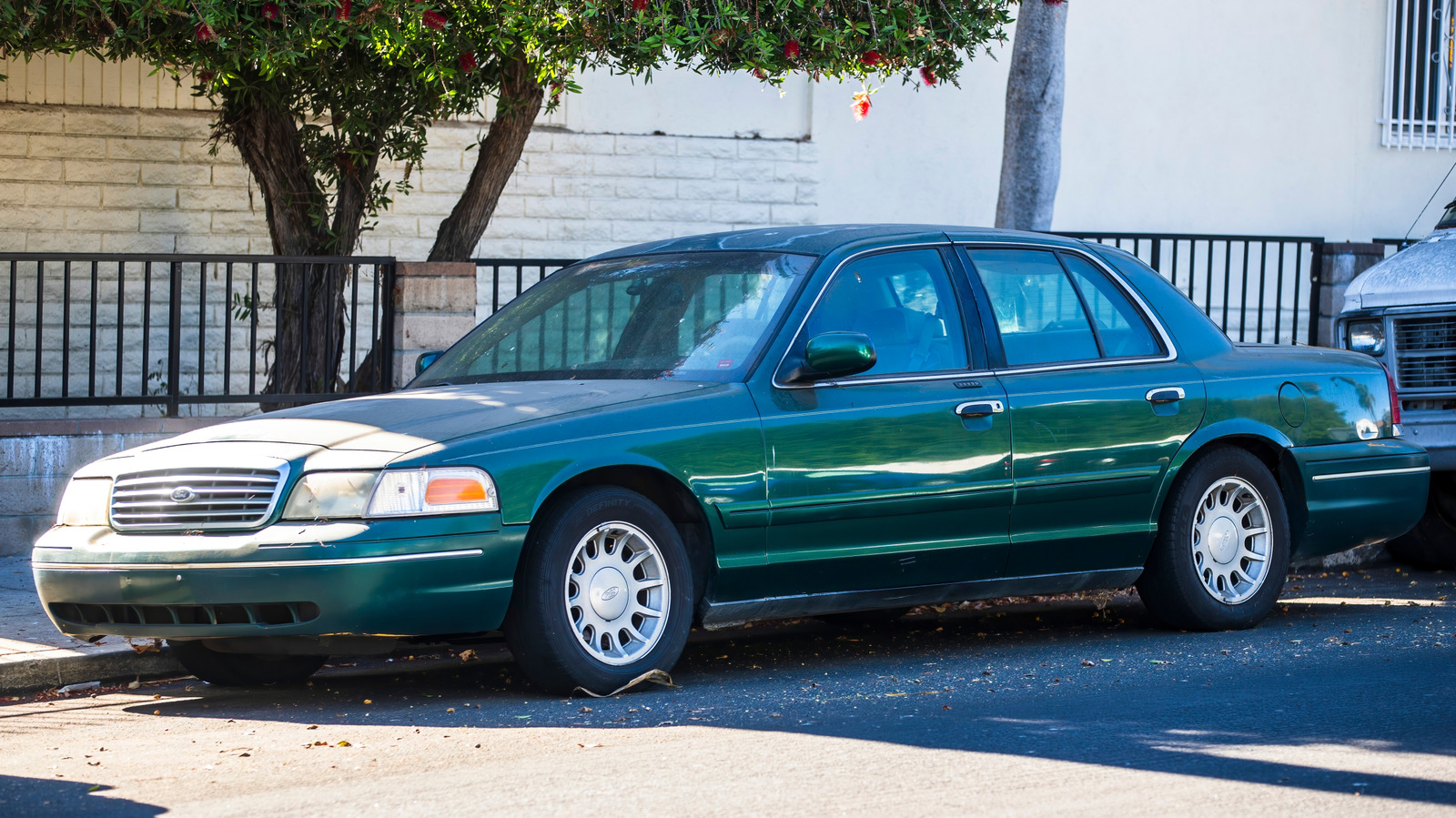
Body-on-frame cars may feel like a ghost from another era, but the old layout still has a surprisingly strong footprint in the modern auto world. Passenger cars have almost completely moved on, while trucks and SUVs kept the design alive for the kinds of jobs and abuse it handles best.
The big split between unibody and body-on-frame construction shaped decades of car design. In the passenger-car world, that split has already been settled, with unibody taking over almost everywhere and leaving body-on-frame behind.
For years, American roads were packed with body-on-frame sedans, coupes, wagons, and other familiar family cars. That changed as automakers chased lighter weight, better fuel economy, and easier packaging, and the shift slowly pushed the old setup out of ordinary car showrooms.
The last body-on-frame passenger car sold in the United States was the Ford Crown Victoria, which ended production in 2011. By then, it was already more of a survivor than a trendsetter, hanging on through Ford’s Panther platform long after the rest of the market had moved on.
Go back a few decades and the story looks very different. In the 1970s, big names like the Oldsmobile Cutlass and Chevrolet Impala still rode on body-on-frame foundations, even while unibody cars were gaining momentum in other corners of the industry.
Unibody was not some brand-new invention waiting in the wings either. The Nash 600 helped pioneer it in the late 1940s, and by the early 1960s, major Ford, General Motors, and Chrysler models had already made the switch in large numbers.
Some platforms kept the older formula alive longer than expected. GM’s G-body lineup carried body-on-frame construction into the 1980s, while the B-body cars held on until the mid-1990s and bowed out with the Impala SS.
Ford stretched the concept even further with its full-size rear-drive Panther platform. That architecture supported not just the Crown Victoria, but also the Mercury Grand Marquis and Lincoln Town Car, giving buyers one last dose of big, traditional American iron.
That long run gave those cars a loyal following that still lingers today. The Panther cars became known for their toughness, simple layout, and unmistakable old-school feel, which is exactly why they earned a cult reputation once they disappeared.
The reason body-on-frame passenger cars faded is pretty straightforward. They were heavier, less efficient, and usually weaker on the safety and refinement front than newer unibody designs, so the market kept drifting toward the lighter option.
There is also a bigger twist in the story. The full-size body-on-frame car did not vanish so much as change shape, with its basic mission shifting into the modern pickup truck and the SUV.
That makes the transition easy to see. The old four-door Impala with a V8 and a huge trunk has a close modern cousin in a crew cab Silverado, while the classic station wagon’s family-hauling role now lives on in vehicles like Explorers and Tahoes.
Those newer trucks and SUVs do the same kind of work, just with taller bodies, more cargo flexibility, and a tougher chassis underneath. Body-on-frame has not gone extinct at all, it just moved to the vehicles that still need it most.
