
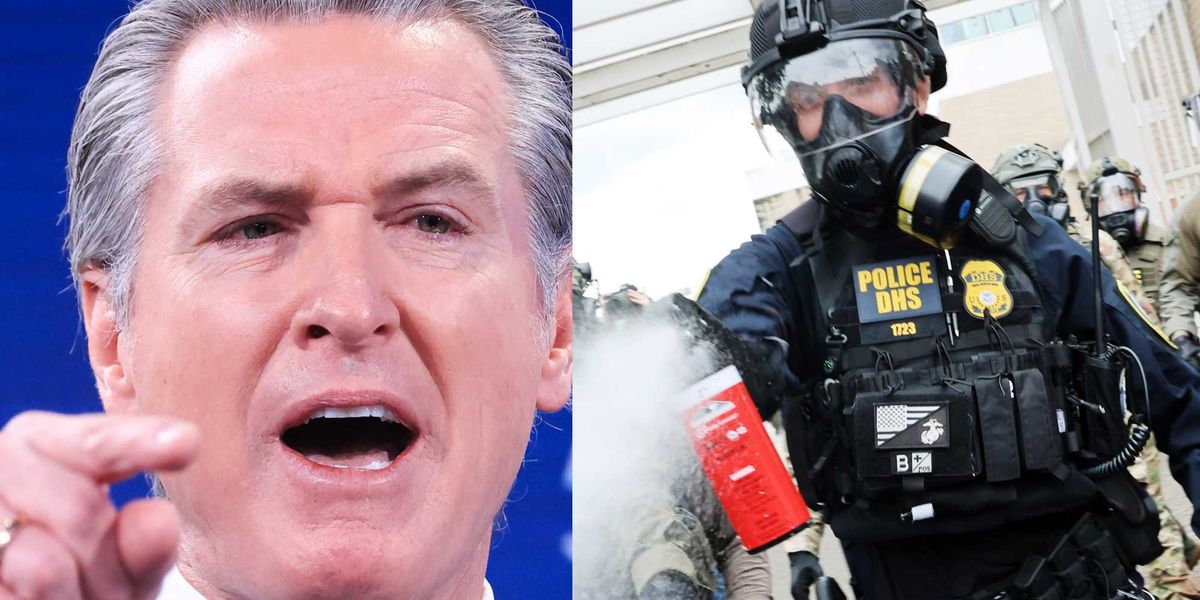
A federal appeals court has temporarily blocked California’s No Vigilantes Act, finding it likely unconstitutional under the Supremacy Clause and pausing the law while the court reviews the case. The fight pits state theater against federal authority, with the Biden administration successfully arguing that California crossed a constitutional line. Both sides warn of public safety consequences, and the state can still seek emergency relief from the Supreme Court.
The appeals panel issued a clear rebuke to the state for trying to regulate federal agents in the course of their duties, siding with the federal government’s argument that the measure intrudes on federal sovereignty. Federal officials argued the law singles out non‑uniformed immigration officers and attempts to tell them how to operate during enforcement. That constitutional confrontation is exactly why the courts stepped in to block the law for now.
“That is precisely what the No Vigilantes Act does,” wrote U.S. Circuit Judge Mark Bennett in the unanimous decision. Bennett’s language cut straight to the point, calling the statute a direct regulation of government officers rather than ordinary conduct. The panel made clear the issue is not about badges or theater, it’s about whether a state can set rules for federal agents engaged in federal duties.
“The Act does not regulate conduct that any ordinary citizen could perform,” continued Bennett. “Rather, it applies exclusively to law enforcement agencies and their officers, including federal law enforcement agencies and federal law enforcement officers. The Act thus directly regulates conduct reserved to sovereigns.” Those lines underline the central legal problem: the state moved into territory reserved for the national government.
California’s leadership framed the law as a transparency measure aimed at unidentified agents operating in public spaces, but critics say the law puts federal officers and their families at risk by forcing them to reveal sensitive operational details. The federal government argued those operational choices are part of federal law enforcement prerogative and thus protected by the Supremacy Clause. With the injunction in place, the law cannot take effect while the Ninth Circuit sorts the legal questions.
“Transparency and accountability are the foundation of good law enforcement,” read a statement from Bonta’s office. “The Trump administration has stepped well outside the boundaries of normal practice, deploying masked and unidentified agents to carry out immigration enforcement, despite the risks these tactics pose to public safety and basic civil liberties.” That stance reflects the state’s position but does not answer the constitutional grant of authority to the federal government.
Gov. Gavin Newsom has made the law a signature opposition move to federal immigration policy, and he has used fiery rhetoric to rally supporters. “I’ll be signing a bill, the first in the nation, saying enough! To ICE: Unmask. What are you afraid of?” Newsom to supporters in Sept. 2025. His tone makes the dispute feel political rather than legal, which is exactly the point federal lawyers raised in court.
Newsom also demanded basic on‑the‑street identification from federal officers, pushing the message that state rules should trump federal discretion. “You’re gonna go out and you’re gonna do enforcement? Provide an ID,” he added. “Tell us what agency you represent. Provide us basic information that all local law enforcement is required to provide.” Those demands echo a political campaign line more than a workable policy for coordinated law enforcement.
The panel included judges appointed by different presidents and still reached a unanimous decision, underscoring the court’s view that the state overreached. California can apply to the U.S. Supreme Court for emergency relief, but for now federal enforcement actions will not be constrained by this state law. The case will force a clear ruling on how far a state can go when it targets federal officers carrying out their duties.
Public debate will keep circling around safety, civil liberties, and who gets to set enforcement rules. Supporters of federal authority argue the government must be able to carry out immigration enforcement without patchwork state limits, while state officials insist on transparency and local input. The legal fight is just getting started, and the courts will decide whether California’s political theater can become binding law.
https://x.com/MarcoFoster_/status/1969494551506153665
