
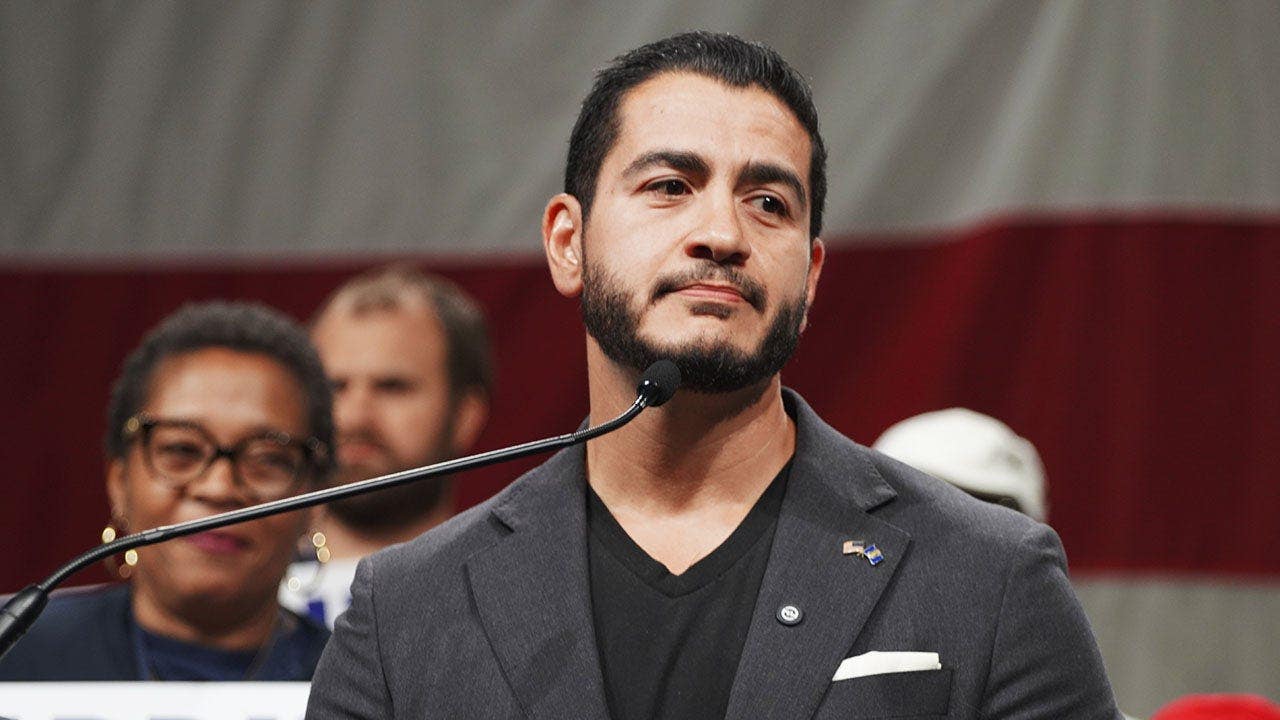
America’s political class keeps tripping over a basic distinction that matters a lot more than it gets credit for: Muslims are not Islamists, and criticism of political Islam is not the same thing as hate. That confusion has turned a serious national conversation into a fog of accusations, slogans, and bad faith, especially as the rise of Abdul El-Sayed pulls both parties into the mess.
For many Muslims, the difference is personal and painful. A Muslim woman, physician, and longtime critic of Islamism has seen the damage up close through work involving victims of Hamas, ISIS, the Taliban, and other extremist movements that hide behind religious language while trampling human life. Those experiences make one point impossible to dodge: extremist ideology can grow inside a faith without defining that faith as a whole.
That tension hit a new level when El-Sayed became the nation’s first Muslim senator-elect. His victory should have opened a serious debate about Islamism, political alliances, and the line between religious identity and ideological commitment, but instead it triggered a predictable scramble. Republicans often went too broad and too hard, while Democrats rushed to treat any scrutiny as taboo.
That’s where the blind spot starts. Republicans lose credibility when they talk as if all Muslims are suspect, because that kind of sweeping language blurs the real threat and alienates the very voters they need to persuade. Democrats, meanwhile, often refuse to engage with the substance at all, hiding behind the charge of “Islamophobia” even when the questions are about political associations, public statements, or views tied to Islamist movements.
El-Sayed’s rise exposed that double failure in real time. He denied family ties to the Muslim Brotherhood and mocked critics after the election, but the issue did not disappear just because he brushed it off. Public office invites scrutiny, especially when a candidate has been surrounded by questions about ideological networks and past commentary that touch on the Brotherhood and related movements.
There is a difference between bigotry and accountability, and that line matters. Calling someone a menace because of their religion is lazy and wrong, but asking whether a politician has made excuses for extremist ideology is fair game. When those two things get mashed together, real warnings get buried and bad actors get more room to operate.
Republicans have their own credibility problem here because some of the attacks on El-Sayed were flat-out reckless. Comments like calling him “very, very evil” or a “jihadist” may fire up a crowd, but they also hand Democrats an easy escape hatch. Once the debate turns into blanket attacks on Muslims, the legitimate questions about Islamist influence become easier to dismiss.
That same problem shows up in the broader debate over how Islamist networks work. A 2025 French government report on the Muslim Brotherhood pointed to “Islamist entryism,” the practice of building influence through civic groups, associations, and local institutions. That kind of strategy is exactly why voters deserve honest discussion, not slogans that shut the conversation down before it starts.
Democrats are not exactly solving the problem either. Too many leaders treat every challenge to Islamist politics as prejudice, even while their own coalition fights over antisemitism, anti-Zionism, and hostility toward Israel. Once those fights spill into campaign events and public appearances, the refusal to draw clear lines starts looking less like principle and more like avoidance.
El-Sayed’s political orbit only sharpened the questions. His appearance with Hasan Piker, who once said America “deserved 9/11,” raised eyebrows for good reason, even if El-Sayed later distanced himself. Politicians cannot be blamed for every word from every supporter, but they do need to reject ugly rhetoric quickly and without hedging.
Another flashpoint came after the attack on Temple Israel synagogue in Michigan. El-Sayed’s “hurt people hurt people” remarks were widely criticized because leaders are supposed to condemn antisemitic violence without leaving room for confusion. On issues like that, vague language is not a virtue, and it does not earn anyone a pass.
The deeper issue is whether elected officials can say plainly where they stand on the Muslim Brotherhood, antisemitism, Israel, and political Islam. Those topics are not side quests. They go to the heart of whether a politician supports pluralism or gives cover to an ideology that has done real damage across the world.
The answer cannot be panic, and it cannot be silence. Muslim Americans should be free to serve, vote, worship, and run for office without being treated like suspects, but Americans should also be free to ask tough questions about ideology, alliances, and public records. That balance is the only way to protect both religious liberty and the country’s political sanity.
https://x.com/clashreport/status/2118774717616373960
