
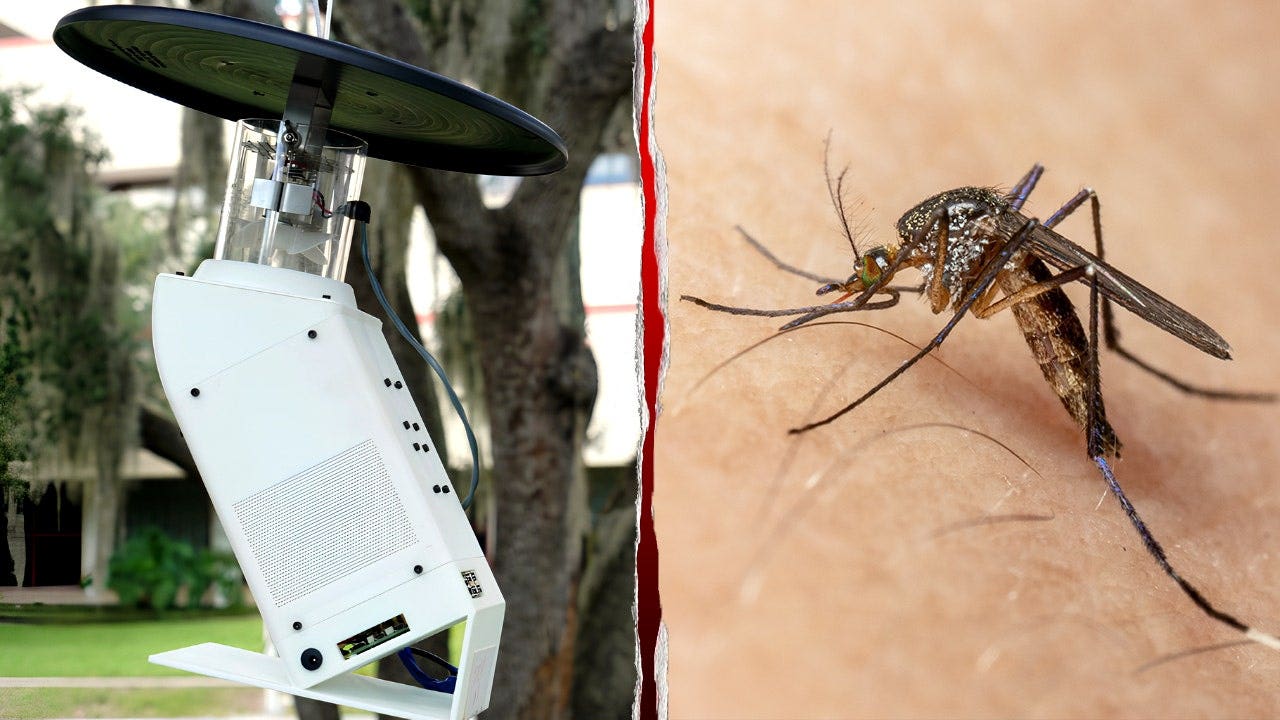
Florida’s dengue fight has taken a high-tech turn, and that matters because mosquito season does not always end when the calendar says it should. A new AI-powered trap from researchers at the University of South Florida is designed to spot dangerous mosquito species fast, giving health officials a better shot at moving before an outbreak spreads further. The timing is sharp, the need is real, and the stakes are bigger than a backyard nuisance.
What makes this especially urgent is the scale of the outbreak already hitting Florida. Hillsborough County has seen hundreds of locally acquired dengue cases, and the broader state total has kept health officials busy tracking where the virus is spreading. These cases are not tied to travel abroad, which means mosquitoes on home turf are doing the damage, and that changes the response in a big way.
The new trap comes from Digitomy, a startup built around research from USF scientists Ryan Carney and Sriram Chellappan. Instead of forcing experts to spend hours peering at specimens under a microscope, the device uses cameras and artificial intelligence to identify what it catches. In lab testing, the system has reportedly hit more than 98% accuracy when sorting mosquito species, which is a strong signal that the concept has real bite.
The setup is simple enough to be practical in the field. A light or bait lures mosquitoes in, a fan draws them toward a sticky surface, and the cameras snap images for the AI to analyze. The system can even tell whether a mosquito is male or female and whether it has recently taken a blood meal, details that matter because female mosquitoes are the ones that bite and spread disease.
That speed is where the trap could become a real game-changer. Traditional mosquito surveillance can take a couple of days, and during an outbreak, that lag can slow down treatment decisions and targeted spraying. Digitomy wants to shrink that window to the same day, which could help public health teams figure out where risky mosquito populations are showing up before the problem gets worse.
The focus is on species like Aedes aegypti, which is one of the main mosquitoes linked to dengue transmission in Florida. Knowing which species are present is not the same as proving a mosquito is infected, so lab testing would still be needed for that step. Even so, finding the right species early can give officials a much clearer map of where to push control efforts.
That early warning angle is what makes the technology feel bigger than a single device. If traps begin feeding results into a dashboard, mosquito control teams could see patterns develop across neighborhoods instead of waiting on scattered reports. A few more detections in the same area could trigger targeted action, which is a lot smarter than playing catch-up after more people get sick.
The researchers have already linked trap data to a private layer of a larger mosquito observation dashboard, and that platform also pulls in citizen science reports. It is a mix of automation and public participation that could give health departments a fuller picture of mosquito activity. The same system may also support earlier warning tools for other mosquito-borne threats, including West Nile virus.
There is also a practical side to the rollout. The trap has been tested at USF and with a mosquito control district in St. Johns County, and field validation is being lined up for Hillsborough County as well. Digitomy is working toward licensing the AI system to established trap manufacturers, which could make adoption easier than asking agencies to replace their entire setup.
For now, there is no consumer version on the shelf and no retail price to point to. The company has also received accelerator funding to help move the technology from research into real-world use, and it is building training tools for mosquito control pros and the public. That matters because better surveillance only works when people on the ground know how to use it well.
Even with all the tech in play, the basic advice has not changed much. Dump standing water, use repellent, and cover up when mosquitoes are active, especially in warmer places where the bugs keep going long after summer fades. Smart traps may soon give communities a better edge, but the old-school habits still do a lot of heavy lifting while the next wave of mosquito surveillance takes shape.
