
America’s security now runs through factories, data centers, batteries, and the raw materials that feed them. The problem is simple and unsettling: the United States has leaned too hard on China for critical minerals, even though Alaska holds huge reserves that could help change the game. Graphite, in particular, has become a flashpoint because it sits at the center of modern industry and military readiness.
For years, national security was talked about mostly in terms of ships, jets, and troops. That still matters, but it is only part of the picture now, because the country also needs dependable access to the minerals behind advanced weapons, electric vehicles, energy storage, semiconductors, and artificial intelligence infrastructure. If those materials are vulnerable, so is everything built from them.
The COVID-19 years made that reality hard to ignore. When overseas supply chains broke, American hospitals felt the squeeze on basic medical gear that had been produced in China and shipped across the world. That same dependence carries over into critical minerals, where a disruption can ripple into defense production, manufacturing, and everyday technology faster than most people realize.
Graphite is easy to overlook because many people still think of it as pencil material, but that view is way too small. It is a key ingredient in rechargeable batteries, and it also shows up in drones, defense systems, advanced manufacturing, and the power-hungry infrastructure behind data centers. In a world running on stored energy and computing power, graphite is not a side issue. It is part of the engine.
China has spent decades building control over the mineral supply chain, from mining to processing to finished materials. That gives Beijing leverage, and it has not been shy about using strategic pressure when it suits its interests. When one rival can choke off materials that American industry needs, the United States is not in a strong position.
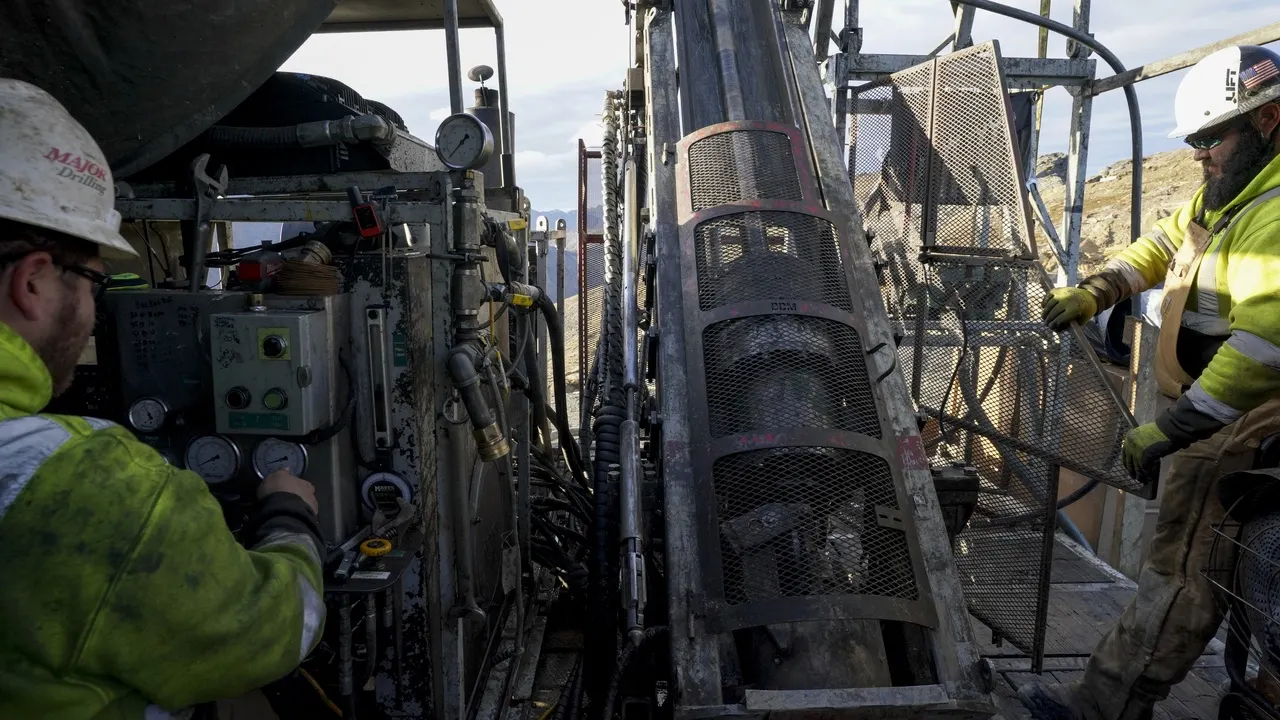
That is why Alaska keeps coming up in the conversation. The state contains 57 of the 60 minerals considered critical to America’s economic and national security, and on the Seward Peninsula sits Graphite Creek, a deposit with serious strategic value. The site is widely viewed as the largest known graphite deposit in the country and one of the biggest anywhere, which makes it more than a mining story. It is a national asset sitting in plain sight.
Still, digging up raw material is only the first step. A secure supply chain does not stop at the mine gate, because processing matters just as much as extraction. China dominates that part of the system too, and that leaves the United States exposed even when domestic resources are available underground.
The real goal is a full American chain from the ground to the finished product. That means mining at home, processing at home, and manufacturing at home, under American standards for labor, safety, and the environment. It is hard to argue with that formula, especially when the alternative is leaning on countries that do not share America’s interests.
For too long, slow permitting and regulatory uncertainty have made big domestic projects harder to build than they should be. That hesitation has pushed the country toward imports, even when the result is weaker security and less control over the supply chain. The irony is painful: America has the resources, the talent, and the capital, but too often not the speed or determination to put them to work.
There is no mystery about what needs to happen next. The country needs responsible development of its own mineral wealth, along with processing capacity that keeps more value inside the United States. Alaska could play a central role in that shift, and graphite may turn out to be one of the materials that finally forces Washington to treat mineral independence as a serious priority.
