
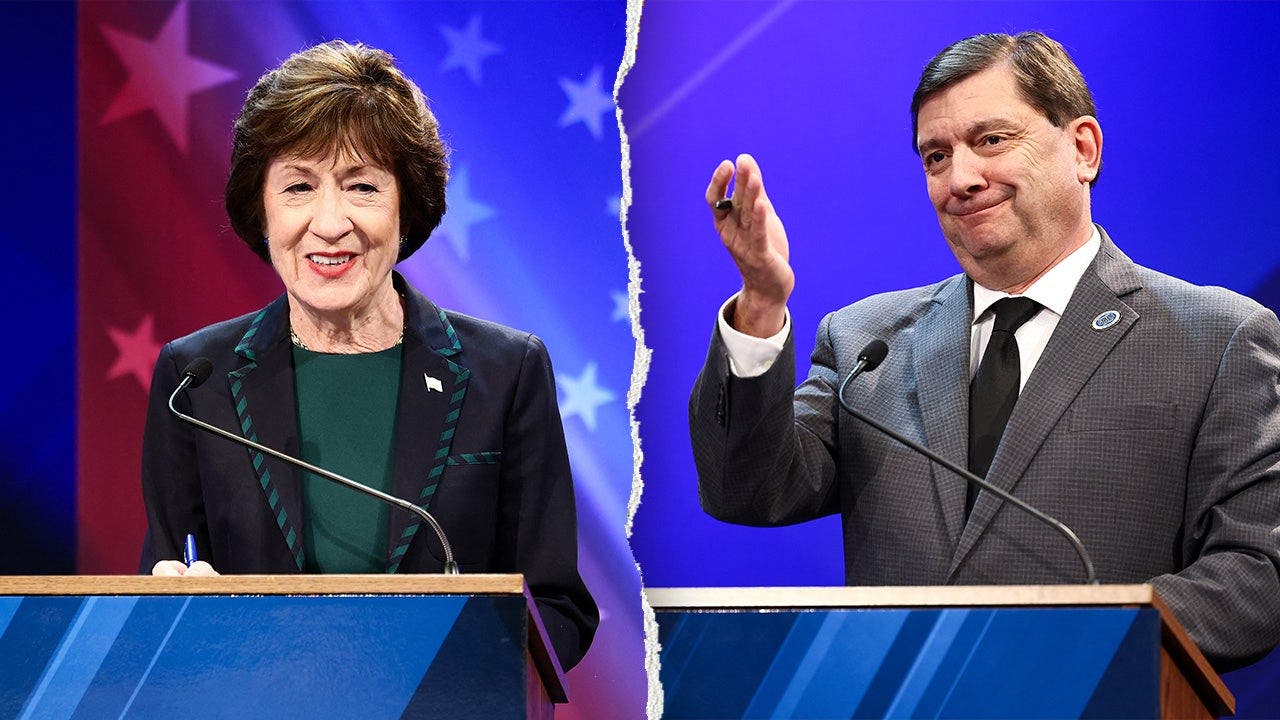
Sen. Susan Collins and Troy Jackson brought plenty of heat to their latest Maine Senate showdown, trading sharp words over money, loyalty, and who really understands working people. The debate swung from billionaire donors to Donald Trump to personal digs, with both candidates trying to claim the mantle of independence while knocking the other off balance.
One of the night’s loudest moments came when an interruption from the crowd turned into a verbal snap. Collins suggested the heckler was backing Jackson, and Jackson immediately fired back with, “Oh shut up,” before saying, “I don’t even know that kid.”
That kind of raw exchange fit the tone of a race that has gotten more combustible with every debate. Collins pressed Jackson on whether his anti-billionaire message matched his campaign finance record, arguing that his rhetoric and donor list did not quite line up.
Jackson did not dodge the issue. He admitted that billionaires were supporting his campaign, then tried to draw a bright line between his position and Collins’ approach, saying he had not made “deals” the way she supposedly had and that he planned to tax wealthy donors if he reached the Senate.
Collins kept coming back to the same theme, which was whether Jackson was really serious about standing up to his own side. She framed the contest as a test of backbone, asking whether he would ever break with Democrats when it mattered for Maine.
The independence question also followed Collins, especially when the moderator pressed her to name a time she had bucked Trump in a meaningful way. Collins pointed to her opposition to the confirmation of Defense Secretary Pete Hegseth, describing it as a moment when she helped organize resistance inside her party.
Jackson was unimpressed by that defense and argued that Collins still ends up where Trump wants her more often than not. He painted her as a politician who likes the image of moderation but still delivers for Republican priorities when the pressure is on.
Collins answered by leaning into her reputation as a centrist and saying she votes independently. She argued that Jackson, by contrast, would be too tied to party loyalty and that Maine does not need another senator who simply follows the line.
Jackson pushed back by pointing to his record in the state Senate and his clashes with Democratic Gov. Janet Mills. He used that as evidence that he is not anyone’s rubber stamp, especially not when his own party is in charge.
The debate also took a more personal turn when Jackson questioned whether Collins looked down on him because he came from a working-class background. The question landed hard, and it shifted the room from policy squabbles into something more pointed and emotional.
Jackson said his life experience gave him a perspective Collins could not dismiss, then asked whether her criticism was aimed at him alone or at working-class people in general. It was the kind of line that forces a candidate to answer not just about policy, but about respect.
Collins rejected that framing and offered her own story in response. She said she grew up in Caribou, picked potatoes as her first job, and started working when she was ten, using that background to argue that she understands ordinary Mainers better than Jackson was giving her credit for.
The back-and-forth made clear how much this race has turned into a fight over identity as much as ideology. Both candidates are trying to prove they are the one who can stand up for Maine without folding to party bosses, wealthy donors, or national pressure.
With Election Day approaching, every exchange now feels a little bigger, and every jab carries more weight. In a state where Senate control could come down to a handful of tight contests, this kind of debate does not just stir the crowd, it can set the mood for the final sprint.
