
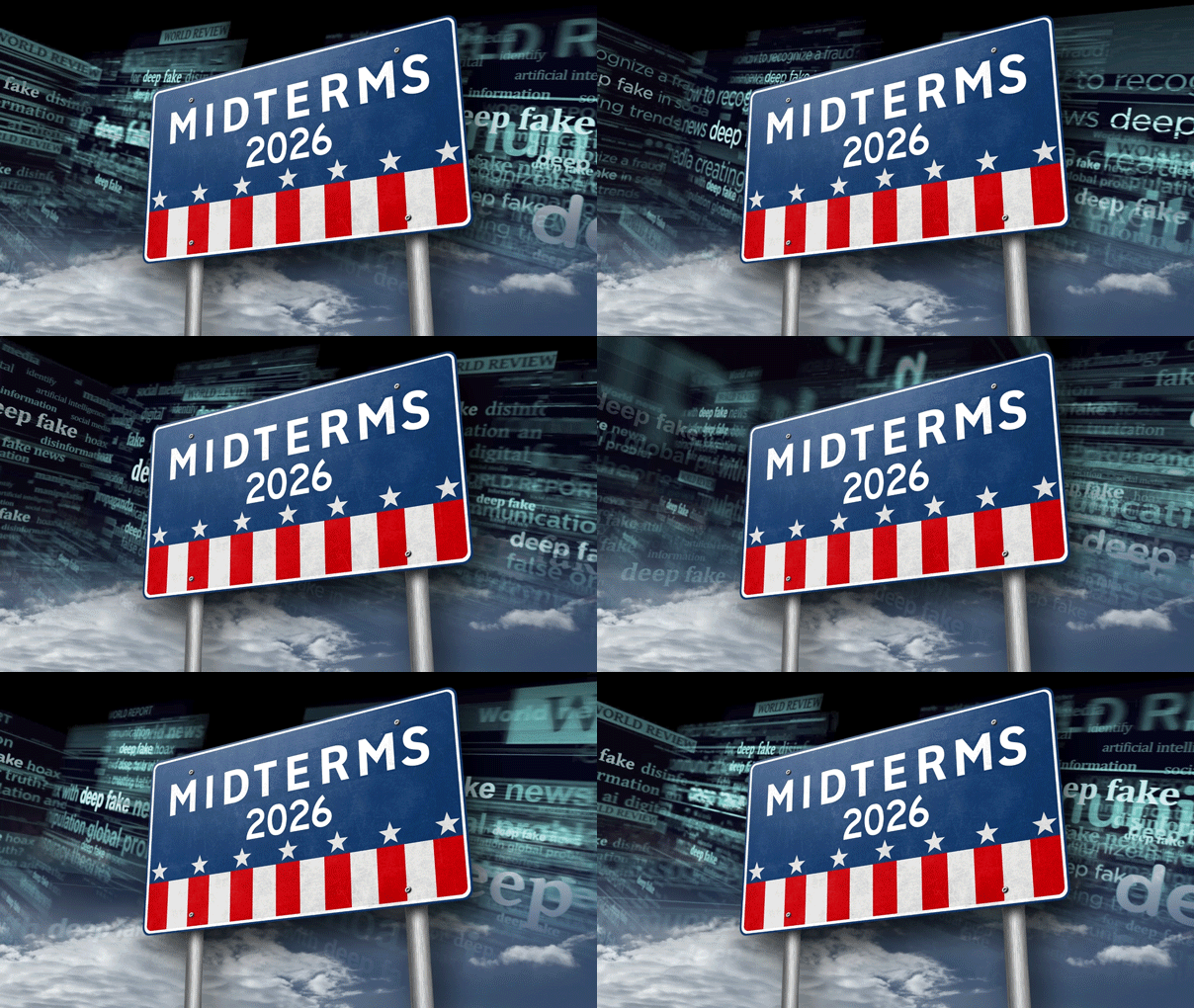
AI has stormed into campaign season like a fresh stack of flyers printed at warp speed, and political operatives are loving the convenience. But the loudest, flashiest ad does not automatically turn into votes, and that gap is where the real fight is happening.
The appeal is easy to see. AI can crank out more content, in more styles, for less money, which is a dream for campaigns trying to stretch every dollar. That means faster ad production, cheaper creative work, and more room to test messages that might have taken weeks to build the old-fashioned way.
Still, the big edge is not just speed. Campaign veterans say AI is already being folded into message writing, outreach, and creative development, and the teams that ignore it are likely falling behind. The technology is changing the grind of politics, but it is not replacing judgment, strategy, or a sharp political instinct.
That point keeps coming up in the Republican world, where consultants are openly embracing the tools while warning against getting dazzled by them. A polished visual trick or a clever synthetic voice can grab attention fast, but attention is not the same thing as persuasion. A campaign still has to land a message that feels true, hits hard, and actually sticks.
One of the clearest examples came from Massachusetts, where an AI-generated radio spot used a synthetic version of Gov. Maura Healey’s voice to attack her record and draw major attention. The ad helped stir the conversation around Republican Brian Shortsleeve, but the spotlight did not carry him through the GOP primary. That outcome reinforced a lesson campaigns keep relearning: a viral stunt can create noise without changing the result.
Los Angeles offered another vivid test case. Spencer Pratt used AI-generated videos that cast him as a heroic figure in a city under siege, and the clips exploded across social media. The material drove huge online momentum and pushed him into the conversation, but all that digital heat still stopped short of a spot in the general election.
The same pattern is showing up in other races too. Republicans have used AI imagery and synthetic messaging against Democrats in Senate contests, and some of those pieces have traveled far online. Yet even strong circulation does not guarantee that voters connect the dots in a meaningful way when they walk into the booth.
That is where the risk side of AI starts to bite. Deepfakes and synthetic audio can blur the line between real and fake so fast that voters start doubting everything, even material that is legit. Once that skepticism sets in, campaigns may find themselves fighting not just the opponent, but the public’s growing suspicion of the medium itself.
There is also a legal and regulatory mess hanging over all of it. States have begun passing rules around political deepfakes, but the national picture is still scattered, and campaigns are operating in a space where the technology is moving faster than the guardrails. That gives operatives room to innovate, but it also raises the odds of backlash when something crosses a line.
Republican strategists are not pretending the trend is temporary. They see AI as a tool that can help smaller teams punch above their weight, speed up production, and keep pace with bigger operations that used to dominate on resources alone. The catch is that the message still has to sound human, urgent, and believable, because voters can smell fake hype pretty quickly.
That is why the smartest campaigns are treating AI like a booster, not a shortcut to victory. It can sharpen a pitch, amplify a theme, and make a race louder in a hurry, but it cannot rescue a weak candidate or a muddled argument. In the end, the campaigns that win are still the ones that make people feel something real, not just something flashy.
