
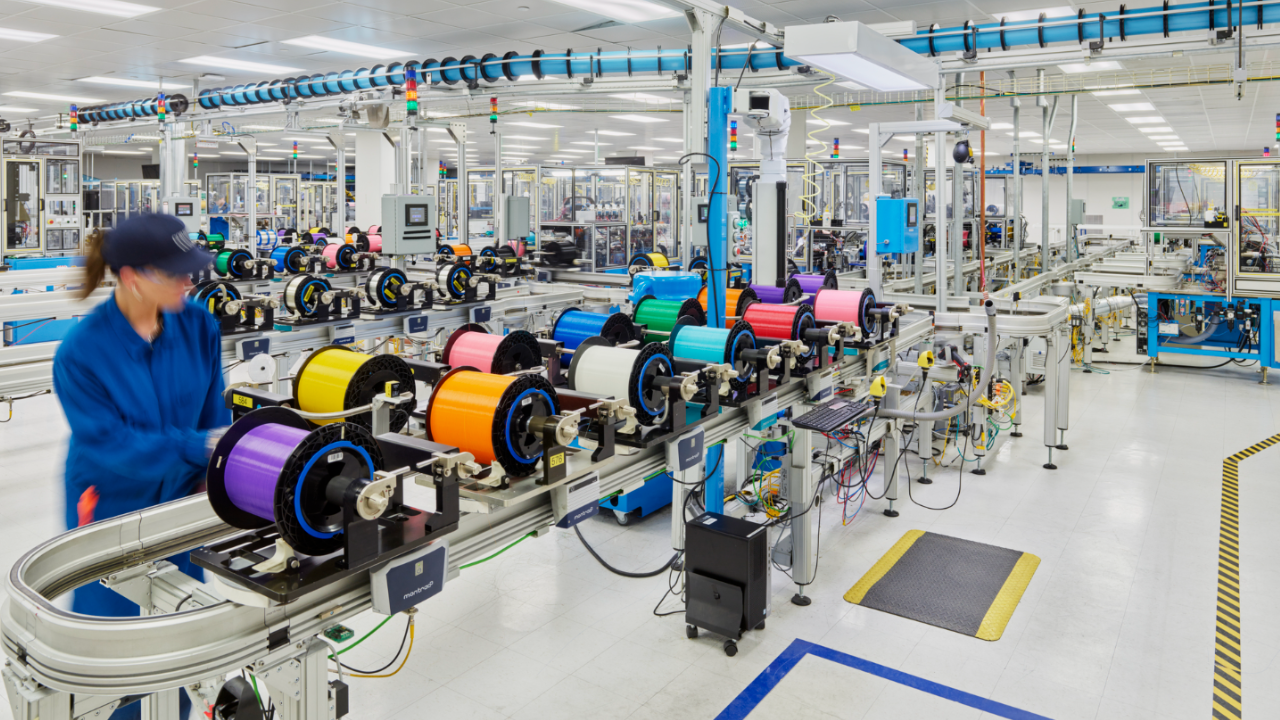
AI’s explosive growth is doing more than supercharging chipmakers and cloud giants. It is also pulling a 175-year-old glass company into the center of a new industrial rush, with Corning set to expand U.S. optical manufacturing, add thousands of jobs, and become a bigger piece of the country’s tech backbone.
The surge in artificial intelligence has set off a race to build more data centers, and those facilities need far more than power and server racks. They depend on high-speed optical fiber to move huge amounts of data fast, which puts Corning in a very strong spot as demand keeps climbing.
Corning, based in New York and long known for kitchenware and smartphone glass, is scaling up production to keep pace. The company has spent nearly 175 years reinventing itself, and now it is supplying the glass connections that help tie together the servers inside modern AI facilities.
The company’s latest push comes through a partnership with NVIDIA to build three advanced optical-manufacturing facilities in North Carolina and Texas. That move is expected to create more than 3,000 jobs and increase Corning’s U.S. optical-manufacturing capacity tenfold, a serious leap for an old-school American manufacturer.
That kind of growth shows how the AI boom is spreading well beyond software screens and computer chips. The real story includes factories, production lines, and skilled workers making the hardware that lets the whole system breathe.
Corning chairman, CEO and president Wendell Weeks said the company is seeing growth at a pace that stands out even after almost two centuries in business. “AI is a huge job creator, and it’s a huge manufacturing job creator,” Weeks told Fox News Digital.
He also said the company could nearly double in size over the coming years, with most of the new hiring concentrated in advanced manufacturing. “As a 175-year-old company, we’re going through our fastest growth period,” Weeks said. “We will probably double our size over the coming years and almost all of our new hires will be in advanced manufacturing, a significant part of them right here in America.”
On the ground, that momentum is already being felt in Corning’s facilities. Emily Capek, a planning supervisor at the company’s Wilmington, North Carolina, plant, said employees can see the demand wave rolling straight into their daily work.
“As the world develops and tells us what it needs, we’re right there at the forefront,” Capek told Fox News Digital. She said the push for AI platforms is translating directly into stronger demand for Corning’s products, and that has given the factory floor a sense of urgency and pride.
For many Americans, AI can feel like a story about machines replacing people. Corning’s expansion points in another direction, where the technology race is still creating serious work for skilled labor, engineers, and technicians who build the physical systems behind the digital surge.
That matters because the data-center buildout is not some isolated tech story. It is dragging in manufacturers, contractors, and supply chains across the country, and the need for optical fiber is becoming one of the clearest signs that the AI economy runs on more than code and silicon.
Inside those data centers, Corning’s fiber handles the heavy lifting of moving information between servers and chips. The fast-growing market may be dominated by flashy headlines about artificial intelligence, but the infrastructure underneath still depends on American manufacturing muscle to keep it moving.

1 Comment
Estd more fiber plants alone nationwide