
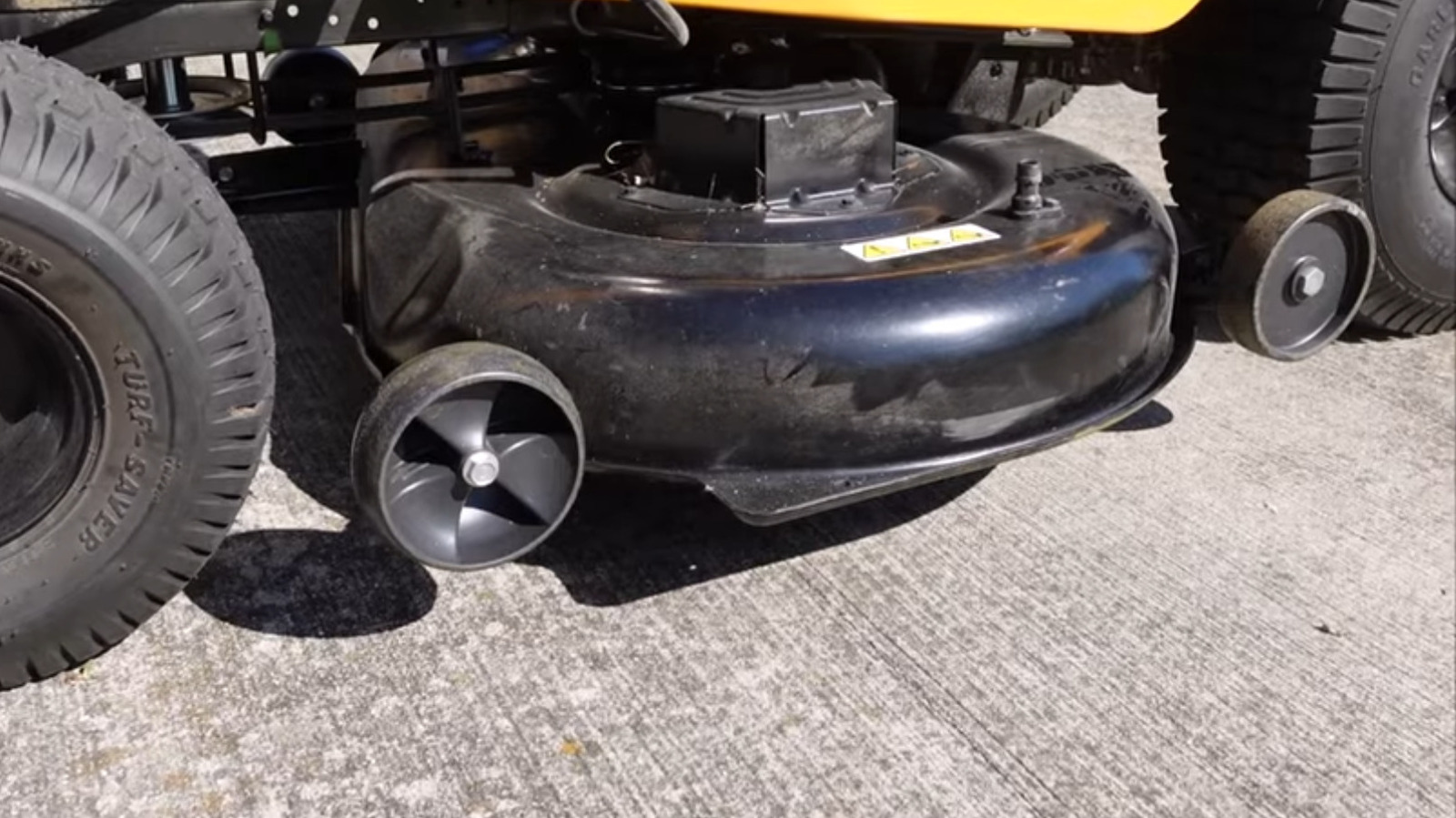
The tiny wheels on a mower deck seem minor but they shape how your lawn gets cut, how the deck behaves over bumps, and how long the blades and deck last. This piece breaks down why deck wheels exist, whether they should contact the turf, how to set them for different ground conditions, and the common mistakes that turn a useful part into a nuisance. Expect straightforward guidance on adjustment, wear signs to watch for, and practical setup advice you can use the next time you tune your mower.
Deck wheels act like a third set of eyes for the mower deck, controlling how closely the cutting deck follows the ground. They reduce the chance of scalping by supporting the deck at critical points, which is especially helpful on uneven lawns. Instead of relying solely on the mower deck’s height settings, these wheels share the load and buffer sudden drops or high spots.
Whether those wheels should touch the grass depends largely on the job at hand and the terrain. On flat, even turf you want minimal wheel contact so the deck rides on its own support and produces an even cut. Over rough or rolling ground, letting the wheels sit lightly on the surface prevents the deck from bottoming out and scalping peaks.
Adjustment is the key. Most mowers let you raise or lower deck wheels relative to the deck so you can set how much load they take. Start with the manufacturer’s baseline and then tweak in small steps, testing a short strip of lawn after each change until the blades leave a smooth, even finish without patches of brown where the deck dug in.
Watch how the mower behaves during the trial runs. If the deck bounces or the cut line shows uneven stripes, the wheels may be too high or too low. If you see ridges or areas where the grass is shorter around bumps, that is scalping and a sign the wheels need to bear more weight. Conversely, if the wheels drag and slow the mower or leave wheel marks, they are probably too low relative to the deck.
>
When terrain is extremely rough, consider raising the deck overall and letting the wheels do more of the work to preserve blade clearance and prevent damage to spindles and belts.
Maintenance matters as much as adjustment. Check wheel bearings, bushings, and mounting points for play or wear before the mowing season begins. Damaged wheels shift load unpredictably and lead to uneven cuts, so replace worn parts promptly to keep the deck tracking true across the lawn.
There are trade offs to consider. Wheels contacting too much of the ground can hold the deck at a fixed height that ignores small terrain variations and leave wheel tracks on softer soil. On the flip side, wheels set too high leave the deck vulnerable to dip-induced scalping, which ruins the look of freshly cut grass and can stress engine load when blades strike unexpected high spots.
Different mowing strategies call for different setups. For a manicured lawn you want minimal wheel influence and fine height adjustments for a crisp, uniform finish. For rougher yards or when towing heavy attachments let the wheels support more of the deck so components do not get jolted or overloaded by the terrain.
Practical tips: perform adjustments on level ground, mark your baseline so you can return to factory settings if needed, and mow a test stripe after each tweak. Keep spare wheels or replacements on hand if your mower gets frequent use, and consult the manual for torque specs so you do not overtighten fasteners and damage bushings.
Finally, listen to the mower while you operate it. Strange vibrations, sudden changes in cutting quality, or the sound of blades striking obstacles all hint at wheel or deck issues that deserve immediate attention. With simple checks and small adjustments you can make those deck wheels work for you instead of against the lawn and avoid costly repairs down the line.
