
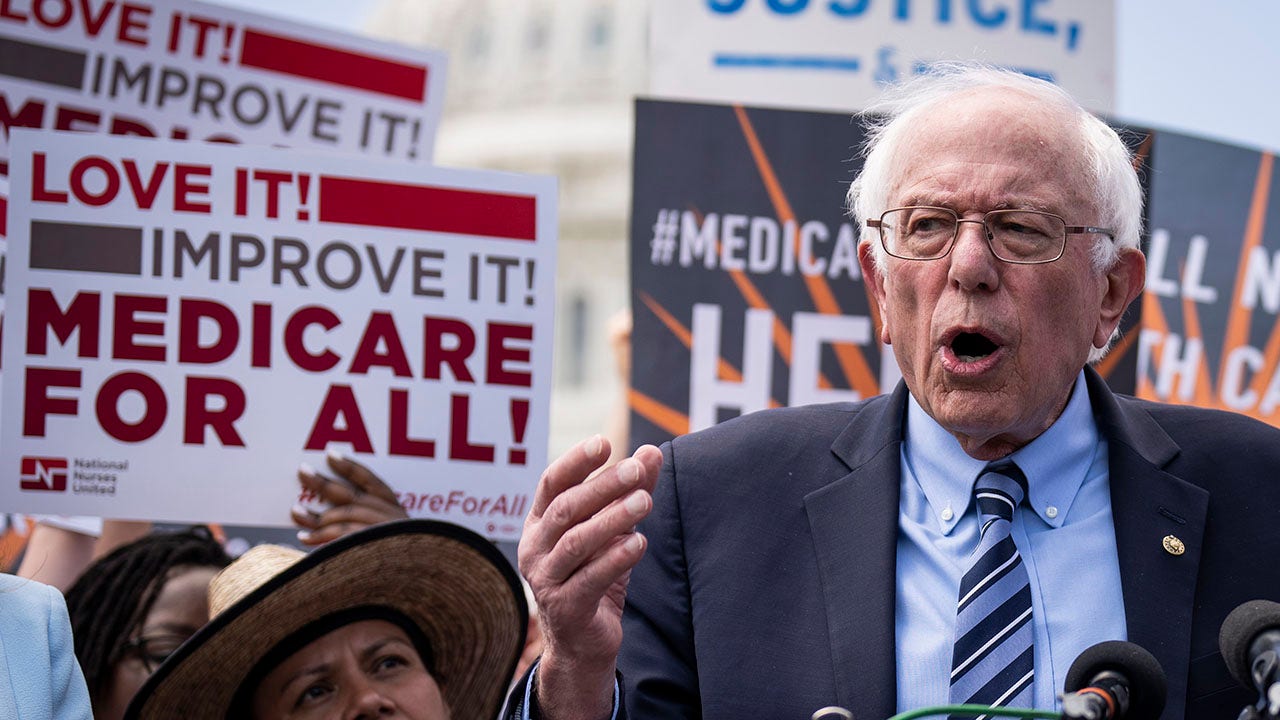
Medicare for All is sold with a smile and a promise that sounds almost too good to question: no premiums, no deductibles, no copays, and a healthcare system that supposedly just works. But that pitch leaves out the part that always matters when the numbers get real, because somebody still has to pay doctors, hospitals, nurses, and the rest of the system that keeps the country running.
The basic problem is simple. Health care does not become free just because Washington says it is. The bill does not disappear, it just shifts from the checkout counter to taxpayers, and that is where the debate turns from slogan to math.
The price tag is not a minor detail, either. The Congressional Budget Office has modeled single-payer systems that could push federal healthcare spending up by roughly $1.5 trillion to $3 trillion a year by 2030, which would make it one of the biggest spending shocks in modern American history. At the high end, that adds up to about $30 trillion over a decade, a number so huge it makes most budget fights look like pocket change.
That matters even more because Washington is already buried in debt and already taking in trillions in revenue just to keep the lights on. Adding another giant entitlement on top of that means somebody has to make up the difference, and there are only so many ways to do it. Higher payroll taxes, higher income taxes, and new surtaxes are the most obvious routes, which is why the word “free” is doing a lot of heavy lifting.
Supporters of single-payer usually make a fair point of their own. Many Americans do spend a painful amount on premiums, deductibles, and copays, and for families getting squeezed every month, the idea of wiping those costs away sounds like a lifesaver. But a premium disappearing on paper does not erase the underlying medical cost, it just changes which government hand reaches into the same wallet.
That is why the financing question is the whole game. A family could end up saving money, or it could end up paying more, depending on income, health needs, and the final tax structure. Until someone puts the funding plan on the table in plain English, nobody can honestly say whether the average household comes out ahead or gets stuck with a worse deal.
There is also the issue nobody can wish away: doctors and hospitals are not magic. If millions more people suddenly use the system because cost barriers drop, demand goes up fast, and the country still has shortages of medical professionals in many places. More coverage is a good idea on paper, but more coverage without more capacity can mean longer waits, tighter access, and more pressure on already strained hospitals.
That is where the details get messy. If Washington tries to hold spending down by squeezing reimbursements, physicians and hospitals take the hit. If it pays more, the tax burden grows even bigger, and the whole promise of simplicity starts to unravel under its own weight.
There is also a serious question about what happens to the coverage millions of people already have through work. Employer-sponsored insurance is still the backbone for a huge share of Americans, and a sweeping federal plan would replace that system whether people like it or not. Some would welcome the change, but others would lose the plans, provider networks, or benefits they prefer, and employers would be forced into a major reset.
Even Medicare itself is a reminder that government health coverage is never truly free. Beneficiaries already pay premiums, deductibles, and often buy extra coverage to fill the gaps. A true Medicare for All setup would be more generous than traditional Medicare in important ways, and generosity is great until the financing bill lands on the doorstep.
The bigger issue is that politics cannot repeal economics. Washington can rename the bill, repackage the bill, or hide the bill inside another tax code trick, but it cannot make the bill vanish. Health care is already a massive part of the American economy, and any serious plan has to deal with prices, waste, drug costs, and access without pretending those problems can be solved by a press release.
That is why the argument keeps coming back to the same hard truth. Americans do deserve care, and the country does need a system that is cheaper, smoother, and less frustrating. But when someone promises a trillion-dollar overhaul and calls it free, the real question is not whether the pitch sounds good.
The real question is where the bill is going to show up, and whose paycheck is going to absorb it when it does.
