
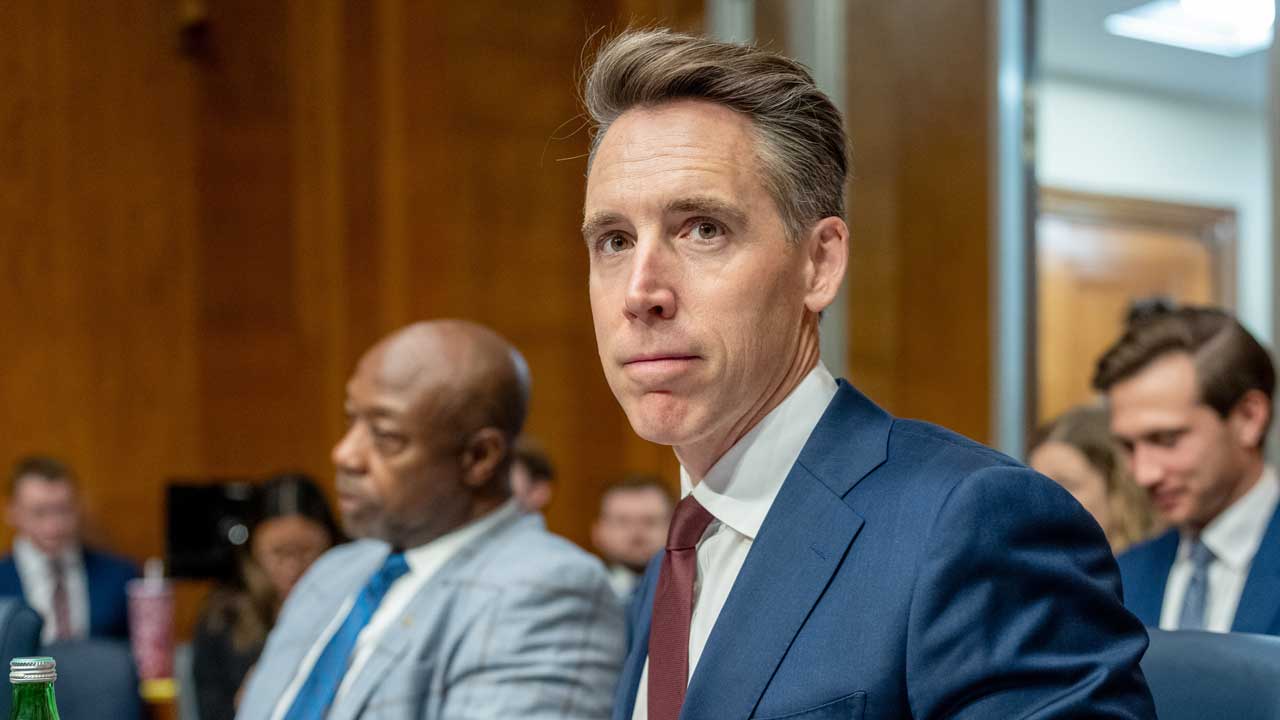
Josh Hawley is suddenly sounding less like a senator content to sit on the sidelines and more like a Republican who knows the 2028 conversation can move fast. After a rough election night for the GOP, his language has shifted from flat-out denial to open-ended reflection, and that is enough to get the political class buzzing. The change matters because Hawley is not some back-bench name tossed around for fun, he is a national figure with the kind of profile that can catch fire if the field gets messy.
Just a few months ago, Hawley was telling people there was no presidential run in his future. Now he is saying the election forced serious thinking about the party, the country, and what his own role might be in the years ahead. That is not a declaration, but it is also not the same hard no he gave before, and Washington hears the difference loud and clear.
The timing is what makes this interesting. Democrats came out of the midterms with real momentum and will take control of both chambers next year, which puts Republicans in a bruising stretch of soul-searching. When your side gets hit that hard, every ambitious senator, governor, and donor starts asking the same blunt question: who is actually ready to lead?
Hawley’s answer so far has been cautious, but not dismissive. He told the Associated Press that after the election, anyone who cares about the future of the party and the country has “a lot of thinking to do,” then added that he has “a lot of thinking to do” himself. That kind of phrasing is carefully chosen, which is exactly why people in and around the GOP are reading so much into it.
He also told NBC News that he was alarmed by the election results and worried about where both the party and the country are headed. He said he wants to do his part and is trying to figure out what that part should be, which leaves plenty of room for speculation without locking him into anything. For a politician with White House-level ambition, that is often how the door gets cracked before it swings wider.
There is another reason this caught attention, and it is simple: Hawley had already said the opposite before. In September, he reportedly told the Washington Examiner that he had no intention of running in 2028, period. That kind of reversal, even a soft one, turns a routine political story into a live-wire guessing game.
Hawley’s track record gives the chatter real weight. He has been in the Senate since early 2019 and won reelection in 2024, so he is not facing an immediate deadline or some desperate need to scramble for a new stage. With years left in his current term, he has the luxury of watching the field, testing the mood, and deciding whether the moment is right to step into a bigger fight.
His comments also fit the broader mood inside the Republican Party, where midterm losses usually trigger a reset. That reset often brings out the people who think the party needs sharper edges, stronger messaging, and a clearer sense of purpose. Hawley has long fit that mold, which is why even a few cautious quotes can ripple far beyond Missouri.
The speculation will not slow down just because he has not made a formal move. His campaign did not immediately respond to questions, and that silence only adds more fuel to the chatter. In politics, especially after a bad cycle, a single sentence can hang in the air like a trial balloon, and Hawley just sent up a pretty big one.
