
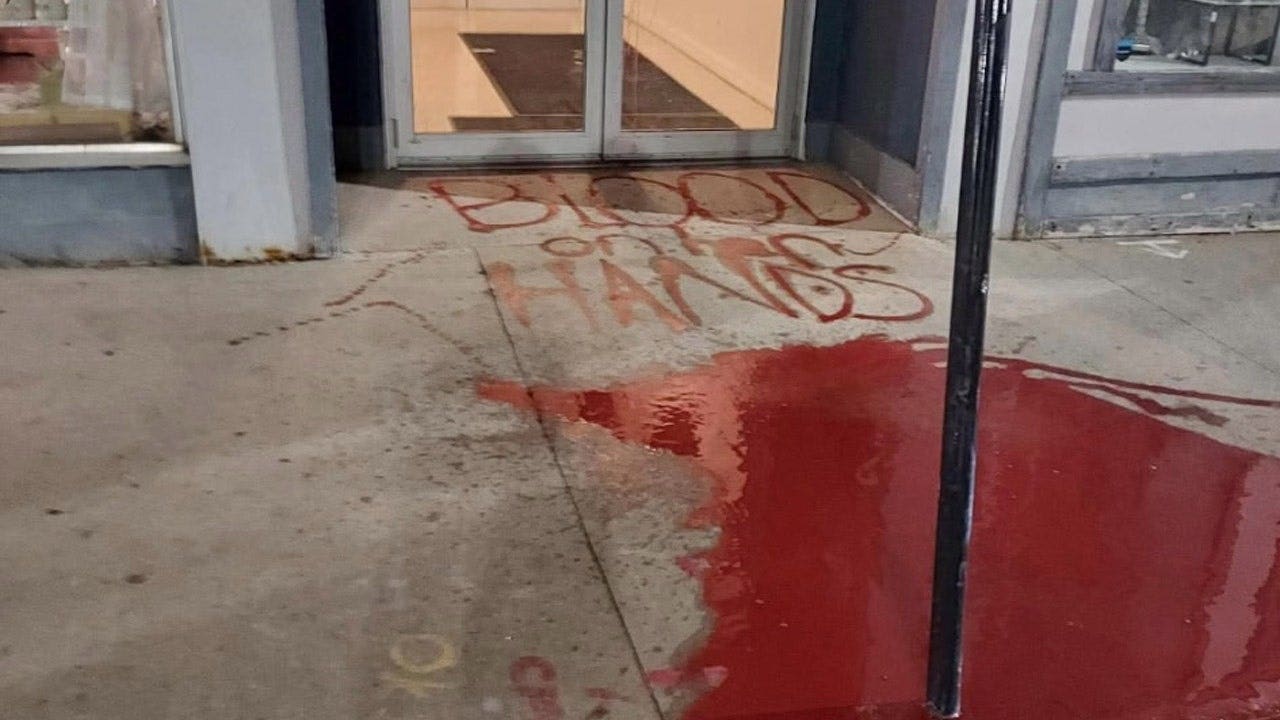
The Biddeford office of Sen. Susan Collins was hit with another round of vandalism just before Election Day, turning an already tense political fight in Maine into something uglier. Red paint, threatening graffiti, and a fresh police investigation have put the spotlight on the growing level of hostility surrounding the race.
Biddeford police are looking into the incident after someone splashed a bucket of red paint outside the office and scrawled “BLOOD on her HANDS” on the sidewalk. Collins’ chief of staff said this was the second attempt in a month to intimidate the senator and her staff, and made clear the office plans to keep working through it.
The latest mess followed an earlier September incident in which the building’s door was spray-painted. That earlier act already had the feel of a deliberate warning, and the new one made the pattern impossible to ignore. For staffers trying to do their jobs, it was another reminder that public service can come with a nasty edge when the temperature rises.
The Biddeford location has also sat near the center of a different flashpoint tied to immigration enforcement. After an ICE officer-involved shooting in July that left 26-year-old Colombian national Johan Sebastián Guerrero dead, protesters descended on the office days later and pushed through the front door while chanting “vote her out.”
That kind of scene leaves a mark well beyond a single building. It feeds a broader sense that anger is spilling from debate stages and social media into the real world, where offices, sidewalks, and staffers become targets. The paint on the pavement is only the latest example of how quickly politics can turn personal.
Then there was the red spray-painted insult on the office door in September, a crude message meant to humiliate as much as it was meant to offend. It was a blunt attempt to drag the campaign into the gutter, and the fresh vandalism suggests whoever did it wanted to raise the stakes even higher.
Even with the ugly backdrop, the response from Collins’ office stayed steady. Katie Brown said the intimidation was “disturbing” but not effective, and that the staff remained focused on the work in front of them. That kind of message matters in a moment like this, because chaos tends to feed on fear and retreat.
Collins’ Senate challenger, former Democratic state Senator Troy Jackson, condemned the vandalism and said there is no place for that kind of behavior in Maine. He said Collins and her staff should be able to do their jobs without anyone defacing the office, adding plainly that whoever did it should be condemned.
Jackson also spoke out after the September vandalism, reinforcing that the office attacks were over the line. Campaigns love sharp elbows, but office vandalism is not part of the game, and voters notice when the noise starts to drown out basic decency. The fact that both sides have had to talk about this more than once says a lot about the mood in the state.
The Senate race itself has been hot enough without the graffiti and broken calm outside the office door. Maine voters are watching a contest shaped by immigration, party loyalty, and bitter exchanges, while police try to sort out who turned a campaign office sidewalk into a billboard for rage. For now, the message from Biddeford is blunt, messy, and impossible to miss.
