
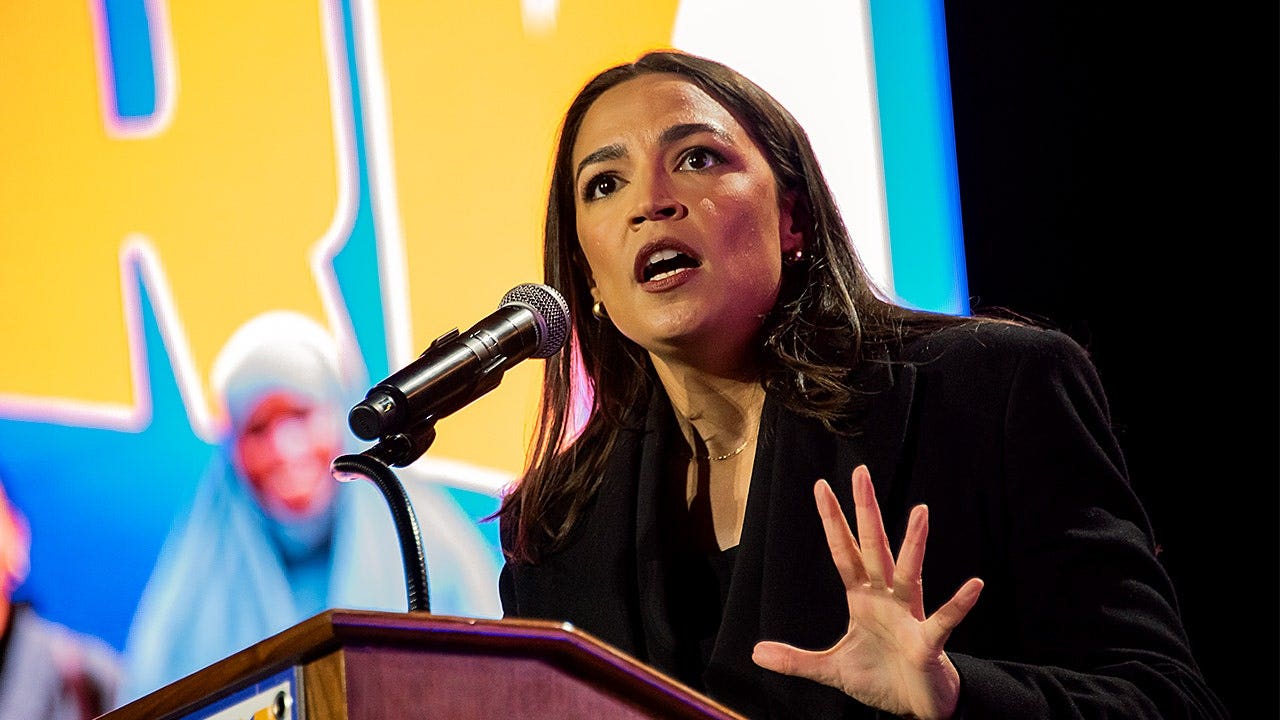
A new campaign memo is putting Alexandria Ocasio-Cortez front and center as more than just a loud voice on the left. It casts her as a national Democratic power player, pointing to a massive fundraising machine, a growing list of endorsements, and a message built around economic resentment and working-class frustration.
The document says Ocasio-Cortez has moved well beyond the role of a progressive outsider shouting from the sidelines. Instead, it argues that she now sits near the center of the party’s effort to reconnect with voters who feel squeezed by prices, politics, and a system they think favors the rich.
One of the memo’s biggest claims is that her influence reaches far outside New York. It says candidates in rural districts and swing seats now see her as a useful asset, not a liability, which is a striking shift for a figure once treated by many Democrats as too polarizing to embrace openly.
The fundraising numbers are a big part of that pitch. The memo says her operation has pulled in more than 2 million contributions totaling $38 million, with an average donation of $17.56, and that more than $3 million has gone to other Democratic candidates and state parties.
That kind of small-dollar haul gives her a kind of political independence most lawmakers can only dream about. It also lets the campaign frame her as a model for a new kind of Democratic organizing, one that leans on crowds, online energy, and a constant stream of direct voter engagement.
The memo also ties her rise to the aftermath of Donald Trump’s 2024 victory. In its telling, Ocasio-Cortez responded by pushing Democrats toward economic populism and a broader message aimed at working families who feel left behind by both parties.
Her appeal, the document says, comes from more than just ideology. It argues that she has become one of the party’s strongest messengers because she speaks in plain terms about rent, wages, debt, and the sense that regular people are getting crushed while wealthy interests keep winning.
That message has not stayed inside safe blue territory. The memo points to endorsements and appearances in states like California, Michigan, Pennsylvania, and Montana, presenting her as someone who can shape races far from her own district.
One example it highlights is Michigan Democrat Abdul El-Sayed, who got a boost from her backing. Another is Sam Forstag in Montana, whose primary comeback after a rough start is used as evidence that her support can energize voters in places that do not usually look friendly to national progressive politics.
The document also places weight on her public rallies with Bernie Sanders, including a stop in Missoula that it says helped turn the tide in a competitive primary. That kind of crowd-driven politics is part of the larger picture the memo is trying to sell, one where enthusiasm can matter as much as a consultant’s spreadsheet.
At the same time, the memo hints at a political reset after a few setbacks inside Washington. It describes a moment when she shifted from inside-the-Beltway fights to a more direct relationship with voters, especially after congressional frustrations and Democratic budget drama left the party looking disjointed.
That reset appears to have sharpened her national profile instead of shrinking it. The more she talks about wealth, power, and frustration with the system, the more she seems to fit the role of a movement leader who thrives on conflict and attention rather than careful moderation.
Her recent remarks carry that same edge. At a rally in Idaho, she framed everyday stress as the result of being governed by billionaires, a line that captures the emotional pitch driving her politics and explains why supporters see her as a fighter, not a standard politician.
For Democrats trying to decide what kind of party they want to be, that is the larger point hanging over the memo. Ocasio-Cortez is being presented not just as a symbol of progressive anger, but as a force capable of shaping candidates, energizing donors, and dragging the party toward a harder-edged populist identity.
